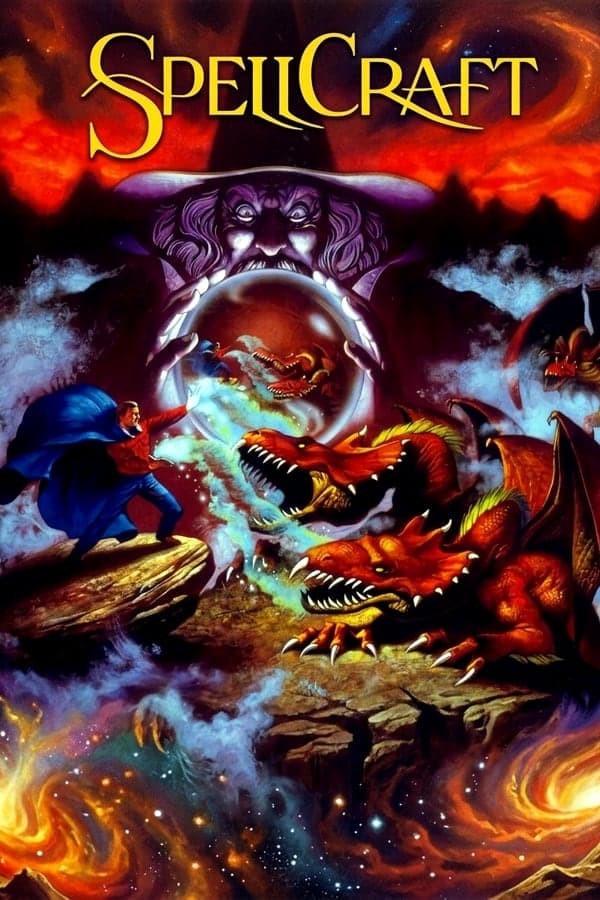

SpellCraft: Aspects of Valor
Rate this game
Mixing the wrong powder with the wrong candle in SpellCraft: Aspects of Valor will instantly blow your character into bloody bits, sending you back to your save file before combat even begins.
What happens when you launch SpellCraft: Aspects of Valor
You start as Robert Garwin, an ordinary guy whisked away through Stonehenge to the fantasy world of Valoria. Your task is to stop seven squabbling Lord Wizards and heal the rift between Valoria and Earth across seven distinct elemental realms. Rather than simply slinging ready-made fireballs, this 1992 isometric strategy game forces you to sit down and prepare every spell manually before walking into battle.
Before stepping into an elemental plane, you combine six distinct components to build a single spell: an Aspect, Jewels, Powders, Stones, Candles, and a precise Magic Word. Get every single element right, and you gain an arsenal of offensive bolts, defensive shields, terrain-altering spellwork, or summoned monsters. Get a single ingredient wrong, and the crafting interface triggers an immediate explosion animation that kills your character on the spot.
The design team behind the alchemy
industry veteran Joe Ybarra brought experience from heavyweights like Starflight and M.U.L.E. when designing this title alongside Michael E. Moore and Steve Perrin. The technical heavy lifting fell on lead programmer Karl Buiter, previously known for Sentinel Worlds, who also handled audio programming alongside Russell Lieblich. Art director Mark Dickenson framed the isometric action in full 256-color VGA graphics, filling the floppy disks with detailed monster sprites and crisp spell effects.
The original release shipped with mandatory physical reference materials, including blank formula sheets printed in the manual. Because trial-and-error experimentation carry such lethal consequences, players had to carefully transcribe functional recipes as they discovered them in-game or traded clues with NPCs on Earth. Publisher Brøderbund marketed the game heavily around its depth, though an intended Super Nintendo conversion was scrapped before ever reaching store shelves.
Where the combat and interface struggle
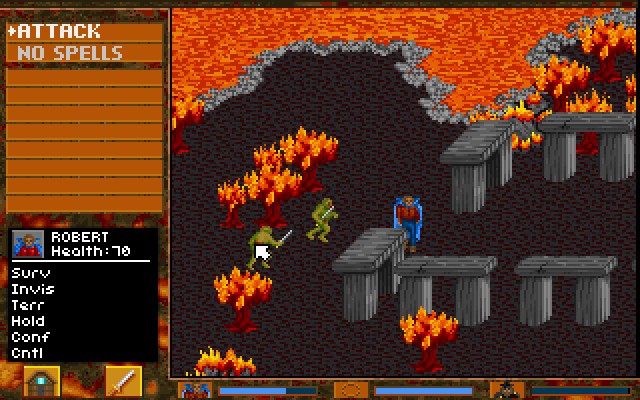
Once you enter real-time tactical combat, the gap between ambitious magic design and execution becomes obvious. Battles run in real-time, requiring you to direct Robert around isometric maps using a cursor while dodging enemy spells and slinging your prepared magic or swinging a sword. Reviewers back in 1992 praised the sheer volume of magic options while pointing out that the awkward mouse-clicking controls caused severe finger fatigue during hectic encounters.
The game relies heavily on obscure clues scattered across town interactions on Terra, leaving modern players baffled if they wander in without a recipe guide. Computer Gaming World noted that it offered the most extensive magic system seen in gaming up to that point, but missing a single hidden clue means guaranteed death during spell creation. Combat often devolves into spamming a few reliable attack spells or monster summons rather than adjusting terrain on the fly, purely because selecting actions mid-fight feels clumsy.
- Attack and Defense: Direct damage projectiles, elemental shields, and personal stat buffs.
- Terrain Modifiers: Spells that alter tiles, creating barriers or opening pathways across elemental hazards.
- Transformations and Summons: Polymorphing targets or bringing friendly creatures onto the field to distract enemies.
How to play SpellCraft: Aspects of Valor online today
Its harsh difficulty spike and twitchy isometric controls take patience, but Asciiware built a clever experiment around its spell-crafting core. The high stakes of spell assembly turn every new discovery into a genuine reward, provided you keep track of your ingredients. If you want to sample 1992 MS-DOS magic design, you can experience the complete DOS version directly in your browser without dealing with vintage hardware setups.
You can play SpellCraft: Aspects of Valor free in your browser right now with no setup needed. Fire up the DOS engine directly on this page, open the spell menu, and see if you can assemble a working flame bolt without blowing Robert into pieces on your very first try.
How SpellCraft: Aspects of Valor is played — the keys the game listens to, grouped by what they do.
- Action
- Interface
Highlighted keys are mapped — hover or tap one to see what it does.
Movement is controlled via the numberpad, and function keys are used to select spells. Controls also support mouse alternatives.
Players' controls
Touch and gamepad controls
The on-screen keyboard and gamepad mapping the browser player uses on a phone, a tablet or a controller, as opposed to the real keys above. $PRO members make their own in the player and share them here; anyone can pick one to play with.
Make your own touch controlsPRO
- 1Open the editorSign in below, then pick what to make. The game starts with the editor open over it.
- 2Place your keysAdd keys and drag them where your thumbs rest, or map a controller's buttons. Test plays the game with them; Save keeps them, and you play with them from then on.
- 3Share themShare them right after saving in the game, or name and share them here. Players vote, and the best become this game's controls for everyone.
Go PROSee how it worksSign in+20 XP for sharing · +50 XP if yours become the game's own
- The game's own controlsKeyboardGamepadWhat every player starts with.In use
2 screenshots
From the archive
No gameplay video yet
No gameplay video for SpellCraft: Aspects of Valor yet. Sign in to add one.
No reviews yet
Tell the community what you think of SpellCraft: Aspects of Valor. Reviews are public and tied to your username.
No archived manuals for SpellCraft: Aspects of Valor yet
No manuals archived for this title yet. Sign in to upload the first scan.
Cheat codes, console commands and memory pokes for SpellCraft: Aspects of Valor — each one verified and attributed.
Sign in to submitNo cheats yet for this title
Know a working cheat, poke or trainer? Add it with the button above. Moderators check every entry before it goes live.
No archived soundtrack for SpellCraft: Aspects of Valor yet
No soundtrack archived for this title yet. Sign in to upload the first rip.
No save states for SpellCraft: Aspects of Valor yet
No save states for this title yet. Sign in to share one.
Discussions
Sign in to post- Threads0
- Total posts0
- Online now6
Community · SpellCraft: Aspects of Valor
Who's contributing, and what's new
- Reviews0
- Threads0
- Uploadsapproved0
- Contributors0
Recent activity
Nothing here yet
Reviews, discussion threads and approved uploads appear here as members add them.