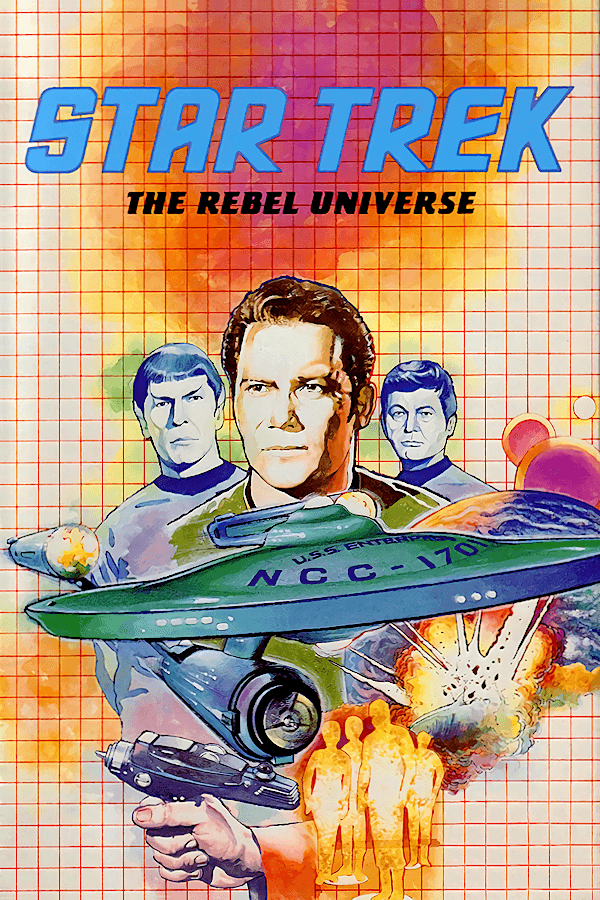

In Star Trek: The Last Generation, you are handed the keys to the prototype USS Enterprise NCC-1701-ZZ and sent on a high-stakes salvage run to pull 15 blast-proof safes out of deep space before Romulan warships intercept you.
Commanding the prototype Enterprise in Star Trek: The Last Generation
Fresh out of the United Federation of Planets Star Captain Training Academy, your first real assignment is anything but a standard patrol. The USS Saggitarius has gone down, leaving its cargo drifting in open space: 15 blast-proof safes housing over a thousand dilithium crystals valued at 23 million Federation Monetary Units. This shipment powers the fleet's entire energy ration for the next three months, making it the only thing standing between Federation territory and an imminent Romulan invasion force.
Instead of direct joystick controls or mouse-driven bridge consoles, you manage your Nebula-class starship entirely through a typed command interface. Success relies on issuing clear orders to your crew, interpreting text outputs, and managing ship systems under pressure. Fans of early text-heavy simulation games will immediately recognize the tension of sitting in the captain's chair where every mistake comes from a mistyped command or a miscalculated maneuver.
Race against the Romulan fleet
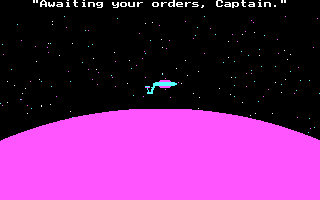
The core challenge of this 1988 release comes down to time management and strategic navigation. Romulan commanders know about the security leak, and their warships are actively scanning the sector to claim the dilithium for themselves. If you take too long plotting courses or issue vague orders to your tactical officers, you risk running straight into enemy ambushes with an unshielded prototype vessel.
The parser demands precise inputs, which can be unforgiving if you are trying to maneuver quickly during an encounter. Finding the drifting safes requires methodical sector scans, but moving too slowly lets enemy patrols close the gap. It captures the methodical, deliberate pacing of classic space strategy, where reading the situation correctly matters far more than fast reflexes.
Text-based bridge management on 1980s PC hardware
Developer and publisher Xordanbhorgh, Inc. released this title for MS-DOS during a era when sci-fi games were rapidly experimenting with low-resolution graphics and parser commands. Without complex 3D viewports or digitized speech, the experience relies entirely on creating atmospheric tension through text feedback and strategic decisions. It fits squarely alongside other late-80s strategy and text-adventure experiences found in the action genre catalog from the same period.
While missing the visual polish of later official Trek titles, its focus on logistical resource recovery gives it a distinct identity. The entire fleet's operational capability rests on securing those 15 safes, giving every sector entry real weight.
How it holds up for retro strategy fans
Players jumping into this release today will find a sparse, uncompromising command simulation that expects you to learn its parser quirks quickly. The absence of modern quality-of-life features like automatic plotting or contextual menus means you need to keep your focus sharp during long recovery runs. If you enjoy retro parser mechanics and managing ship logistics under a strict time limit, it offers a focused challenge built around classic space command tropes.
- Command a prototype Nebula-class star cruiser using text inputs
- Locate and salvage 15 blast-proof safes carrying critical dilithium rations
- Outmaneuver Romulan warships attempting to annex Federation sectors
- Balance long-range sensor scanning with aggressive defensive positioning
Play Star Trek: The Last Generation online in your browser
If you want to experience this early MS-DOS sci-fi title for yourself, you can play Star Trek: The Last Generation free in your browser right now with no setup required. As soon as the main prompt loads, try issuing your initial system status and long-range scan commands right away to track down the Saggitarius before the first Romulan patrol picks up your signal.