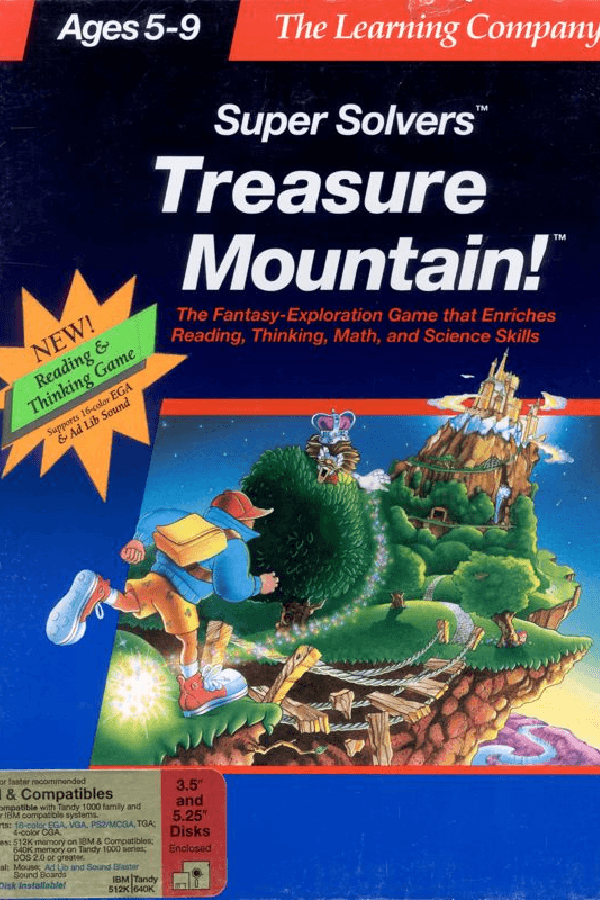

Catching scroll-touting elves with a net in Super Solvers: Treasure Mountain! was every young PC gamer's first taste of how high-stakes a logic puzzle could feel when the Master of Mischief was involved.
Netting elves and decoding riddles on the slopes
You land on the lowest level of the mountain with a butterfly net, a pouch full of magic coins, and three clues to untangle before you can even think about opening the gate to the next floor. Wandering elves walk across the screen carrying rolled-up scrolls. You swing your net to catch one, answer whatever reading, math, or visual puzzle it presents, and earn a clue alongside a handful of coins.
Those clues describe the exact background object hiding the key to the next stage. One clue might give you a number like three, another gives a shape like a triangle, and the third gives a description like striped. You walk past trees, bushes, and signs, searching for an item that matches all three traits. When you drop a magic coin in front of the right spot, the key pops out into your hands. If you only match two traits, you get one of the stolen kingdom treasures instead, which still counts toward filling your castle stash at the summit.
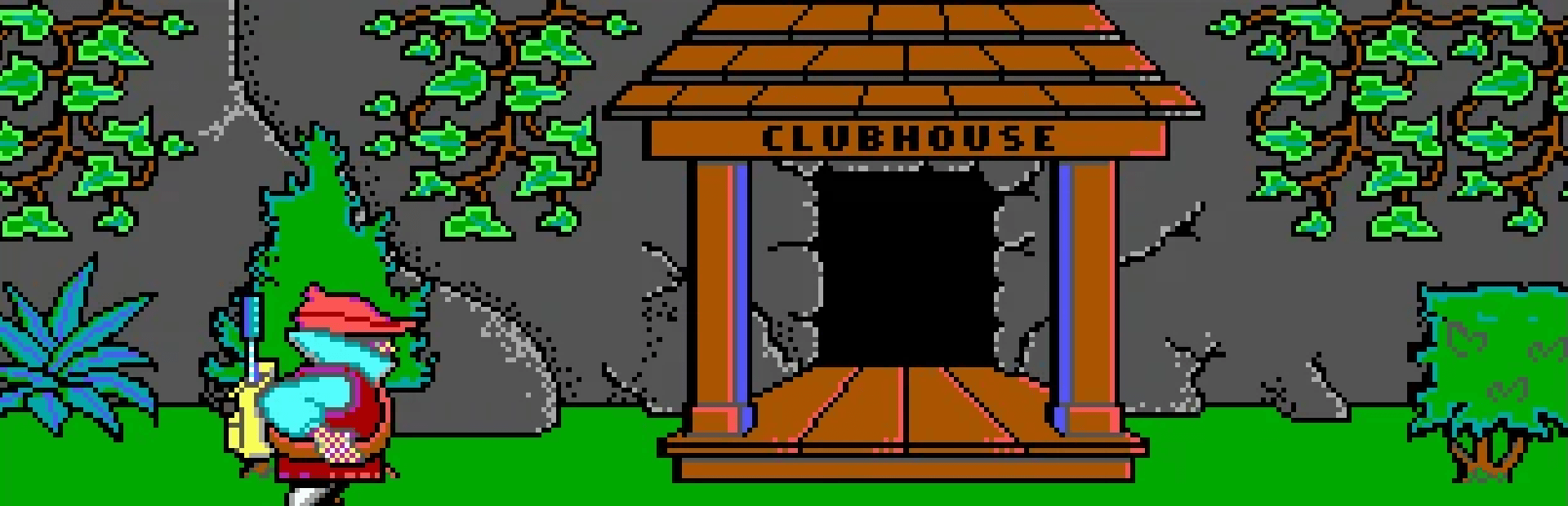
Finding the key unlocks the ladder to the next tier of the mountain, where the process repeats across three distinct floors. At the top, you enter the castle, dodge the Master of Mischief while climbing ladders, and empty your sack into the main chest. You earn a prize for your clubhouse display case, step back outside, and start the climb all over again from the base. It is a tight, satisfying gameplay loop that teaches basic deduction without feeling like a dreary classroom worksheet.
What makes the climbing loop in Super Solvers: Treasure Mountain! work
The genius of The Learning Company, Inc. was making inventory management and spatial search feel like a legitimate arcade quest. Rather than giving away secrets through simple multiple-choice prompts, the game forces you to constantly cross-reference your current clues with every background asset as you scroll past. Dropping a coin behind a round green tree only to realize the riddle called for a tall blue one wastes a coin, and running out of coins forces you to hunt down special stepping spots just to replenish your supply.
That coin system adds actual stakes to every guess. Stepping on a coin spot triggers a sharp, metallic sound effect that instantly signals you are back in business. If you waste your gold dropping coins behind every bush, you spend half your time chasing down more elves just to afford another attempt. The search mechanics turn visual observation into a core gameplay element, rewarding players who actually take a moment to look at the pixel art before spending their currency.
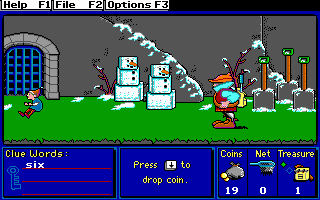
The progression system keeps pushing you back up the peak with incremental promotions. Every set of treasures you return increases your star rank in the Super Seekers club, which raises the overall difficulty for your next run. Elves begin throwing elf dust to steal your hard-earned coins, riddles demand multi-step math calculations, and stage layouts require far more precision to search efficiently. The gradual ramp gives you a real reason to keep climbing.
EGA art, Baroque tunes, and the heartbreak of lost profiles
On standard hardware back in 1990, the presentation punched well above its weight for an educational title. The 16-color EGA graphics used bold outlines and distinct patterns to make clue matching reliable even on muddy CRT monitors. Brightly colored toadstools, carved wooden signs, and distinct leaf shapes gave each tier of the mountain a clear visual identity. It proved that a title aimed at younger players did not need to look cheap or unfinished.
The audio side was equally memorable, particularly for anyone running an AdLib sound card or a Tandy 3-Voice setup alongside their standard PC speaker. The soundtrack adapted classic Baroque compositions and traditional contra dance arrangements into jaunty FM synthesis chiptunes. Hearing those familiar classical melodies beep merrily through a PC speaker while dodging the Master of Mischief left a long-lasting impression on anyone who spent their afternoons in the family computer room.
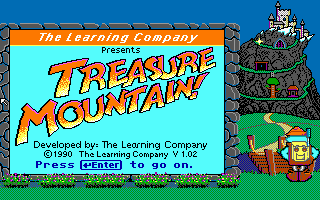
Yet for all its technical polish, the original 1990 release contained a notorious point of frustration for younger computer users: profile management. A misclicked button on the user selection screen could instantly wipe out a high star rank and clear out your entire clubhouse prize room with zero prompt to confirm. Generations of kids learned the painful lesson of back-up discipline after accidentally nuking weeks of progress with one hasty mouse click.
Where the mountain design starts to drag
The main issue you encounter after a couple of hours with this adventure game is the total lack of a final ending. Super Solvers: Treasure Mountain! never actually finishes; it loops forever, cycling through the same three mountain tiers while dialing up riddle complexity and coin costs. Once you reach the highest rank and fill every shelf in your clubhouse, the prize rewards simply repeat themselves endlessly.
The pool of logic puzzles is also surprisingly limited. Because the game reuses riddle formats across multiple climbs, adult players or older kids quickly memorize the answers to the math prompts and visual matches. Here is a clear breakdown of how a typical ascent plays out from base to peak:
- Catch an elf with your net to launch a reading or math riddle.
- Collect the single clue phrase and magic coins granted by a correct answer.
- Search background trees, rocks, and signs by dropping coins behind items matching all three clues.
- Grab the level key, head up the ladder, and repeat the process on the next tier.
- Navigate the castle ladder maze, dodge the Master of Mischief, and dump your haul in the chest.
Reviewers at the time rightfully praised the clean integration of basic math lessons, but modern players will notice how quickly the climb turns repetitive. Going up and down the exact same hillside forty times loses its punch once the visual novelty wears off. It functions best in short bursts rather than long marathon sessions.
Ascend the peak in your browser right now
Despite the repetitive loop and the infinite structure, it is still a sharp educational release. The net mechanics feel nimble, the clue-matching logic holds up completely, and the AdLib soundtrack is as catchily absurd as ever. If you want to experience the original Super Solvers: Treasure Mountain! MS-DOS game, you can run it without tracking down vintage sound drivers or messing with floppy disk images.
You can play Super Solvers: Treasure Mountain! online free in your browser right here. The net controls respond instantly, the sound emulation handles the Baroque tunes perfectly, and you can test your riddle-solving skills on the mountain within seconds. Jump in, start catching elves, and see how many treasures you can stack in the clubhouse before the Master of Mischief gets in your way.