
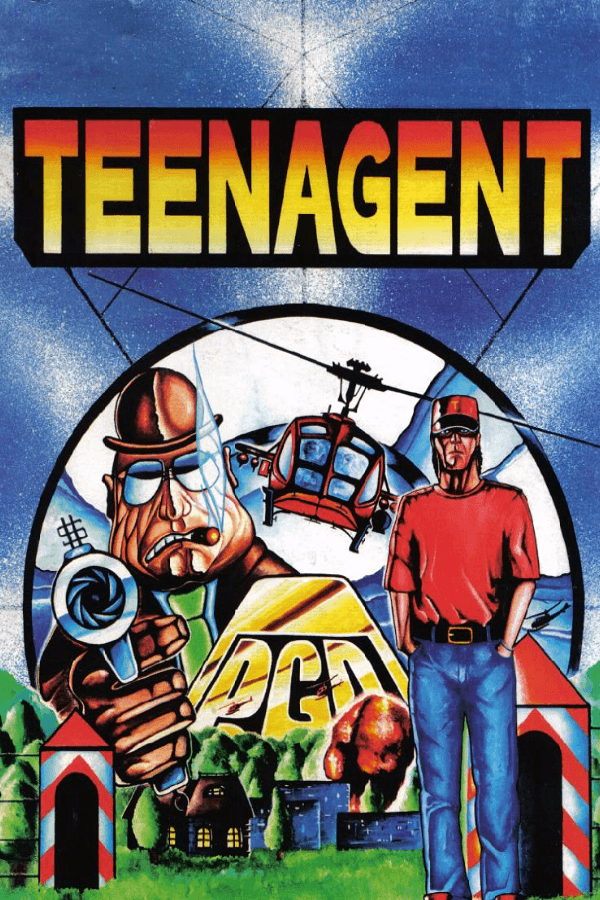

In Teenagent, a fortune teller picks random high school kid Mark Hopper out of a phone book to join a secret agency and stop a villain named John Noty from stealing all the world's gold.
Metropolis built a LucasArts comedy on pure inventory trial and error
Before writer and programmer Adrian Chmielarz went on to co-found People Can Fly, he crafted a point-and-click comedy alongside Grzegorz Miechowski at Metropolis Software House. The premise throws Mark Hopper into the RGB secret agency after an occult reading deems him the chosen spy. There are no laser pistols, health bars, or twitch reflexes anywhere in sight. Your survival depends entirely on gathering absurd items and figuring out which background object requires rubbing against them.
The control setup uses a clean two-button mouse interface that keeps screen clutter to a minimum. Left-clicking an object makes Mark inspect it with a dry quip, right-clicking executes an action, and sliding your cursor to the top edge opens your inventory bag. Sound Blaster sound cards get a lively workout playing converted tracker modules originally written for Amiga hardware, filling training tents and quiet villages with bouncy synth beats.
The middle chapter turns a sharp spy parody into a pixel hunt
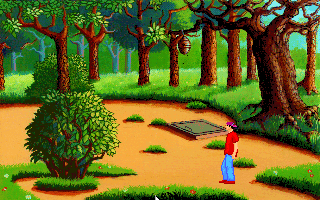
The campaign splits neatly into three locations, each with its own self-contained set of problems. You begin at the RGB training facility in a section titled "The Three Tasks", where a heavy-handed commander demands you complete basic tests to prove your worth. Once you pass those trials, the story moves into a sprawling rural village before culminating in a final push through John Noty's heavily guarded mansion estate.
While the opening camp and closing mansion feel tight, the middle act in the village stalls the momentum completely. You end up backtracking across dozens of static outdoor screens, searching for tiny interactive hotspots that disappear into the background art. Missing a single pocket-sized object on a dirt road means wandering endlessly through looping dialogue trees until you discover the one item you walked past ten minutes earlier.
- Act One: The RGB Training Camp, where Mark proves his fitness by solving three preliminary tests.
- Act Two: The Village, an expansive central hub filled with oddball locals, locked doors, and hidden tools.
- Act Three: The Mansion, a security-heavy estate where you pull off the final heist against John Noty.
Teenagent pushed 20,000 frames of animation out of early SVGA PCs
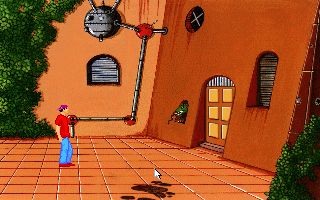
Visually, the game was a serious technical project for a small studio working in Poland during the mid-1990s. The art team created over 20,000 frames of hand-drawn character animation, utilizing dynamic rotoscoped scaling and shading to keep Mark proportional as he walks toward or away from the camera. The hand-painted SVGA backgrounds look sharp, giving every screen the look of a colorful European comic strip.
That production effort paid off locally when an expanded CD-ROM build titled Nowy Teenagent arrived in 1996, making history as the first video game released on CD-ROM in Poland. That edition featured full Polish voice acting recorded by the editorial staff of Gambler magazine. For international players, the shareware DOS version distributed across BBS networks and coverdisks served as the primary introduction to the studio's work.
Brittle English quips and absurd item logic define the challenge
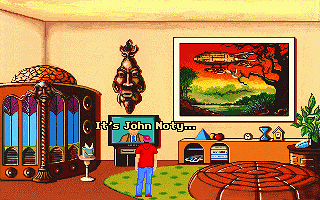
The core difficulty does not come from clever mechanical design, but from total narrative absurdity. You will solve roadblocks by catching a wild pigeon, dipping a mug into a mud puddle, or combining completely unrelated junk items to bypass armed guards. Because the original Polish script underwent a direct translation into English, several puns and cultural references lose their punch, leaving behind typos and bizarre quips that sound oddly endearing coming from a reluctant teenage protagonist.
Period magazine reviews reflected that mixed personality. When PC Games highlighted it as Shareware Game of the Month in June 1995, the writers praised the sharp graphics and simple mouse controls while warning that the puzzles were exceptionally difficult. Reviewers at Home of the Underdogs later framed it as a valiant attempt to recreate the LucasArts style that was equal parts amusing and exasperating. Without an in-game hint feature, progress often degenerates into clicking every inventory piece against every pixel on screen.

Infiltrate John Noty's estate in Teenagent free in your browser
Despite the occasional pathfinding delay and the nonsensical item logic, this 1995 release is a fun slice of mid-nineties adventure game history. The expressive character sprites, catchy tracker music, and lowbrow humor offer plenty of entertainment if you approach it with a walkthrough nearby. It sits alongside other 1995 DOS releases as a solid example of European studios putting their own spin on classic point-and-click tropes.
You can play Teenagent online directly in your web browser with no installation or setup necessary. To get your bearings right away, search every drawer inside the opening military tent, take the mug, and talk to the guard commander outside. You will get an instant feel for the humor, the click-driven inventory system, and the synth soundtrack within two minutes of starting your mission to reclaim the stolen gold.