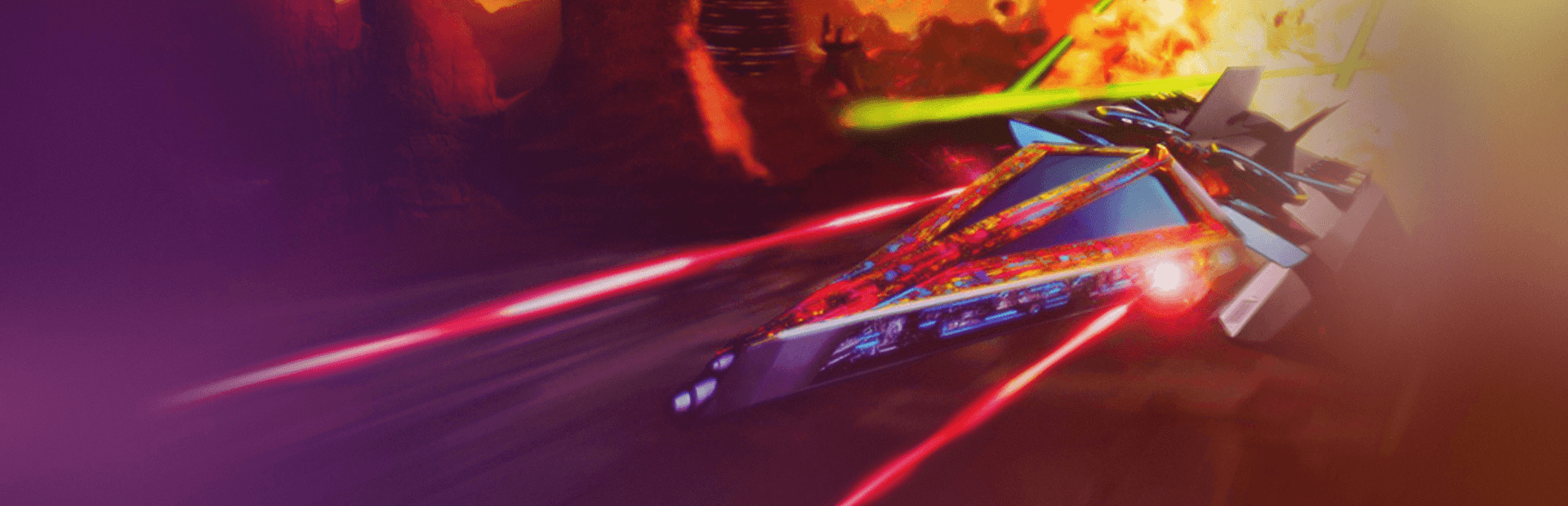
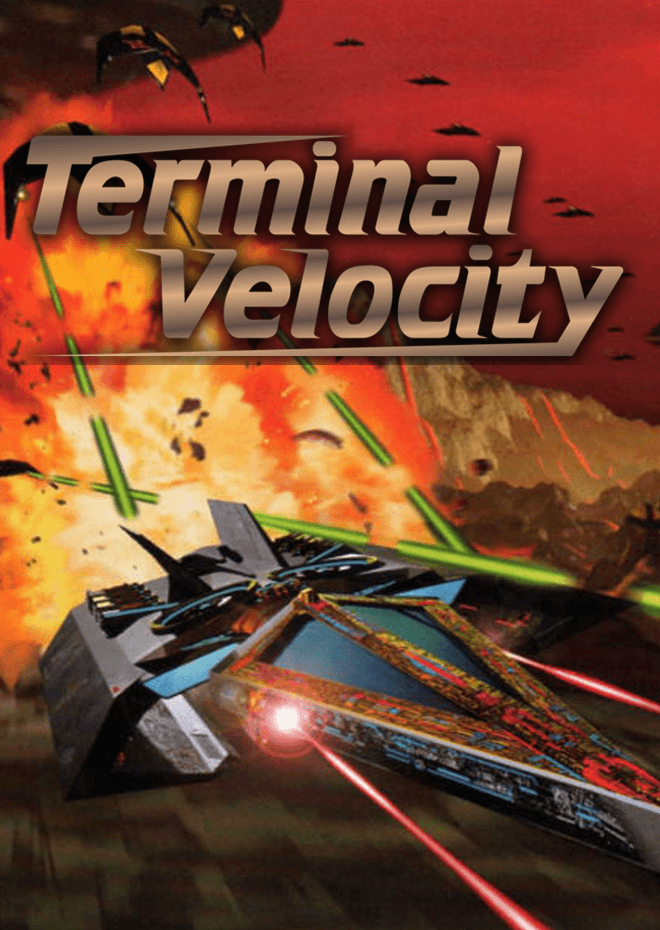

In Terminal Velocity, you strap into the cockpit of the TV-202 starfighter to blast through alien planet surfaces and underground tunnels without ever having to worry about landing gear or stalling out in a dogfight.
Back when flight simulators demanded thick printed manuals full of key bindings and stall-speed tables, Terminal Reality took the opposite route. Lead programmer Mark Randel came straight off his work on Microsoft Flight Simulator to build an engine that completely ignored atmospheric physics in favor of raw speed. Co-produced by Tom Hall, the result discarded aerodynamic drag, landing gear mechanics, and blackout g-forces, replacing them with a craft that turns instantly, hovers on a dime, and fires non-stop energy weapons into incoming alien forces.
You play an unnamed pilot flying for humanity in the year 2704 after the Alliance of Space-Faring Alien Races (ASFAR) falls under the control of a rogue supercomputer named X.I., short for the Xenocidic Initiative. Operating on the studio's custom Photex software engine, the game rendered vast textured 3D terrain on standard PC hardware while offering an optional performance toggle tailored specifically for high-end Intel Pentium processors. Running this 1995 release on a Sound Blaster card meant hearing continuous engine hum and punchy weapon discharge alongside a heavy soundtrack composed by Kyle Richards, whose original title track file was cheekily named SEX.MOD in the system directory.
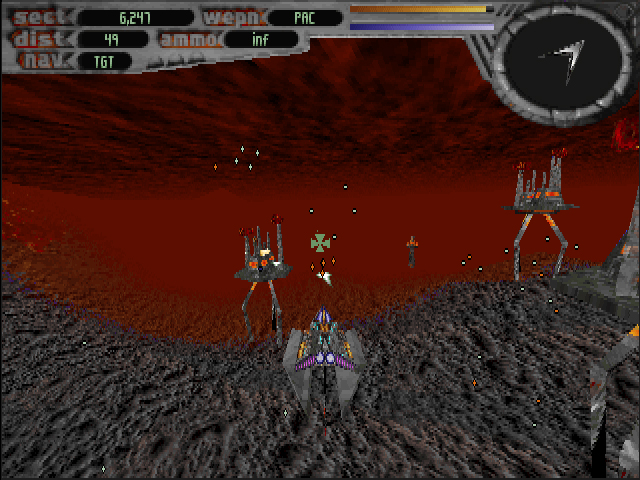
The campaign splits across three episodes taking you across nine distinct planets for a total of 27 missions. Environments cycle from the frozen ice fields of Ymir and Crythania to the jagged rock canyons of Ositsho, Erigone, and Prozima Seven. Every planetary drop sends you over broad outdoor landscapes before plunging into claustrophobic subterranean bunkers dug directly into mountain walls. On open ground, your objective is straightforward: wipe out enemy radar installations, defense checkpoints, and supply depots while dodging ground tanks, heavy enemy fighters, and massive defense platforms.
Your primary tool is an ever-expanding arsenal scavenged from fallen targets and shattered supply bunkers scattered over each map. Firepower ramps up fast across seven distinct weapon systems:
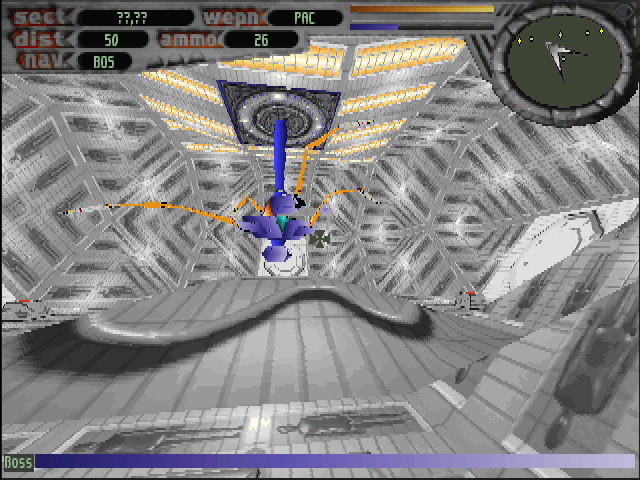
When outdoor air battles transition into underground tunnel networks, the dynamic shifts entirely. Once you cross the doorway into a mountain complex, your craft loses its ability to turn fully around, forcing you forward through narrow shafts crammed with rotating barriers, laser grids, and blast doors. Surviving these tight corridors requires precise throttle control to weave past wall-mounted guns without scraping your hull to scrap metal against concrete walls.
For all its fluid frame rates and immediate thrills, the design carries quirks that split players down the middle. Because your ship features zero flight inertia, craft rotation speeds can feel stiff when you try to pull a tight hard turn to catch a enemy fighter buzzing past your tail. Furthermore, the persistent radar display on your HUD marks key objectives so clearly that hunting down your primary targets on the open terrain requires very little actual navigation skill.
The mission structure also shows its age across long play sessions. Strip away the varied skyboxes and landscape recolors, and you end up repeating the same basic routine of hunting radar installations and tunnel exits across 27 levels. Stripping away all your collected weapon upgrades and shield capacity back to zero at the beginning of each new episode adds artificial friction, forcing you to re-acquire basic weapon upgrades all over again.
Yet the game is packed with secrets that players still share. Typing TRIGODS gives instant invincibility, while 3DREALM maxes out your weapons, and TRWARP skips straight to any mission. Entering "Terminal" as your player name and "Reality" as your callsign at startup drops you into a secret stage 0 filled with organic mouth textures and a massive alien monster. If you fly close to the dirt near coordinates (63, 227) on stage 3-1, you can even spot a hidden ground texture displaying photographs of the development team.
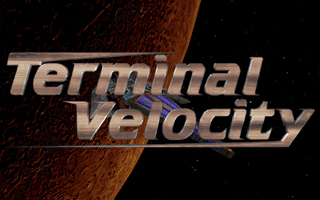
Published by FormGen and distributed widely through shareware channels, this title generated over a million dollars in revenue during its first year alone. Its tech was so reliable that Microsoft hired Terminal Reality to build a Windows-native follow-up titled Fury3 shortly afterward. While modern flight simulators focus on realism and hyper-detailed cockpit switches, this arcade shooter works because it prioritizes fast movement and immediate destruction over technical flight manuals.
You can play Terminal Velocity free in your browser right here as a classic MS-DOS game with no setup needed. The immediate sense of speed as you drop from high orbit down into mountain trenches is something static screenshots can never replicate until you are sitting in the cockpit yourself. Fire up the engine, drop your throttle to full, and hit TRIHOVR whenever those tight underground tunnels get a little too crowded for comfort.
In Terminal Velocity, you strap into the cockpit of the TV-202 starfighter to blast through alien planet surfaces and underground tunnels without ever having to worry about landing gear or stalling out in a dogfight.
Back when flight simulators demanded thick printed manuals full of key bindings and stall-speed tables, Terminal Reality took the opposite route. Lead programmer Mark Randel came straight off his work on Microsoft Flight Simulator to build an engine that completely ignored atmospheric physics in favor of raw speed. Co-produced by Tom Hall, the result discarded aerodynamic drag, landing gear mechanics, and blackout g-forces, replacing them with a craft that turns instantly, hovers on a dime, and fires non-stop energy weapons into incoming alien forces.
You play an unnamed pilot flying for humanity in the year 2704 after the Alliance of Space-Faring Alien Races (ASFAR) falls under the control of a rogue supercomputer named X.I., short for the Xenocidic Initiative. Operating on the studio's custom Photex software engine, the game rendered vast textured 3D terrain on standard PC hardware while offering an optional performance toggle tailored specifically for high-end Intel Pentium processors. Running this 1995 release on a Sound Blaster card meant hearing continuous engine hum and punchy weapon discharge alongside a heavy soundtrack composed by Kyle Richards, whose original title track file was cheekily named SEX.MOD in the system directory.

The campaign splits across three episodes taking you across nine distinct planets for a total of 27 missions. Environments cycle from the frozen ice fields of Ymir and Crythania to the jagged rock canyons of Ositsho, Erigone, and Prozima Seven. Every planetary drop sends you over broad outdoor landscapes before plunging into claustrophobic subterranean bunkers dug directly into mountain walls. On open ground, your objective is straightforward: wipe out enemy radar installations, defense checkpoints, and supply depots while dodging ground tanks, heavy enemy fighters, and massive defense platforms.
Your primary tool is an ever-expanding arsenal scavenged from fallen targets and shattered supply bunkers scattered over each map. Firepower ramps up fast across seven distinct weapon systems:
When outdoor air battles transition into underground tunnel networks, the dynamic shifts entirely. Once you cross the doorway into a mountain complex, your craft loses its ability to turn fully around, forcing you forward through narrow shafts crammed with rotating barriers, laser grids, and blast doors. Surviving these tight corridors requires precise throttle control to weave past wall-mounted guns without scraping your hull to scrap metal against concrete walls.

For all its fluid frame rates and immediate thrills, the design carries quirks that split players down the middle. Because your ship features zero flight inertia, craft rotation speeds can feel stiff when you try to pull a tight hard turn to catch a enemy fighter buzzing past your tail. Furthermore, the persistent radar display on your HUD marks key objectives so clearly that hunting down your primary targets on the open terrain requires very little actual navigation skill.
The mission structure also shows its age across long play sessions. Strip away the varied skyboxes and landscape recolors, and you end up repeating the same basic routine of hunting radar installations and tunnel exits across 27 levels. Stripping away all your collected weapon upgrades and shield capacity back to zero at the beginning of each new episode adds artificial friction, forcing you to re-acquire basic weapon upgrades all over again.
Yet the game is packed with secrets that players still share. Typing TRIGODS gives instant invincibility, while 3DREALM maxes out your weapons, and TRWARP skips straight to any mission. Entering "Terminal" as your player name and "Reality" as your callsign at startup drops you into a secret stage 0 filled with organic mouth textures and a massive alien monster. If you fly close to the dirt near coordinates (63, 227) on stage 3-1, you can even spot a hidden ground texture displaying photographs of the development team.

Published by FormGen and distributed widely through shareware channels, this title generated over a million dollars in revenue during its first year alone. Its tech was so reliable that Microsoft hired Terminal Reality to build a Windows-native follow-up titled Fury3 shortly afterward. While modern flight simulators focus on realism and hyper-detailed cockpit switches, this arcade shooter works because it prioritizes fast movement and immediate destruction over technical flight manuals.
You can play Terminal Velocity free in your browser right here as a classic MS-DOS game with no setup needed. The immediate sense of speed as you drop from high orbit down into mountain trenches is something static screenshots can never replicate until you are sitting in the cockpit yourself. Fire up the engine, drop your throttle to full, and hit TRIHOVR whenever those tight underground tunnels get a little too crowded for comfort.
aka Velocity Brawl · Terminal Velocity: Boosted Edition
How Terminal Velocity is played — the keys the game listens to, grouped by what they do.
Highlighted keys are mapped — hover or tap one to see what it does.
In-flight keymap for movement, weapons, and actions could not be retrieved in full from the provided notes. The game optionally supports a mouse or joystick, requiring calibration for joystick use.
The on-screen keyboard and gamepad mapping the browser player uses on a phone, a tablet or a controller, as opposed to the real keys above. $PRO members make their own in the player and share them here; anyone can pick one to play with.
Cheat codes, console commands and memory pokes for Terminal Velocity — each one verified and attributed.
Sign in to submitHow Terminal Velocity is played — the keys the game listens to, grouped by what they do.
Highlighted keys are mapped — hover or tap one to see what it does.
In-flight keymap for movement, weapons, and actions could not be retrieved in full from the provided notes. The game optionally supports a mouse or joystick, requiring calibration for joystick use.
The on-screen keyboard and gamepad mapping the browser player uses on a phone, a tablet or a controller, as opposed to the real keys above. $PRO members make their own in the player and share them here; anyone can pick one to play with.
Cheat codes, console commands and memory pokes for Terminal Velocity — each one verified and attributed.
Sign in to submit