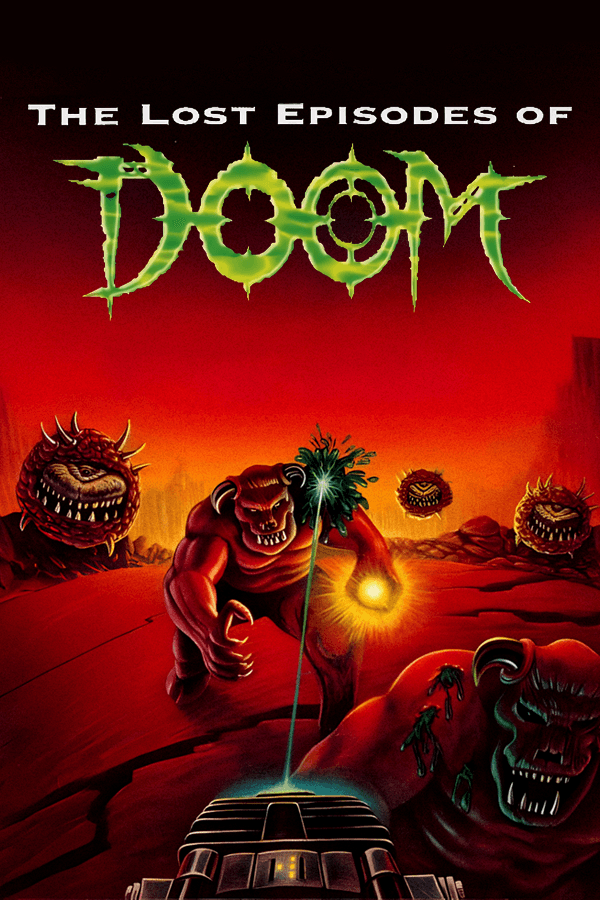

If you picked up The Lost Episodes of Doom back in 1995, you were paying bookstore prices for a single floppy disk tucked into the back cover of a paperback strategy guide.
Before commercial expansion packs became standard fare, level creators Christen Klie and Bob Carter put together 24 original maps for the registered Doom engine. Published as an action gaming book package by Sybex Inc, the set was designed for players who had already run through id Software's original campaign until every secret wall was memorized. The back-of-the-book setup casts you as an unnamed scientist pulled early from cryogenic sleep aboard a deep space probe, waking up near Jupiter's moons while demons overrun Mars.
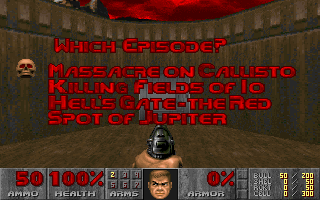
Instead of requiring a completely new game executable, these maps ran on top of your existing registered copy of Doom version 1.2 or higher. You received three brand new eight-level episodes: "Massacre on Callisto", "The Killing Fields of Io", and "Hell's Gate - The Red Spot". Unlike the main game, there are no ninth secret stages tucked away behind obscure exit doors. What you get instead are straightforward, puzzle-heavy layout designs that test how well you manipulate switches, lower platforms, and manage monster triggers.
The core combat keeps every weapon and monster from the 1993 original intact. You start with the hand pistol, grab the combat shotgun in short order, and spend your time clearing out Imps, Pinkies, and Cacodemons. Because the package relied entirely on standard engine resources, there were no new art assets or custom sound effects added to the mix, though the disk did include three pre-recorded demo files showing off clean runs through the custom geometry.
The early levels designed by Klie in the first episode, "Massacre on Callisto", strike a careful balance between claustrophobic corridors and wide control rooms. Map six, "Halls of Injustice", asks you to track down keycards while managing room-lowering staircases. You have to take your time when tripping triggers here; rushing past a sequence before the steps finish moving can lock the path forward completely, forcing a quick reload.
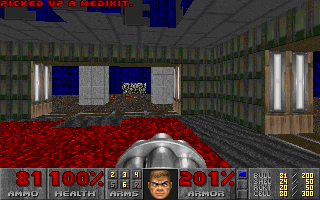
By the time you reach "Core of Evil" and "Callisto Consecration" at the end of the first act, the architecture relies heavily on switch puzzles and carefully timed lift traps. The monster counts stay manageable, giving you plenty of space to dodge incoming fire. Power-ups like the Berserk pack and supercharge spheres are placed in early rooms, giving you room to breathe even when the game throws heavy hitscanners into tight spaces.
Where the design works best is in its environmental pacing. Rather than throwing roomfuls of Cyberdemons at you right off the bat, maps rely on room height, dark corners, and sudden monster closets to create tension. You can inspect the layout from high walkways before dropping down into combat arenas, which lets you plan your route around health pickups and ammo boxes.
The map set is far from perfect, and its cracks show quickly if you play aggressively. The single biggest flaw in 1995 release of The Lost Episodes of Doom MS-DOS game is its sheer oversupply of supplies. Rooms are often packed with so many medkits, armor pick-ups, and shell boxes that surviving standard difficulties takes very little tactical effort. You can walk through heavy fire, take direct hits from an Imp fireball, and immediately recover your health meter from the next hallway floor.
Another structural quirk is the placement of exit doors. In several maps throughout the second and third episodes, the exit switch sits just a few rooms away from the starting line. A player moving forward without checking their automap can accidentally finish a stage in under forty seconds, completely skipping the core layout and keycard hunts Carter and Klie built.
The map quality also takes a noticeable turn in the latter half of the set. Starting around the fifth level of "The Killing Fields of Io", the geometry turns into winding, repetitive corridors that lack clear visual cues. Map layouts feel more like random mazes than working base structures, culminating in brutal moments like an infamous pit trap in "Callisto Consecration". If you drop into that pit containing six Cyberdemons without the proper switches flipped, there is no physical way out, leaving typing noclip as your only escape route.
What made the package distinct on store shelves was the 246-page strategy guide written by Jonathan Mao Mendoza, author of popular survival guides for the main game. The book contained detailed walkthroughs, full floorplan maps, and narrative lore for every level. The retail disk also catered to budding level designers by including the popular Doom Editing Utilities (DEU) creation program alongside a binary source partitioner tool, encouraging users to build their own WAD files.
Because Christen Klie and Bob Carter created these levels as a portfolio project to enter the professional gaming industry, the pack offers a fascinating look at mid-nineties homebrew map editing. Modern players running the original WAD through modern source ports will notice that level names do not display correctly on the intermission screen unless a community fix file like jptr_fix.zip is loaded alongside it.
The map set works best when viewed as an historical snapshot of early community map design. Here is a brief look at how the package came together for retail stores:
If you want a straightforward run through early commercial level expansion history without messing around with MS-DOS boot disks or file directories, you can experience it immediately. The map design has its rough edges and generous item counts, but it offers a genuinely fun afternoon of classic shotgun action once you get into the flow of its switch puzzles.
You can play The Lost Episodes of Doom online right now, completely free in your browser. There is nothing to install and no complex setup required. Jump straight into "Massacre on Callisto", grab your shotgun, and see how nineties level builders expanded the classic engine format.
If you picked up The Lost Episodes of Doom back in 1995, you were paying bookstore prices for a single floppy disk tucked into the back cover of a paperback strategy guide.
Before commercial expansion packs became standard fare, level creators Christen Klie and Bob Carter put together 24 original maps for the registered Doom engine. Published as an action gaming book package by Sybex Inc, the set was designed for players who had already run through id Software's original campaign until every secret wall was memorized. The back-of-the-book setup casts you as an unnamed scientist pulled early from cryogenic sleep aboard a deep space probe, waking up near Jupiter's moons while demons overrun Mars.
Instead of requiring a completely new game executable, these maps ran on top of your existing registered copy of Doom version 1.2 or higher. You received three brand new eight-level episodes: "Massacre on Callisto", "The Killing Fields of Io", and "Hell's Gate - The Red Spot". Unlike the main game, there are no ninth secret stages tucked away behind obscure exit doors. What you get instead are straightforward, puzzle-heavy layout designs that test how well you manipulate switches, lower platforms, and manage monster triggers.
The core combat keeps every weapon and monster from the 1993 original intact. You start with the hand pistol, grab the combat shotgun in short order, and spend your time clearing out Imps, Pinkies, and Cacodemons. Because the package relied entirely on standard engine resources, there were no new art assets or custom sound effects added to the mix, though the disk did include three pre-recorded demo files showing off clean runs through the custom geometry.
The early levels designed by Klie in the first episode, "Massacre on Callisto", strike a careful balance between claustrophobic corridors and wide control rooms. Map six, "Halls of Injustice", asks you to track down keycards while managing room-lowering staircases. You have to take your time when tripping triggers here; rushing past a sequence before the steps finish moving can lock the path forward completely, forcing a quick reload.
By the time you reach "Core of Evil" and "Callisto Consecration" at the end of the first act, the architecture relies heavily on switch puzzles and carefully timed lift traps. The monster counts stay manageable, giving you plenty of space to dodge incoming fire. Power-ups like the Berserk pack and supercharge spheres are placed in early rooms, giving you room to breathe even when the game throws heavy hitscanners into tight spaces.
Where the design works best is in its environmental pacing. Rather than throwing roomfuls of Cyberdemons at you right off the bat, maps rely on room height, dark corners, and sudden monster closets to create tension. You can inspect the layout from high walkways before dropping down into combat arenas, which lets you plan your route around health pickups and ammo boxes.
The map set is far from perfect, and its cracks show quickly if you play aggressively. The single biggest flaw in 1995 release of The Lost Episodes of Doom MS-DOS game is its sheer oversupply of supplies. Rooms are often packed with so many medkits, armor pick-ups, and shell boxes that surviving standard difficulties takes very little tactical effort. You can walk through heavy fire, take direct hits from an Imp fireball, and immediately recover your health meter from the next hallway floor.
Another structural quirk is the placement of exit doors. In several maps throughout the second and third episodes, the exit switch sits just a few rooms away from the starting line. A player moving forward without checking their automap can accidentally finish a stage in under forty seconds, completely skipping the core layout and keycard hunts Carter and Klie built.
The map quality also takes a noticeable turn in the latter half of the set. Starting around the fifth level of "The Killing Fields of Io", the geometry turns into winding, repetitive corridors that lack clear visual cues. Map layouts feel more like random mazes than working base structures, culminating in brutal moments like an infamous pit trap in "Callisto Consecration". If you drop into that pit containing six Cyberdemons without the proper switches flipped, there is no physical way out, leaving typing noclip as your only escape route.
What made the package distinct on store shelves was the 246-page strategy guide written by Jonathan Mao Mendoza, author of popular survival guides for the main game. The book contained detailed walkthroughs, full floorplan maps, and narrative lore for every level. The retail disk also catered to budding level designers by including the popular Doom Editing Utilities (DEU) creation program alongside a binary source partitioner tool, encouraging users to build their own WAD files.
Because Christen Klie and Bob Carter created these levels as a portfolio project to enter the professional gaming industry, the pack offers a fascinating look at mid-nineties homebrew map editing. Modern players running the original WAD through modern source ports will notice that level names do not display correctly on the intermission screen unless a community fix file like jptr_fix.zip is loaded alongside it.
The map set works best when viewed as an historical snapshot of early community map design. Here is a brief look at how the package came together for retail stores:
If you want a straightforward run through early commercial level expansion history without messing around with MS-DOS boot disks or file directories, you can experience it immediately. The map design has its rough edges and generous item counts, but it offers a genuinely fun afternoon of classic shotgun action once you get into the flow of its switch puzzles.
You can play The Lost Episodes of Doom online right now, completely free in your browser. There is nothing to install and no complex setup required. Jump straight into "Massacre on Callisto", grab your shotgun, and see how nineties level builders expanded the classic engine format.
aka Doom: The Lost Episodes
How The Lost Episodes of Doom is played — the keys the game listens to, grouped by what they do.
Highlighted keys are mapped — hover or tap one to see what it does.
Set up for modern play: W A S D move, the mouse turns (this engine has no mouse look, so moving the mouse forward walks), left click fires. The arrow keys still turn. Ctrl and Alt are left free because the browser uses them (Ctrl + W closes the tab).
The on-screen keyboard and gamepad mapping the browser player uses on a phone, a tablet or a controller, as opposed to the real keys above. $PRO members make their own in the player and share them here; anyone can pick one to play with.
Cheat codes, console commands and memory pokes for The Lost Episodes of Doom — each one verified and attributed.
Sign in to submitHow The Lost Episodes of Doom is played — the keys the game listens to, grouped by what they do.
Highlighted keys are mapped — hover or tap one to see what it does.
Set up for modern play: W A S D move, the mouse turns (this engine has no mouse look, so moving the mouse forward walks), left click fires. The arrow keys still turn. Ctrl and Alt are left free because the browser uses them (Ctrl + W closes the tab).
The on-screen keyboard and gamepad mapping the browser player uses on a phone, a tablet or a controller, as opposed to the real keys above. $PRO members make their own in the player and share them here; anyone can pick one to play with.
Cheat codes, console commands and memory pokes for The Lost Episodes of Doom — each one verified and attributed.
Sign in to submit