
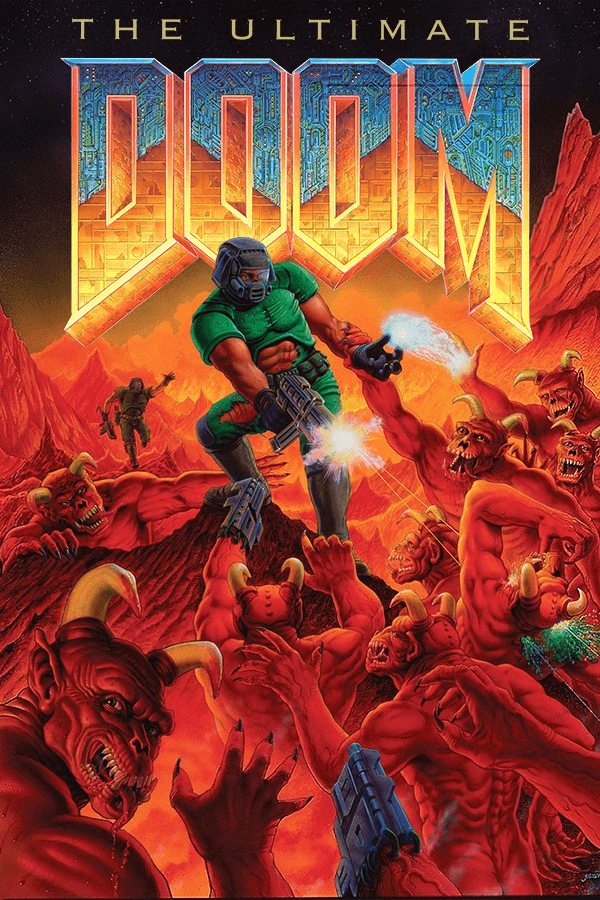
The Ultimate DOOM took the shareware classic that redefined PC action and brought it to store shelves with an unforgiving fourth episode built to crush experienced players.
When published by GT Interactive Software Corp. in 1995, this box set gave retail shoppers the full three-episode campaign alongside a brand new fourth chapter titled Thy Flesh Consumed. Developed by id Software, Inc. with level design contributions from John Romero, American McGee, Shawn Green, Tim Willits, and guest author John "Dr. Sleep" Anderson, this bonus episode bridges the story gap. It explains how hellspawn invaded Earth and murdered Doomguy's pet rabbit, Daisy, setting up the sequel.
If you expected a gentle warm-up, the opening levels of Episode 4 slap that notion away immediately. Levels like E4M1: Hell Beneath and E4M2: Perfect Hatred drop you into tight, lava-filled chambers with virtually no health or ammunition. You spawn facing shotgun-wielding zombies, Imps, and Barons of Hell with almost nowhere to run and a distinct lack of heavy firepower in the first few corridors.
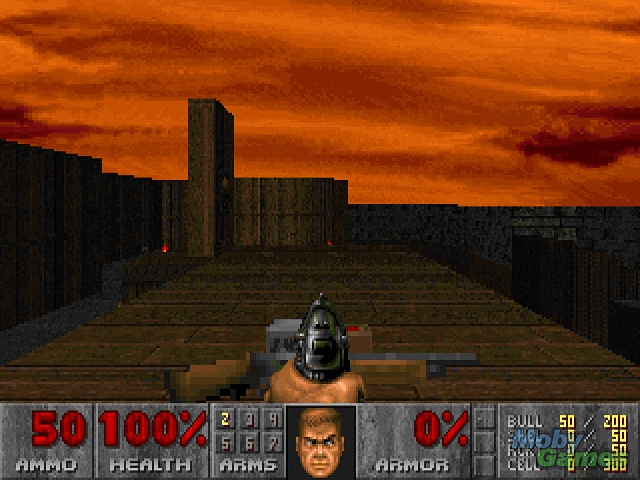
While the original three episodes, Knee-Deep in the Dead, The Shores of Hell, and Inferno, balanced exploration with escalating fights, Episode 4 demands precision movement. Resource starvation forces you to bait enemies into infighting rather than blasting through every door. It is a steep difficulty jump, but surviving E4M2 without relying on quicksaves feels incredible in classic action games.
Under the hood, the release runs on executable version 1.9 of the id Tech 1 engine. The renderer uses 2.5D pseudo-3D raycasting, combined with flat 2D directional sprites for monsters and pick-up items. Even at its release, some players criticized the blocky texture filtering up close and complained that the monster growls sounded like stock sound effects. Yet the visual design works because the game moves at a blisteringly fast 35 frames per second that keeps your focus entirely on survival.
The weapons carry an unmistakable sense of punch and feedback, composed with audio design by Robert Prince. Broadening your arsenal from the standard pistol and fist to the double-barreled power of the pump-action shotgun, the continuous chatter of the chaingun, and the clearing spread of the plasma rifle gives you clear tactical choices for every threat level. When you pull the trigger on the BFG9000 inside a room packed with Pinky Demons, the momentary delay before the green plasma ball detonates creates genuine tension.
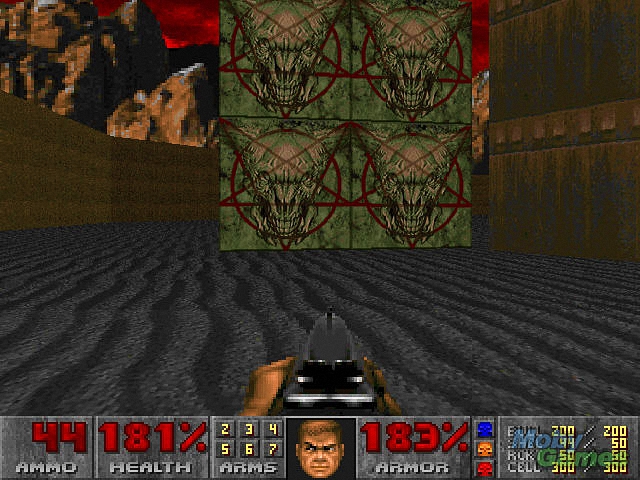
The combat works because every monster type fills a distinct role on the battlefield. You quickly learn to prioritize target lists based on immediate danger:
When GT Interactive brought The Ultimate DOOM MS-DOS game into software shops, it contained far extra content beyond its nine extra maps. John Carmack had specifically designed the engine to separate the core executable code from game assets stored in .WAD files. This clean separation allowed players to modify textures, replace sound effects, and write entirely custom level structures without touching the underlying engine program.
That architecture launched the modern PC modding scene. Players built map editors, compiled total conversions, and shared their creations across early internet bulletin boards. If a custom map felt entirely too brutal, typing the classic cheat code IDDQD granted total invincibility, while IDKFA instantly restocked all weapons, maximum armor, and every color-coded keycard needed to clear locked doors.
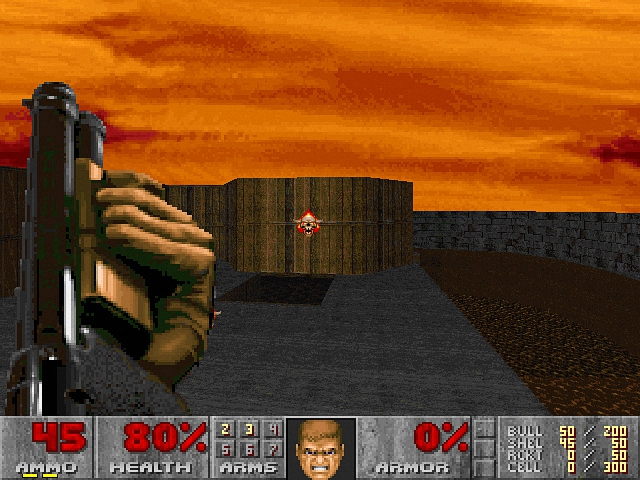
Even without custom modifications, the base campaign levels contain dozens of secret closets and hidden wall panels. Level designers hid green armor, soul spheres, and hazard suits behind subtle texture misalignments on room walls. Checking suspicious alcoves or searching for hidden switches on E1M1: Hangar quickly becomes a habit that carries through every level all the way to E3M8: Dis.
Despite its fast movement and clever map construction, parts of the design cause frustration for players today. The engine lacks vertical mouse aiming, meaning your shots automatically snap up or down toward enemies standing on high ledges above you. While this vertical auto-aim works well enough in narrow rooms, it feels jarring when trying to hit an Imp sniping you from a high ledge across a huge cavern.
Navigating the map layout can also devolve into tedious maze searching. Later levels in the Inferno episode rely heavily on teleporter pads, hidden switches with no visual feedback on what door they unlocked, and vast floors of damaging acid or lava. If you run out of radiation suits while hunting for a blue skull key in toxic sludge, you end up taking forced damage while wandering dark corridors to find where to go next according to a Wikipedia entry on early FPS navigation habits.
Episode 4 also suffers from uneven pacing across its nine missions. E4M1 and E4M2 hit you with extreme resource starvation and cruel trap placement, but the subsequent levels ease off on the pressure significantly. This front-loads the hardest encounters into the very beginning of the episode, creating a strange reverse difficulty curve that catches unprepared players off guard.
If you want to experience the fast pacing and tight shooter mechanics of this original PC release, you can play The Ultimate DOOM online without configuring MS-DOS memory settings or searching for vintage hardware. Nothing beats running through the classic Phobos base, holding down the strafe keys, and clearing hordes of hellspawn at top speed.
You can launch The Ultimate DOOM free in your browser directly on this page with zero installation needed. Jump into E1M1: Hangar, grab the shotgun from the secret outdoor courtyard, and feel how responsive the high-speed player movement remains. Try clearing the first episode on Hurt Me Plenty difficulty, then hop straight into Episode 4 to see if your circle-strafing skills can survive the bloodbath of Hell Beneath.
The Ultimate DOOM took the shareware classic that redefined PC action and brought it to store shelves with an unforgiving fourth episode built to crush experienced players.
When published by GT Interactive Software Corp. in 1995, this box set gave retail shoppers the full three-episode campaign alongside a brand new fourth chapter titled Thy Flesh Consumed. Developed by id Software, Inc. with level design contributions from John Romero, American McGee, Shawn Green, Tim Willits, and guest author John "Dr. Sleep" Anderson, this bonus episode bridges the story gap. It explains how hellspawn invaded Earth and murdered Doomguy's pet rabbit, Daisy, setting up the sequel.
If you expected a gentle warm-up, the opening levels of Episode 4 slap that notion away immediately. Levels like E4M1: Hell Beneath and E4M2: Perfect Hatred drop you into tight, lava-filled chambers with virtually no health or ammunition. You spawn facing shotgun-wielding zombies, Imps, and Barons of Hell with almost nowhere to run and a distinct lack of heavy firepower in the first few corridors.
While the original three episodes, Knee-Deep in the Dead, The Shores of Hell, and Inferno, balanced exploration with escalating fights, Episode 4 demands precision movement. Resource starvation forces you to bait enemies into infighting rather than blasting through every door. It is a steep difficulty jump, but surviving E4M2 without relying on quicksaves feels incredible in classic action games.
Under the hood, the release runs on executable version 1.9 of the id Tech 1 engine. The renderer uses 2.5D pseudo-3D raycasting, combined with flat 2D directional sprites for monsters and pick-up items. Even at its release, some players criticized the blocky texture filtering up close and complained that the monster growls sounded like stock sound effects. Yet the visual design works because the game moves at a blisteringly fast 35 frames per second that keeps your focus entirely on survival.
The weapons carry an unmistakable sense of punch and feedback, composed with audio design by Robert Prince. Broadening your arsenal from the standard pistol and fist to the double-barreled power of the pump-action shotgun, the continuous chatter of the chaingun, and the clearing spread of the plasma rifle gives you clear tactical choices for every threat level. When you pull the trigger on the BFG9000 inside a room packed with Pinky Demons, the momentary delay before the green plasma ball detonates creates genuine tension.
The combat works because every monster type fills a distinct role on the battlefield. You quickly learn to prioritize target lists based on immediate danger:
When GT Interactive brought The Ultimate DOOM MS-DOS game into software shops, it contained far extra content beyond its nine extra maps. John Carmack had specifically designed the engine to separate the core executable code from game assets stored in .WAD files. This clean separation allowed players to modify textures, replace sound effects, and write entirely custom level structures without touching the underlying engine program.
That architecture launched the modern PC modding scene. Players built map editors, compiled total conversions, and shared their creations across early internet bulletin boards. If a custom map felt entirely too brutal, typing the classic cheat code IDDQD granted total invincibility, while IDKFA instantly restocked all weapons, maximum armor, and every color-coded keycard needed to clear locked doors.
Even without custom modifications, the base campaign levels contain dozens of secret closets and hidden wall panels. Level designers hid green armor, soul spheres, and hazard suits behind subtle texture misalignments on room walls. Checking suspicious alcoves or searching for hidden switches on E1M1: Hangar quickly becomes a habit that carries through every level all the way to E3M8: Dis.
Despite its fast movement and clever map construction, parts of the design cause frustration for players today. The engine lacks vertical mouse aiming, meaning your shots automatically snap up or down toward enemies standing on high ledges above you. While this vertical auto-aim works well enough in narrow rooms, it feels jarring when trying to hit an Imp sniping you from a high ledge across a huge cavern.
Navigating the map layout can also devolve into tedious maze searching. Later levels in the Inferno episode rely heavily on teleporter pads, hidden switches with no visual feedback on what door they unlocked, and vast floors of damaging acid or lava. If you run out of radiation suits while hunting for a blue skull key in toxic sludge, you end up taking forced damage while wandering dark corridors to find where to go next according to a Wikipedia entry on early FPS navigation habits.
Episode 4 also suffers from uneven pacing across its nine missions. E4M1 and E4M2 hit you with extreme resource starvation and cruel trap placement, but the subsequent levels ease off on the pressure significantly. This front-loads the hardest encounters into the very beginning of the episode, creating a strange reverse difficulty curve that catches unprepared players off guard.
If you want to experience the fast pacing and tight shooter mechanics of this original PC release, you can play The Ultimate DOOM online without configuring MS-DOS memory settings or searching for vintage hardware. Nothing beats running through the classic Phobos base, holding down the strafe keys, and clearing hordes of hellspawn at top speed.
You can launch The Ultimate DOOM free in your browser directly on this page with zero installation needed. Jump into E1M1: Hangar, grab the shotgun from the secret outdoor courtyard, and feel how responsive the high-speed player movement remains. Try clearing the first episode on Hurt Me Plenty difficulty, then hop straight into Episode 4 to see if your circle-strafing skills can survive the bloodbath of Hell Beneath.
How The Ultimate DOOM is played — the keys the game listens to, grouped by what they do.
Highlighted keys are mapped — hover or tap one to see what it does.
Set up for modern play: W A S D move, the mouse turns (this engine has no mouse look, so moving the mouse forward walks), left click fires. The arrow keys still turn. Ctrl and Alt are left free because the browser uses them (Ctrl + W closes the tab).
The on-screen keyboard and gamepad mapping the browser player uses on a phone, a tablet or a controller, as opposed to the real keys above. $PRO members make their own in the player and share them here; anyone can pick one to play with.
Cheat codes, console commands and memory pokes for The Ultimate DOOM — each one verified and attributed.
Sign in to submitHow The Ultimate DOOM is played — the keys the game listens to, grouped by what they do.
Highlighted keys are mapped — hover or tap one to see what it does.
Set up for modern play: W A S D move, the mouse turns (this engine has no mouse look, so moving the mouse forward walks), left click fires. The arrow keys still turn. Ctrl and Alt are left free because the browser uses them (Ctrl + W closes the tab).
The on-screen keyboard and gamepad mapping the browser player uses on a phone, a tablet or a controller, as opposed to the real keys above. $PRO members make their own in the player and share them here; anyone can pick one to play with.
Cheat codes, console commands and memory pokes for The Ultimate DOOM — each one verified and attributed.
Sign in to submit