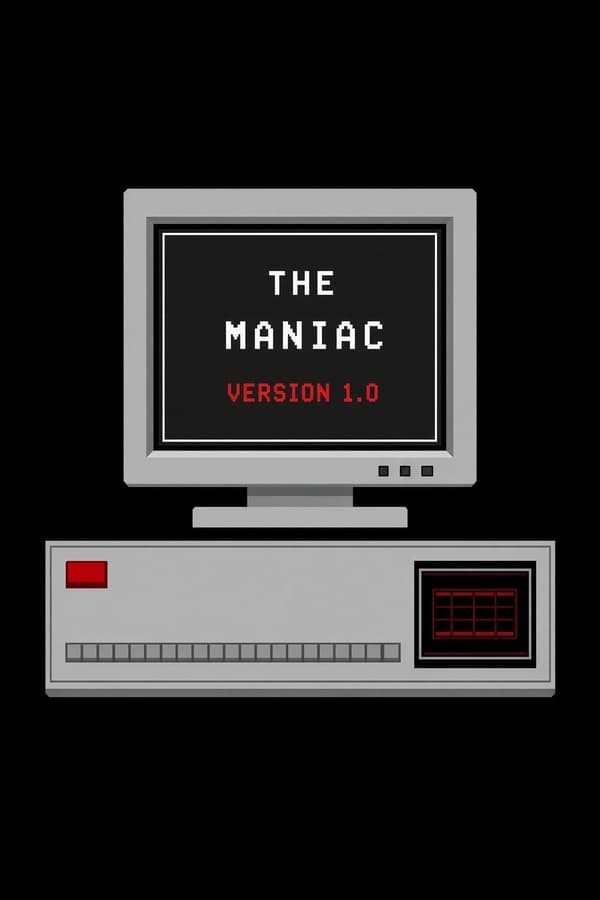
The Maniac
aka Maniac, The
Rate this game
The Maniac pitched itself on the box as a mouse-driven brainteaser that test groups loved, though almost nobody ended up playing it.
What the box promised for The Maniac
Back when publishers were trying to figure out how to make PC point-and-click interfaces work for puzzle strategy, promotional copy tended to run wild. The box for The Maniac claimed that market test groups composed of all ages fell in love with the design, going so far as to predict it would become the most discussed strategy game of the 1990s. That kind of bluster was common on store shelves, though history shows the title vanished almost immediately into total obscurity.
This MS-DOS game from 1991 relied entirely on the mouse while many players were still navigating menus with function keys and cursor arrows. Developer and publisher COM SPEC pushed the mouse-only angle hard, betting that hands-off keyboard control would make their tactical design more approachable to casual players.
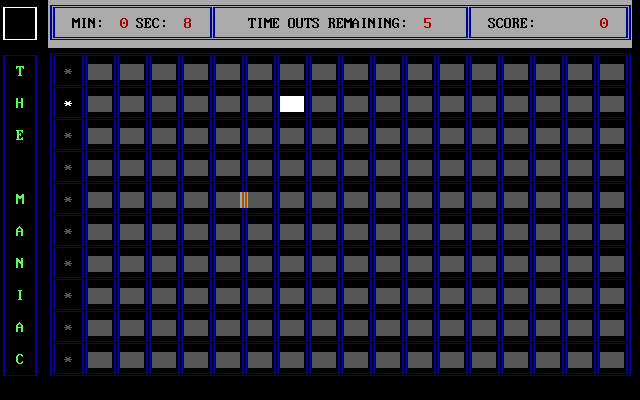
Mouse controls and tactical puzzle decisions
In practice, reliance on the mouse shapes how you interact with every screen. You are not managing high-speed units or twitch reflex actions; you are clicking through explicit interface options to set up moves, solve situational dilemmas, and manage your immediate space. Because the game relies on single clicks for unit management and tactical turns, a bad click or a miscalculated move instantly ruins your entire setup.
The core struggle in this style of MS-DOS strategy game comes down to interface friction and strict move limits. You spend your turns clicking targets, trying to predict how the logic of the board will react, and watching early mistakes snowball into an unwinnable state. When you make a wrong call, there is very little room to recover, meaning you will often restart a scenario from scratch just to fix a single early oversight.
Where The Maniac falls flat for modern players
The main problem with the overall design is its complete lack of feedback. Modern strategy titles signal why a plan failed or what rule you just broke, but here you simply suffer the consequences of a bad turn and have to infer the solution. That trial-and-error loop grinds the pace down quickly, turning what should be a thoughtful session into a process of elimination.
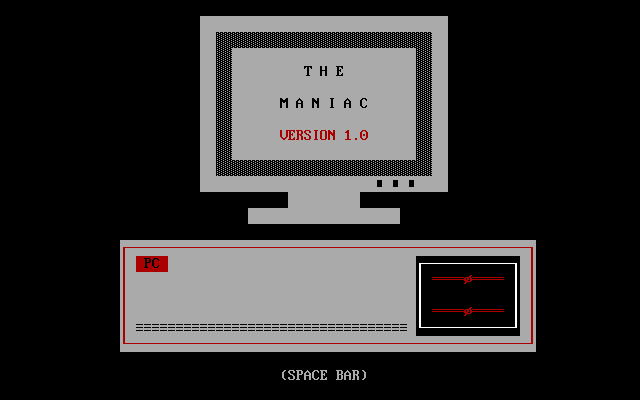
The production values reflect its budget origins. The sound design is minimal, offering little auditory feedback beyond basic system bleeps when clicking buttons, and the visuals are bare-bones functional. It lacks the polish or presentation flare that kept competing titles in computer gaming magazines of the era.
How to play The Maniac free in your browser
If you are curious about forgotten early-nineties shareware and budget releases, spend twenty minutes with it to see how developers approached mouse-only interfaces before standard conventions settled. It is a strange little piece of software history that illustrates just how hit-or-miss retail marketing claims were at the start of the decade.
You can play The Maniac online right here in your browser with zero setup required. Launching the game directly in your browser lets you experience the unforgiving click-based trial and error for yourself without hunting down vintage hardware or wrestling with disk images.
Players' controls
Touch and gamepad controls
The on-screen keyboard and gamepad mapping the browser player uses on a phone, a tablet or a controller, as opposed to the real keys above. $PRO members make their own in the player and share them here; anyone can pick one to play with.
Make your own touch controlsPRO
- 1Open the editorSign in below, then pick what to make. The game starts with the editor open over it.
- 2Place your keysAdd keys and drag them where your thumbs rest, or map a controller's buttons. Test plays the game with them; Save keeps them, and you play with them from then on.
- 3Share themShare them right after saving in the game, or name and share them here. Players vote, and the best become this game's controls for everyone.
Go PROSee how it worksSign in+20 XP for sharing · +50 XP if yours become the game's own
- The game's own controlsNone yet: played with a real keyboard only.In use
2 screenshots
From the archive
No reviews yet
Tell the community what you think of The Maniac. Reviews are public and tied to your username.
No archived manuals for The Maniac yet
No manuals archived for this title yet. Sign in to upload the first scan.
Cheat codes, console commands and memory pokes for The Maniac — each one verified and attributed.
Sign in to submitNo cheats yet for this title
Know a working cheat, poke or trainer? Add it with the button above. Moderators check every entry before it goes live.
No archived soundtrack for The Maniac yet
No soundtrack archived for this title yet. Sign in to upload the first rip.
No save states for The Maniac yet
No save states for this title yet. Sign in to share one.
Discussions
Sign in to post- Threads0
- Total posts0
- Online now6
Community · The Maniac
Who's contributing, and what's new
- Reviews0
- Threads0
- Uploadsapproved0
- Contributors0
Recent activity
Nothing here yet
Reviews, discussion threads and approved uploads appear here as members add them.