From the moment you command an Orc Peon to chop lumber and he grunts back in frustration, Warcraft II: Tides of Darkness grabs you with its fast resource management and sharp tactical choices across land, sea, and air.
Managing three resources across land, sea, and air
The core loop hits you immediately when a match starts. You begin with a single Town Hall or Great Hall, a handful of workers, and an expanse of fogged territory hiding gold mines and dense forests. Success comes down to how quickly you can establish a steady supply of gold and lumber while balancing farm construction so your population can grow without hitting a hard ceiling.
Unlike its predecessor, this sequel forces you off the shore by introducing oil as a mandatory third resource. To build a fleet of naval transports, destroyers, or massive battleships, your workers must construct oil platforms out on open water while tankers ferry crude back to shipyards. Controlling sea lanes becomes vital because transport ships can bypass land choke points and drop a group of Ogres or Paladins right behind your town defense line.
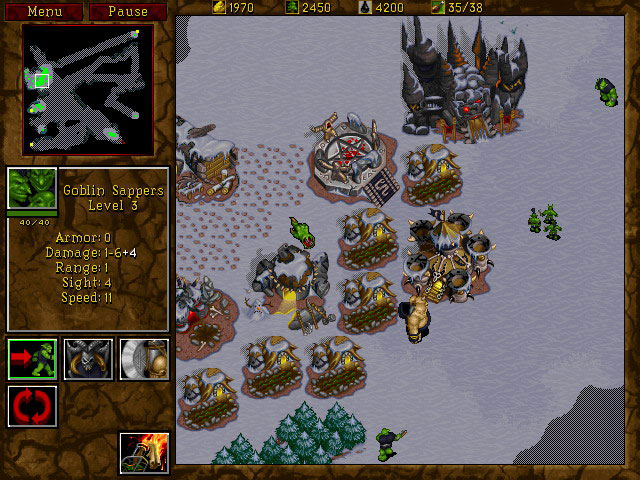
Aerial units add another layer of pressure. Gnomish flying machines clear away the map fog from safety, while Orcish dragons and Alliance gryphon riders bypass physical walls entirely. If you neglect anti-air units like archers, axethrowers, or coastal towers, a air strike can wipe out your mining economy in seconds.
Spells, siege engines, and the mechanics of Warcraft II: Tides of Darkness
While both factions mirror each other in economic function, their high-tier units branch off into distinct tactical roles. Human Mages can cast Fireball into crowded choke points or make strike forces invisible, while Paladins bring healing and holy vision to the front line. On the Horde side, Death Knights turn fallen soldiers into skeletons with Raise Dead or erode enemy fortifications using Death and Decay.
The technological leap requires careful planning with your town upgrades and research structures:
- Early tier focusing on basic infantry production, farm placement, and scouting map resource pockets.
- Mid tier expanding into naval yards, siege engines, and upgrades for ranged archers or spear throwers.
- Late tier unlocking high-level spellcasters, air transport, and devastating area-of-effect magic spells.
Winning a match in this classic strategy tactics title relies on micro-managing your spellcasters while maintaining steady economic output back at base. If you lose track of your resource workers during an offensive push, your war effort stalls completely while your enemy rebuilds.
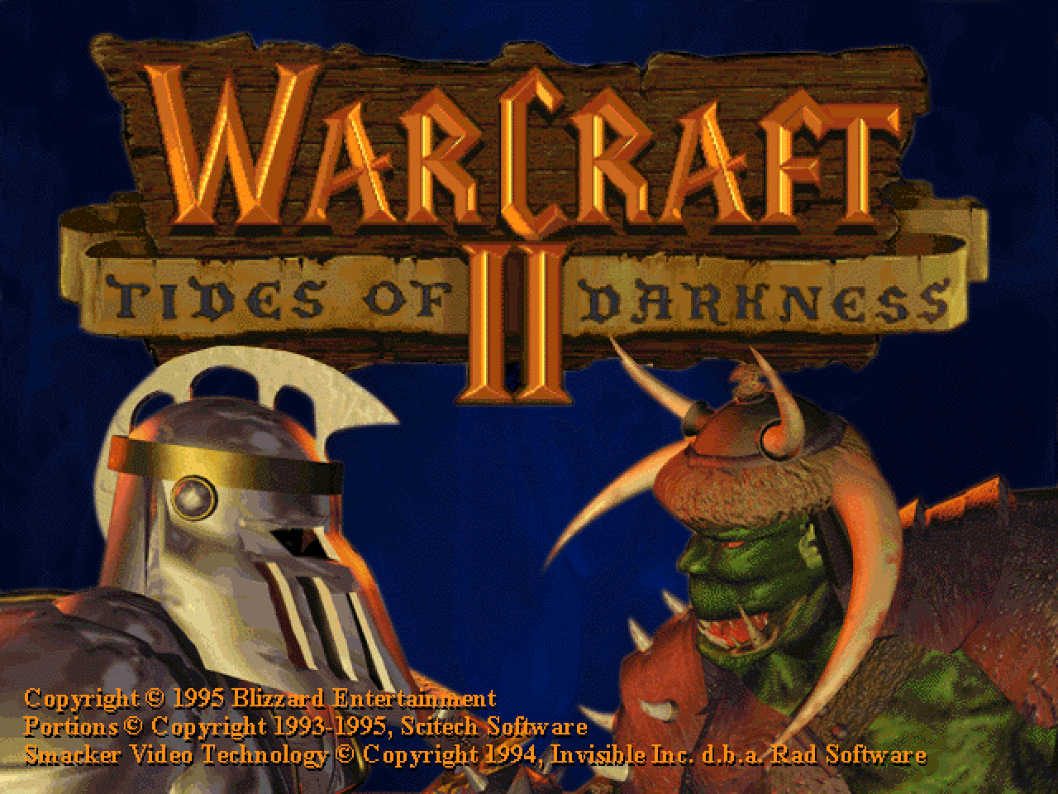
Modern scroll speeds and DOS memory management headaches
When Blizzard Entertainment released the title in late 1995, it set a high standard for SVGA visuals running at 640x480 resolution alongside a full Red Book audio soundtrack. However, pushing those graphics on high-end hardware of the era caused frequent headaches. Players running low-memory DOS setups were forced to tweak system configurations constantly to avoid out of memory crashes when loading high-resolution sound samples alongside heavy combat scenes.
Another bizarre quirk came with the included scenario editor. While the actual Warcraft II: Tides of Darkness MS-DOS game ran strictly in a DOS environment, the map editor required Windows 3.1 or higher to execute. Players who spent their time entirely in standard DOS had to boot into Windows just to design custom maps.
If you run the original DOS files on modern hardware today, the screen scroll speed presents a major issue. Mouse movement flicks the camera across the entire map instantaneously, and adjusting the in-game options slider often fails to slow down the view, making precise army movements tricky.
Multiplayer chaos and network spawning
Multiplayer matches support up to eight combatants over local networks or direct connections. A huge selling point back in 1995 was spawn installation: a single retail compact disc allowed four players to join the same network game without purchasing additional copies. This led to massive LAN sessions where friends fought over island maps and resource nodes.
Early multiplayer suffered from balance issues in unorganized custom matches. Players frequently dropped connection or surrendered within the first five minutes if their initial town layout proved suboptimal or if an early rush destroyed their first gold mine. When teams remained intact, late-game battles degenerated into glorious chaos as submarines hunted ironclads while dragons rained fire on coastal bases.
How to play Warcraft II: Tides of Darkness online right now
The core gameplay retains every bit of its punch today, thanks to crisp unit voice lines, responsive unit movement, and economic management that never lets you go on autopilot. The visual presentation holds up exceptionally well, though you will quickly learn to respect anti-air towers after your first encounter with incoming dragons.
You can jump directly into the battle and play Warcraft II: Tides of Darkness free in your browser right now with nothing to install. If you want to get off to a good start, remember to build extra farms early so your worker production never stops while you scout for that first offshore oil patch.