
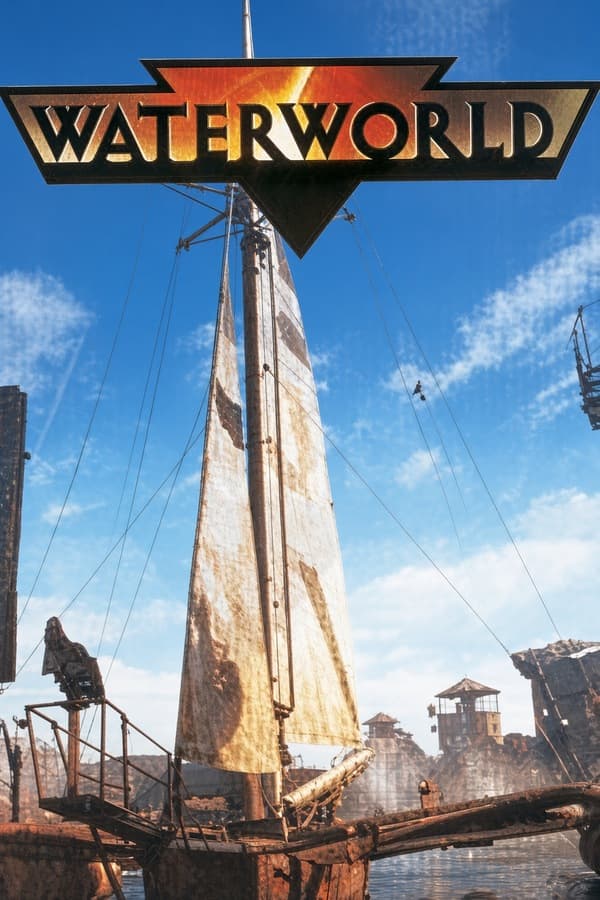

In Waterworld, you lead a band of ragged ocean survivors through 22 real-time tactics missions, scraping together weapons and precious fresh water while fending off raiding parties of Smokers.
Intelligent Games took on an unusual assignment when they started work on a squad tactics title for Interplay. The source film had already earned a reputation as a costly box office stumble two years prior, yet this 1997 MS-DOS game bypassed the standard side-scrolling platformer template used by Ocean's console adaptations to try something far more ambitious. Instead of controlling a single hero jumping across floating flotsam, you view the ocean from high above, directing groups of up to fourteen fighters across open water and makeshift atoll fortresses.
You play as the War Chief, tasked with keeping your small community alive against constant raids. That high top-down perspective shifts your entire focus from action reflex to resource management and positioning. You spend as much time scouring debris field grids for weapons and fresh water as you do directing crossbow fire into incoming Smoker speedboats.
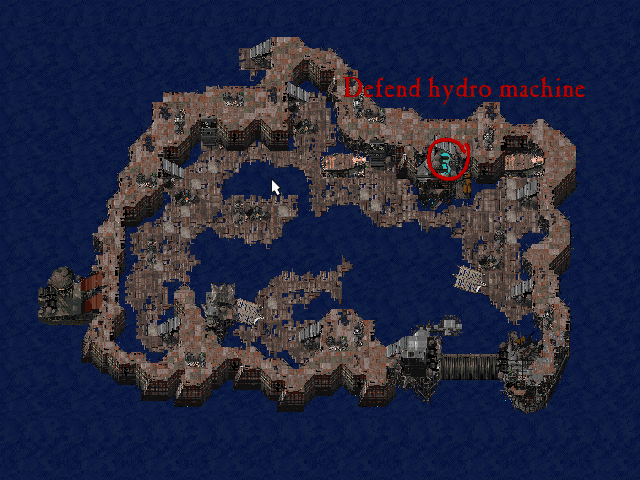
Each mission drops you into a map made of linked pontoon islands, scrap iron barricades, and patchworked gun emplacements. Squad sizes scale from tiny two-man reconnaissance teams up to full fourteen-person assault groups. Your inventory expands as you scavenge or capture enemy gear, eventually accessing up to 17 distinct weapons ranging from simple crossbows and harpoons to pitch-burning Molotov cocktails and heavy flamethrowers.
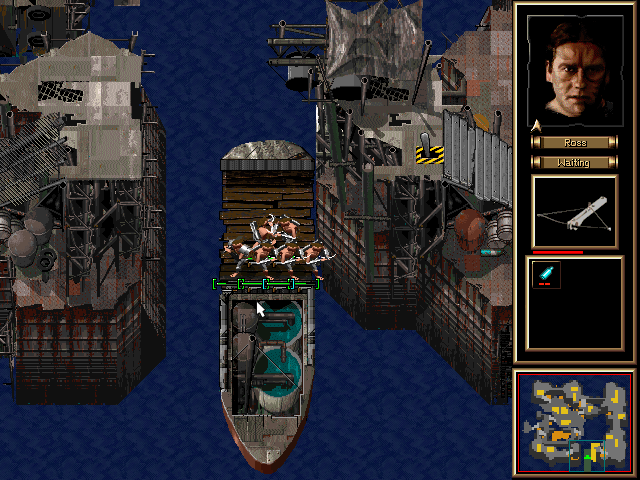
Resource management links every engagement together. Fresh water, known as hydro, acts as currency and survival stock alongside salvaged food, hardware, and tactical intelligence. Defensive scenarios demand that you fortify atoll walls and place marksmen before the first Smoker engines engine roar, while offensive runs require careful ammo allocation so your team does not run dry halfway through an enemy stronghold.
Playing through the campaign highlights why contemporary reviewers were so unsparing. GameSpot handed down a 4.5 out of 10 score upon release, while French magazine PC Jeux capped its rating at 47 percent. The central frustration stems directly from the interface and unit response times. Ordering units through tight wooden walkways often turns into a struggle against pathfinding bugs, with survivors wandering directly into incoming fire while trying to turn around.
The viewport presents its own hurdles. The camera angle frequently obscure unit positions behind high wooden palisades or heavy boat hulls, hiding incoming threats until your fighters are already taking damage. Objective descriptions across the campaign can be infuriatingly vague, leaving you to wander large, quiet stretches of water searching for a specific trigger point or overlooked item drop while enemy reinforcements continuously spawn.
What makes this title peculiar among 1997 tactical titles is its cutscene presentation. Rather than relying entirely on movie clips, the production spent approximately forty thousand dollars to shoot roughly 30 minutes of brand-new live-action FMV on a Hollywood soundstage. Actors wore original film costumes on constructed sets, bridging the gap between original footage and the game's narrative objectives.

Audio design provides some of the strongest atmosphere in the release. Sound designer Charles Deenen and EFX Sound Design integrated cues from the theatrical score alongside heavy mechanical engine thrums and splashing water. Listening to your sound card push ambient ocean soundscapes through a pair of desktop speakers creates a bleak backdrop that fits the post-apocalyptic setting well, even when unit pathfinding falters.
This real-time tactics project is a fascinatng fragment of late nineties PC design, showing how studio Intelligent Games attempted a serious squad simulation under an unlikely license. While stiff unit movement and awkward camera angles keep it from matching the top tier of its genre contemporaries, the detailed resource scavenge system and custom film production make it an intriguing curiousity for tactical fans. You can read more about its history on Wikipedia if you want to explore how movie adaptations were handled during the interactive CD-ROM era.
You can play Waterworld free in your browser right here without downloading extra software. When you start the first defense mission, group your crossbow fighters near the primary hydro storage containers immediately and keep your flamethrower team staged behind the main gate barricade before sending out scouts.
In Waterworld, you lead a band of ragged ocean survivors through 22 real-time tactics missions, scraping together weapons and precious fresh water while fending off raiding parties of Smokers.
Intelligent Games took on an unusual assignment when they started work on a squad tactics title for Interplay. The source film had already earned a reputation as a costly box office stumble two years prior, yet this 1997 MS-DOS game bypassed the standard side-scrolling platformer template used by Ocean's console adaptations to try something far more ambitious. Instead of controlling a single hero jumping across floating flotsam, you view the ocean from high above, directing groups of up to fourteen fighters across open water and makeshift atoll fortresses.
You play as the War Chief, tasked with keeping your small community alive against constant raids. That high top-down perspective shifts your entire focus from action reflex to resource management and positioning. You spend as much time scouring debris field grids for weapons and fresh water as you do directing crossbow fire into incoming Smoker speedboats.
Each mission drops you into a map made of linked pontoon islands, scrap iron barricades, and patchworked gun emplacements. Squad sizes scale from tiny two-man reconnaissance teams up to full fourteen-person assault groups. Your inventory expands as you scavenge or capture enemy gear, eventually accessing up to 17 distinct weapons ranging from simple crossbows and harpoons to pitch-burning Molotov cocktails and heavy flamethrowers.
Resource management links every engagement together. Fresh water, known as hydro, acts as currency and survival stock alongside salvaged food, hardware, and tactical intelligence. Defensive scenarios demand that you fortify atoll walls and place marksmen before the first Smoker engines engine roar, while offensive runs require careful ammo allocation so your team does not run dry halfway through an enemy stronghold.
Playing through the campaign highlights why contemporary reviewers were so unsparing. GameSpot handed down a 4.5 out of 10 score upon release, while French magazine PC Jeux capped its rating at 47 percent. The central frustration stems directly from the interface and unit response times. Ordering units through tight wooden walkways often turns into a struggle against pathfinding bugs, with survivors wandering directly into incoming fire while trying to turn around.
The viewport presents its own hurdles. The camera angle frequently obscure unit positions behind high wooden palisades or heavy boat hulls, hiding incoming threats until your fighters are already taking damage. Objective descriptions across the campaign can be infuriatingly vague, leaving you to wander large, quiet stretches of water searching for a specific trigger point or overlooked item drop while enemy reinforcements continuously spawn.
What makes this title peculiar among 1997 tactical titles is its cutscene presentation. Rather than relying entirely on movie clips, the production spent approximately forty thousand dollars to shoot roughly 30 minutes of brand-new live-action FMV on a Hollywood soundstage. Actors wore original film costumes on constructed sets, bridging the gap between original footage and the game's narrative objectives.
Audio design provides some of the strongest atmosphere in the release. Sound designer Charles Deenen and EFX Sound Design integrated cues from the theatrical score alongside heavy mechanical engine thrums and splashing water. Listening to your sound card push ambient ocean soundscapes through a pair of desktop speakers creates a bleak backdrop that fits the post-apocalyptic setting well, even when unit pathfinding falters.
This real-time tactics project is a fascinatng fragment of late nineties PC design, showing how studio Intelligent Games attempted a serious squad simulation under an unlikely license. While stiff unit movement and awkward camera angles keep it from matching the top tier of its genre contemporaries, the detailed resource scavenge system and custom film production make it an intriguing curiousity for tactical fans. You can read more about its history on Wikipedia if you want to explore how movie adaptations were handled during the interactive CD-ROM era.
You can play Waterworld free in your browser right here without downloading extra software. When you start the first defense mission, group your crossbow fighters near the primary hydro storage containers immediately and keep your flamethrower team staged behind the main gate barricade before sending out scouts.
aka Waterworld: The Quest for Dry Land · Waterworld: The Quest for Dryland
The on-screen keyboard and gamepad mapping the browser player uses on a phone, a tablet or a controller, as opposed to the real keys above. $PRO members make their own in the player and share them here; anyone can pick one to play with.
Cheat codes, console commands and memory pokes for Waterworld — each one verified and attributed.
Sign in to submitThe on-screen keyboard and gamepad mapping the browser player uses on a phone, a tablet or a controller, as opposed to the real keys above. $PRO members make their own in the player and share them here; anyone can pick one to play with.
Cheat codes, console commands and memory pokes for Waterworld — each one verified and attributed.
Sign in to submit