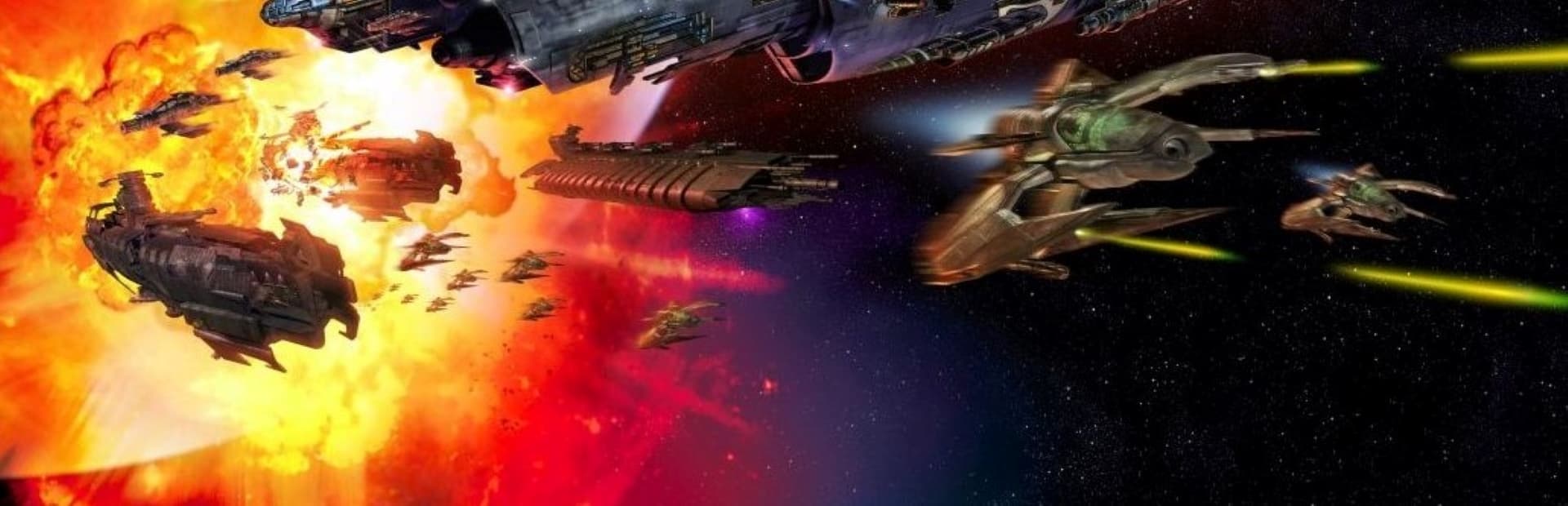
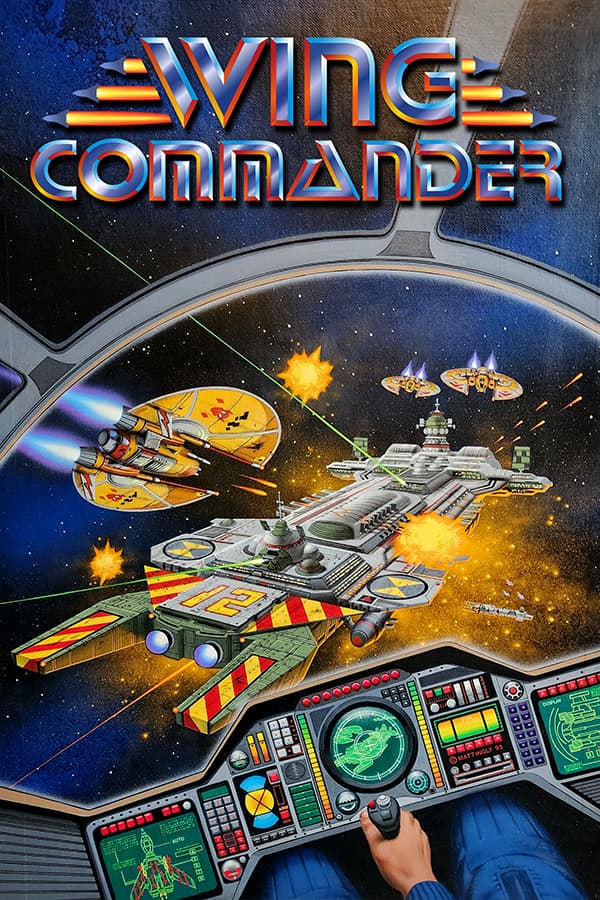

Stepping into the cockpit of the TCS Tiger's Claw in Wing Commander meant managing your afterburners, keeping your wingman alive, and taking on an empire of alien warlords across the Vega Sector.
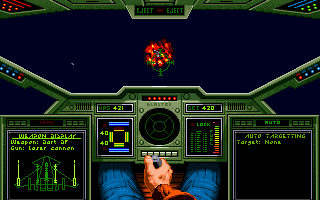
The moment you step off the flight deck, the blue-haired protagonist you control gets dropped straight into a cold cockpit behind a 320x200 VGA dashboard. You roll your fighter, manage heat and speed, and toggle between guns and target lock while scanning space for the Kilrathi, a warrior race of aggressive giant cats. Flight feels tight and arcade-like, prioritizing immediate directional control over genuine Newtonian momentum, which keeps the action fast even when multiple enemy starfighters swarm your path.
Every mission starts with a quick briefing before you shoot out of the launch tube alongside a shipmate. Combat in this simulation game demands total awareness of your instrument panel, balancing energy reserves for your afterburners against the power drawn by active shield generators and laser fire. Landing shots on an aggressive kilrathi fighter while avoiding continuous plasma hits requires careful throttle work and strategic missile deployments.
You can issue direct combat radio commands to your wingman, ordering them to form up, attack your target, or return to base when their hull takes critical damage. Between sorties, you return to the lounge on the carrier ship TCS Tiger's Claw to save your progress, talk with fellow pilots, check the kill board, and collect intelligence about upcoming patrol routes.
When director Chris Roberts and co-producer Warren Spector set out to build this 1990 release, real-time polygonal 3D rendering was far too slow for standard home computers. The engineering team at ORIGIN Systems, Inc. solved this by pre-rendering 3D ship models on high-end computer workstations, then rendering those images out as dozens of bitmap sprites from every conceivable angle. The custom 2.5D engine scaled and rotated these 2D sprites on the fly, creating the illusion of smooth, volumetric space flight at frame rates PC hardware could actually maintain.
That visual punch came at a steep cost for players at launch. The game demanded a high-end 286 or 386 PC equipped with a full 640KB of base RAM and a VGA monitor, pushing many desktop rigs of the era past their limits. If you had the hardware to run it, the game looked unlike anything else on store shelves, completely setting aside the flat vector lines of older space games for solid, shaded starfighter hulls.
The presentation extended right into the physical game box. Players received Claw Marks, a printed shipboard magazine packed with tactical articles, flight tips, and stats on all four playable Confederation fighters, alongside large physical wall blueprints detailing the internal layouts of the Hornet, Scimitar, Rapier, and Raptor.
The campaign structure avoids a straightforward linear sequence of levels, organizing its story along a dynamic branching mission tree instead. Winning a series of patrol objectives moves your squad into offensive systems, while losing critical engagements pushes the Tiger's Claw back into defensive retreats across the Vega Sector. This design gives real narrative weight to every dogfight, leading up to a final strike on the Kilrathi High Command base in the Venice system if you remain on the winning track.
Without mid-mission saves, late sorties turn into tense endurance tests. Taking a fatal hit from a Kilrathi ace five minutes before landing means flying the whole sequence over from the deck. Dense asteroid fields and frustrating escort runs bring out the worst of it, leaving lumbering cargo ships exposed to fast enemy strike groups.
Your wingmen can die permanently in combat, stripping away critical fire support for subsequent missions. Losing a trusted wingman during a tough campaign stretch alters both your tactical options in space and the mood of conversations back on the carrier deck.
The audio design created by George Alistair Sanger, known as "The Fat Man," alongside composer David Govett, relied heavily on mid-range audio hardware. Playing the game through a Sound Blaster card or a high-end Roland MT-32 module yielded a dynamic soundtrack that altered its tempo and key dynamically whenever enemy ships acquired a missile lock or breached your hull shields. Dragon Magazine famously awarded the game an unprecedented score of six out of five stars in issue #166, while Computer Gaming World named it its 1991 Game of the Year, praising its cinematic atmosphere and strong character narrative.
The game dominated reader popularity charts for nearly a year after launch, proving that deep atmospheric narrative and space flight could drive massive software sales. Though later flight simulators adopted true polygonal 3D models and realistic inertia, the arcade reactivity and character drama built into this formula still work.
The campaign still delivers genuine tension when an elite Kilrathi ace suddenly drops behind your tail fins while your shields drop into the red zone. The fast sprite scaling, energetic sound effects, and weight of every tactical decision during the Vega Sector campaign make it worth jumping into the pilot seat for an hour or two.
You can play Wing Commander online free in your browser right now with no setup needed. Fire up the engines, set your throttle, and see if you can hold off the Kilrathi fleet without losing your wingman on your very first patrol run.
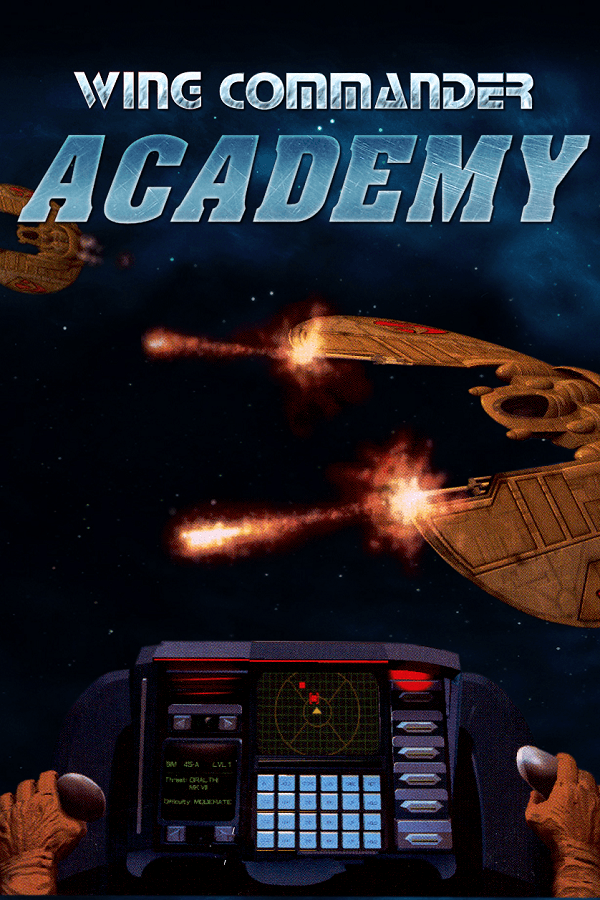
Stepping into the cockpit of the TCS Tiger's Claw in Wing Commander meant managing your afterburners, keeping your wingman alive, and taking on an empire of alien warlords across the Vega Sector.
The moment you step off the flight deck, the blue-haired protagonist you control gets dropped straight into a cold cockpit behind a 320x200 VGA dashboard. You roll your fighter, manage heat and speed, and toggle between guns and target lock while scanning space for the Kilrathi, a warrior race of aggressive giant cats. Flight feels tight and arcade-like, prioritizing immediate directional control over genuine Newtonian momentum, which keeps the action fast even when multiple enemy starfighters swarm your path.
Every mission starts with a quick briefing before you shoot out of the launch tube alongside a shipmate. Combat in this simulation game demands total awareness of your instrument panel, balancing energy reserves for your afterburners against the power drawn by active shield generators and laser fire. Landing shots on an aggressive kilrathi fighter while avoiding continuous plasma hits requires careful throttle work and strategic missile deployments.
You can issue direct combat radio commands to your wingman, ordering them to form up, attack your target, or return to base when their hull takes critical damage. Between sorties, you return to the lounge on the carrier ship TCS Tiger's Claw to save your progress, talk with fellow pilots, check the kill board, and collect intelligence about upcoming patrol routes.
When director Chris Roberts and co-producer Warren Spector set out to build this 1990 release, real-time polygonal 3D rendering was far too slow for standard home computers. The engineering team at ORIGIN Systems, Inc. solved this by pre-rendering 3D ship models on high-end computer workstations, then rendering those images out as dozens of bitmap sprites from every conceivable angle. The custom 2.5D engine scaled and rotated these 2D sprites on the fly, creating the illusion of smooth, volumetric space flight at frame rates PC hardware could actually maintain.
That visual punch came at a steep cost for players at launch. The game demanded a high-end 286 or 386 PC equipped with a full 640KB of base RAM and a VGA monitor, pushing many desktop rigs of the era past their limits. If you had the hardware to run it, the game looked unlike anything else on store shelves, completely setting aside the flat vector lines of older space games for solid, shaded starfighter hulls.
The presentation extended right into the physical game box. Players received Claw Marks, a printed shipboard magazine packed with tactical articles, flight tips, and stats on all four playable Confederation fighters, alongside large physical wall blueprints detailing the internal layouts of the Hornet, Scimitar, Rapier, and Raptor.
The campaign structure avoids a straightforward linear sequence of levels, organizing its story along a dynamic branching mission tree instead. Winning a series of patrol objectives moves your squad into offensive systems, while losing critical engagements pushes the Tiger's Claw back into defensive retreats across the Vega Sector. This design gives real narrative weight to every dogfight, leading up to a final strike on the Kilrathi High Command base in the Venice system if you remain on the winning track.
Without mid-mission saves, late sorties turn into tense endurance tests. Taking a fatal hit from a Kilrathi ace five minutes before landing means flying the whole sequence over from the deck. Dense asteroid fields and frustrating escort runs bring out the worst of it, leaving lumbering cargo ships exposed to fast enemy strike groups.
Your wingmen can die permanently in combat, stripping away critical fire support for subsequent missions. Losing a trusted wingman during a tough campaign stretch alters both your tactical options in space and the mood of conversations back on the carrier deck.
The audio design created by George Alistair Sanger, known as "The Fat Man," alongside composer David Govett, relied heavily on mid-range audio hardware. Playing the game through a Sound Blaster card or a high-end Roland MT-32 module yielded a dynamic soundtrack that altered its tempo and key dynamically whenever enemy ships acquired a missile lock or breached your hull shields. Dragon Magazine famously awarded the game an unprecedented score of six out of five stars in issue #166, while Computer Gaming World named it its 1991 Game of the Year, praising its cinematic atmosphere and strong character narrative.
The game dominated reader popularity charts for nearly a year after launch, proving that deep atmospheric narrative and space flight could drive massive software sales. Though later flight simulators adopted true polygonal 3D models and realistic inertia, the arcade reactivity and character drama built into this formula still work.
The campaign still delivers genuine tension when an elite Kilrathi ace suddenly drops behind your tail fins while your shields drop into the red zone. The fast sprite scaling, energetic sound effects, and weight of every tactical decision during the Vega Sector campaign make it worth jumping into the pilot seat for an hour or two.
You can play Wing Commander online free in your browser right now with no setup needed. Fire up the engines, set your throttle, and see if you can hold off the Kilrathi fleet without losing your wingman on your very first patrol run.
aka Squadron · WC1 · Wing Commander: Der 3D-Raumkampf-Simulator · Wing Commander: The 3-D Space Combat Simulator · Wingleader
How Wing Commander is played — the keys the game listens to, grouped by what they do.
Highlighted keys are mapped — hover or tap one to see what it does.
Joystick users must calibrate using the installation routine if drift occurs. Mouse and joystick controls are supported alongside keyboard inputs.
The on-screen keyboard and gamepad mapping the browser player uses on a phone, a tablet or a controller, as opposed to the real keys above. $PRO members make their own in the player and share them here; anyone can pick one to play with.
Cheat codes, console commands and memory pokes for Wing Commander — each one verified and attributed.
Sign in to submitHow Wing Commander is played — the keys the game listens to, grouped by what they do.
Highlighted keys are mapped — hover or tap one to see what it does.
Joystick users must calibrate using the installation routine if drift occurs. Mouse and joystick controls are supported alongside keyboard inputs.
The on-screen keyboard and gamepad mapping the browser player uses on a phone, a tablet or a controller, as opposed to the real keys above. $PRO members make their own in the player and share them here; anyone can pick one to play with.
Cheat codes, console commands and memory pokes for Wing Commander — each one verified and attributed.
Sign in to submit
Wing Commander1990 · this page