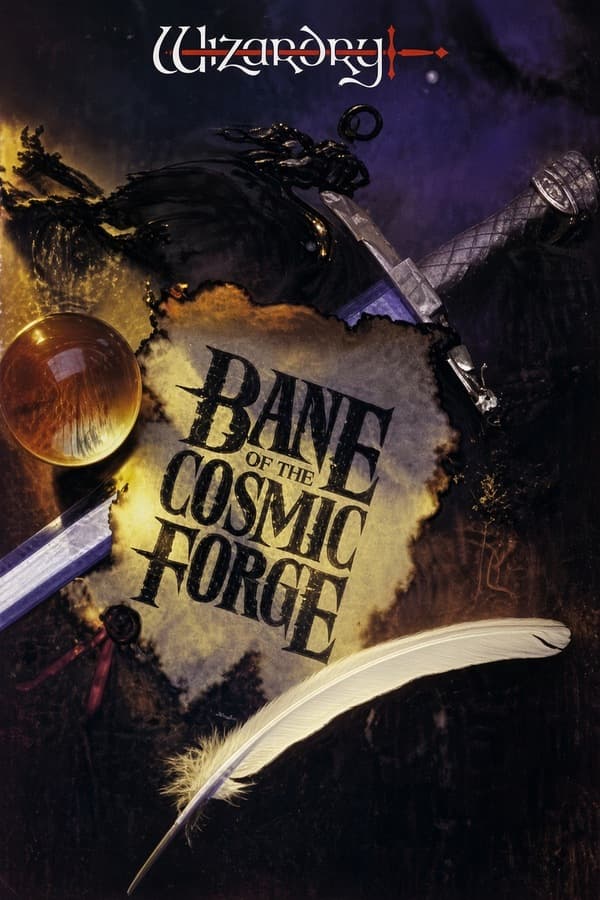
aka Wizardry 6: Bane of the Cosmic Forge · Wizardry: Bane of the Cosmic Forge · Wizardry VI: Kindan no Mahitsu · ウィザードリィⅥ 禁断の魔筆 · 巫術6:創世神筆之詛咒
In Wizardry VI: Bane of the Cosmic Forge, your main goal is simple on paper: assemble six heroes, enter a ruined castle, and hunt for a quill pen that turns whatever you write into reality.
When you start Sir-tech Software, Inc.'s Wizardry VI: Bane of the Cosmic Forge, you spend your first half-hour facing character creation menus long before you set foot in the castle. The game forces you to plan carefully, offering 11 races and 14 distinct professions, from basic fighters to ninja and samurai. Once your party is built and you walk past the entrance, the first-person view locks in, and you are left to explore the dark halls of the Ruined Castle without hand-holding.
Designer David W. Bradley completely overhauled the series for this 1990 release, throwing out the old Pascal engine used in previous chapters for a mouse-driven, 16-color EGA interface. Instead of static text boxes describing every movement, you click on screen to turn or open doors, watching step-by-step animations play out. Sound effects hit your ears directly through standard PC speaker hardware, outputting digitized audio without requiring an expensive sound card setup.
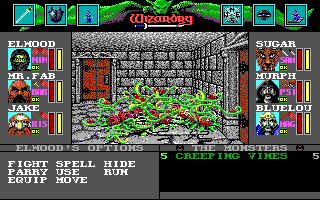
The core mechanics offer staggering variety, featuring six spell schools and over 400 total items to loot or buy. Combat moves in turn-based rounds where you select specific attack types based on what weapon a character holds, choosing between a quick thrust or a heavy bash. You end up managing party position constantly, pushing armored tanks to the front while keep squishier spellcasters in the back to survive encounters with giant bats or aggressive rats.
That depth brings notable friction, especially in combat messaging. If three of your characters target a single enemy and the first hit kills it, the remaining two waste their turns striking a dead target instead of re-targeting live foes. Early reviews in Amiga Format noted that this text display felt far too basic and restrictive when measured against real-time dungeon crawlers like Eye of the Beholder II. Furthermore, the early game carries a steep learning curve that frequently forces new players to start over and rebuild their party composition from scratch.
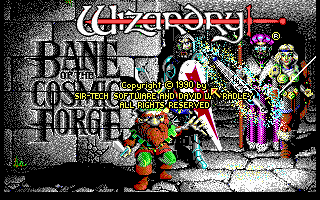
As your party pushes beyond the initial castle floor into Dwarf Mines, Giant Mountain, and across the River Styx, the dungeon designs mix traditional high-fantasy threats with bizarre mythological mashups. You will run into the Amazulu warrior women, trade wits with Lewis Carroll's Caterpillar from Alice in Wonderland, and dodge sirens before reaching King Bane, who has turned into a full-fledged vampire alongside the evil wizard Xorphitus.
Navigating these zones requires dealing with tricky riddles that players still debate online, alongside several infamous programming quirks. Key mechanical issues include:
While later re-releases patched out the manual check, allowing players to press Enter past the prompt, the abrupt ending of the story still leaves several narrative threads hanging unresolved, serving primarily to kick off a multi-game arc.
Despite its early 16-color visual limitations and occasional interface headaches, this 1990 title laid down the blueprint for complex multi-class RPG games throughout the decade. The party progression, item variety, and skill development easily outshine the clunky dead-target combat text once you get a solid group past the early levels.
You can play Wizardry VI: Bane of the Cosmic Forge free in your browser right now, enjoying the full classic MS-DOS version with zero setup needed. Just build a balanced six-person party, remember to put your heavy melee fighters in the front slots, and see how far you make it through the castle gate.

In Wizardry VI: Bane of the Cosmic Forge, your main goal is simple on paper: assemble six heroes, enter a ruined castle, and hunt for a quill pen that turns whatever you write into reality.
When you start Sir-tech Software, Inc.'s Wizardry VI: Bane of the Cosmic Forge, you spend your first half-hour facing character creation menus long before you set foot in the castle. The game forces you to plan carefully, offering 11 races and 14 distinct professions, from basic fighters to ninja and samurai. Once your party is built and you walk past the entrance, the first-person view locks in, and you are left to explore the dark halls of the Ruined Castle without hand-holding.
Designer David W. Bradley completely overhauled the series for this 1990 release, throwing out the old Pascal engine used in previous chapters for a mouse-driven, 16-color EGA interface. Instead of static text boxes describing every movement, you click on screen to turn or open doors, watching step-by-step animations play out. Sound effects hit your ears directly through standard PC speaker hardware, outputting digitized audio without requiring an expensive sound card setup.

The core mechanics offer staggering variety, featuring six spell schools and over 400 total items to loot or buy. Combat moves in turn-based rounds where you select specific attack types based on what weapon a character holds, choosing between a quick thrust or a heavy bash. You end up managing party position constantly, pushing armored tanks to the front while keep squishier spellcasters in the back to survive encounters with giant bats or aggressive rats.
That depth brings notable friction, especially in combat messaging. If three of your characters target a single enemy and the first hit kills it, the remaining two waste their turns striking a dead target instead of re-targeting live foes. Early reviews in Amiga Format noted that this text display felt far too basic and restrictive when measured against real-time dungeon crawlers like Eye of the Beholder II. Furthermore, the early game carries a steep learning curve that frequently forces new players to start over and rebuild their party composition from scratch.

As your party pushes beyond the initial castle floor into Dwarf Mines, Giant Mountain, and across the River Styx, the dungeon designs mix traditional high-fantasy threats with bizarre mythological mashups. You will run into the Amazulu warrior women, trade wits with Lewis Carroll's Caterpillar from Alice in Wonderland, and dodge sirens before reaching King Bane, who has turned into a full-fledged vampire alongside the evil wizard Xorphitus.
Navigating these zones requires dealing with tricky riddles that players still debate online, alongside several infamous programming quirks. Key mechanical issues include:
While later re-releases patched out the manual check, allowing players to press Enter past the prompt, the abrupt ending of the story still leaves several narrative threads hanging unresolved, serving primarily to kick off a multi-game arc.
Despite its early 16-color visual limitations and occasional interface headaches, this 1990 title laid down the blueprint for complex multi-class RPG games throughout the decade. The party progression, item variety, and skill development easily outshine the clunky dead-target combat text once you get a solid group past the early levels.
You can play Wizardry VI: Bane of the Cosmic Forge free in your browser right now, enjoying the full classic MS-DOS version with zero setup needed. Just build a balanced six-person party, remember to put your heavy melee fighters in the front slots, and see how far you make it through the castle gate.
How Wizardry VI: Bane of the Cosmic Forge is played — the keys the game listens to, grouped by what they do.
Highlighted keys are mapped — hover or tap one to see what it does.
Game configuration can be adjusted via winstall.exe to toggle keyboard or mouse control.
The on-screen keyboard and gamepad mapping the browser player uses on a phone, a tablet or a controller, as opposed to the real keys above. $PRO members make their own in the player and share them here; anyone can pick one to play with.
Cheat codes, console commands and memory pokes for Wizardry VI: Bane of the Cosmic Forge — each one verified and attributed.
Sign in to submitHow Wizardry VI: Bane of the Cosmic Forge is played — the keys the game listens to, grouped by what they do.
Highlighted keys are mapped — hover or tap one to see what it does.
Game configuration can be adjusted via winstall.exe to toggle keyboard or mouse control.
The on-screen keyboard and gamepad mapping the browser player uses on a phone, a tablet or a controller, as opposed to the real keys above. $PRO members make their own in the player and share them here; anyone can pick one to play with.
Cheat codes, console commands and memory pokes for Wizardry VI: Bane of the Cosmic Forge — each one verified and attributed.
Sign in to submit
Wizardry VI: Bane of the Cosmic Forge#6 · 1990 · this page