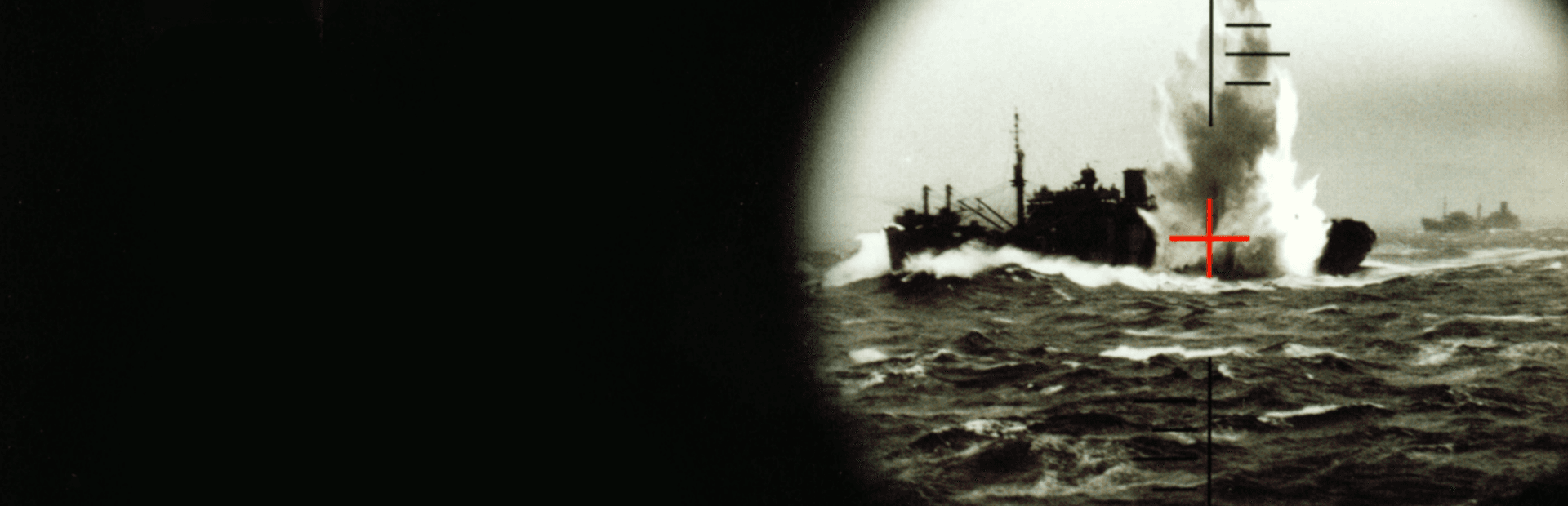
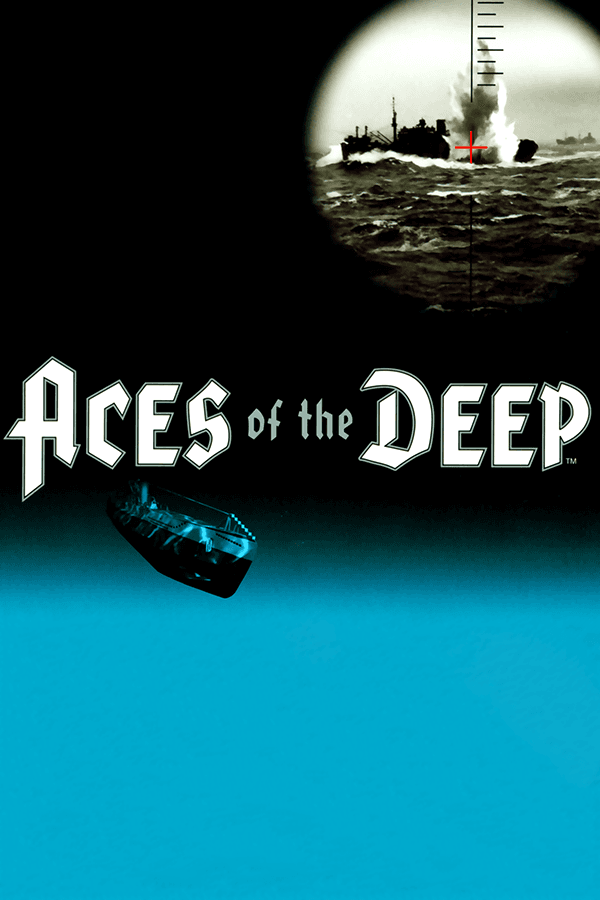

When Aces of the Deep launched in 1994, it forced players to trade the high-speed aerial dogfights of previous simulators for the cold, claustrophobic tension of underwater commerce raiding.
Dynamix spent the early nineties establishing themselves as premier developers of air combat simulations through titles like Red Baron, Aces of the Pacific, and Aces Over Europe. Moving from skies to sub-surface naval warfare required solving an entirely different set of technical problems. Instead of fast banking turns and vertical loops, a submarine simulator demands patience, slow positioning, and acoustic tracking. Producer Mike Jones alongside designers Langdon Beeck, Dennis A. Kilgore, and Alan Roberts designed an engine built to handle dynamic ocean physics, rendering true 3D ocean wave graphics that pitched both your submarine hull and target ships on rolling surface water.
When you boot up this 1994 release, the atmospheric audio immediately sets the tone. Whether rendered via Sound Blaster, Pro Audio Spectrum, Roland MT-32, or General MIDI, the hum of electric motors and distant depth charge explosions dominate the soundscape. The original boxed release backed up this digital atmosphere with physical depth, including a 96-page historical manual, a Kriegsmarine War Grid map for real-world navigation, and digitized video interviews with former U-boat commanders on the CD-ROM edition.
You play as a Kriegsmarine commander hunting Allied shipping across World War II, operating three primary U-boat types across multiple production variations. Gameplay splits between custom single scenarios, historical captain recreations, and an open-ended career mode starting in any chosen year. In career mode, visiting the Nightclub station lets you read war news, hear scuttlebutt, and track your ranking on the tonnage leaderboard. Out on patrol, you navigate between internal stations like the captain's log, engine room fuel prompts, and torpedo management bays, though tactical control centers on the map and periscope views.
Attacking a target requires careful calculation rather than quick reflexes. Lining up an oil tanker, troop ship, or merchant vessel means calculating target heading, speed, and sea state before firing torpedoes or surfacing to use deck guns. The real danger begins when escort ships spot your wake. Corvettes, frigates, destroyers, cruisers, and aircraft carriers aggressively comb the water, using ASDIC active sonar to track your position underwater. As review outlets noted at launch, hearing those sharp ASDIC pings reverberate off your metallic hull will raise the hair on the back of your neck.
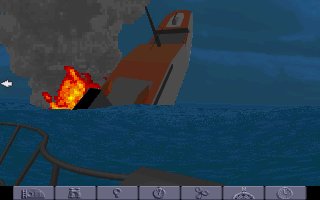
During the opening years of a career campaign, hunting feels manageable as unescorted targets appear frequently and early escort tactic options remain primitive. However, Dynamix, Inc. programmed a harsh historical curve into campaign progression. By mid-1942, Allied radar, extended air patrols, and aggressive escort tactics turn the tables entirely, turning hunter into prey across every major shipping lane.
Taking structural damage deep underwater exposes the unforgiving mechanical model. If depth charges breach your pressure hull down at maximum depths around 700 feet, water pressure rapidly crushes damaged compartments, leading to near-instant catastrophic mortality. Survival during these later months depends on turning off non-essential systems, running silent, and praying depth charges detonate far enough away to spare your battery bank and depth gauges.

For all its tactical strengths as a detailed simulation game, long campaign runs reveal definite pacing problems on the strategic map. Traveling to assigned grid sectors involves traversing vast expanses of open water. While the map features time compression up to 4096x, the engine frequently forces compression back down to roughly 150x whenever contacts appear or terrain checks trigger, resulting in lengthy stretches of real-time transit where very little happens.
Additionally, despite the expansive global grid, individual patrol sectors lack distinct tactical variety, making a convoy intercept in one sector feel mechanically identical to one four grids away. Contemporary magazines praised the title heavily, with Computer Gaming World awarding 5 out of 5 stars, French outlet Gen4 granting an 80% score, and Polish magazine Secret Service scoring it 88% while declaring it the top submarine simulator available. Yet even period reviewers pointed out that navigating empty sea lanes tested a player's endurance.
The tactical tension inside an active engagement holds up well despite campaign map slowdowns. Managing battery life, depth controls, water ingress, and torpedo angles under heavy depth-charge fire gets your palms sweating. That engine led directly to a 1995 Windows re-release titled Command: Aces of the Deep, but the DOS original established the core mechanics for naval warfare sims published by Sierra On-Line, Inc. in the mid-nineties.
You can play Aces of the Deep online free in your browser right now, with no installation needed. For an immediate sense of what makes this classic Aces of the Deep MS-DOS game so effective, fire up a single mission task group raid, dive to periscope depth under heavy weather, and try lining up a blind bow-tube salvo while destroyers circle overhead.
When Aces of the Deep launched in 1994, it forced players to trade the high-speed aerial dogfights of previous simulators for the cold, claustrophobic tension of underwater commerce raiding.
Dynamix spent the early nineties establishing themselves as premier developers of air combat simulations through titles like Red Baron, Aces of the Pacific, and Aces Over Europe. Moving from skies to sub-surface naval warfare required solving an entirely different set of technical problems. Instead of fast banking turns and vertical loops, a submarine simulator demands patience, slow positioning, and acoustic tracking. Producer Mike Jones alongside designers Langdon Beeck, Dennis A. Kilgore, and Alan Roberts designed an engine built to handle dynamic ocean physics, rendering true 3D ocean wave graphics that pitched both your submarine hull and target ships on rolling surface water.
When you boot up this 1994 release, the atmospheric audio immediately sets the tone. Whether rendered via Sound Blaster, Pro Audio Spectrum, Roland MT-32, or General MIDI, the hum of electric motors and distant depth charge explosions dominate the soundscape. The original boxed release backed up this digital atmosphere with physical depth, including a 96-page historical manual, a Kriegsmarine War Grid map for real-world navigation, and digitized video interviews with former U-boat commanders on the CD-ROM edition.
You play as a Kriegsmarine commander hunting Allied shipping across World War II, operating three primary U-boat types across multiple production variations. Gameplay splits between custom single scenarios, historical captain recreations, and an open-ended career mode starting in any chosen year. In career mode, visiting the Nightclub station lets you read war news, hear scuttlebutt, and track your ranking on the tonnage leaderboard. Out on patrol, you navigate between internal stations like the captain's log, engine room fuel prompts, and torpedo management bays, though tactical control centers on the map and periscope views.
Attacking a target requires careful calculation rather than quick reflexes. Lining up an oil tanker, troop ship, or merchant vessel means calculating target heading, speed, and sea state before firing torpedoes or surfacing to use deck guns. The real danger begins when escort ships spot your wake. Corvettes, frigates, destroyers, cruisers, and aircraft carriers aggressively comb the water, using ASDIC active sonar to track your position underwater. As review outlets noted at launch, hearing those sharp ASDIC pings reverberate off your metallic hull will raise the hair on the back of your neck.
During the opening years of a career campaign, hunting feels manageable as unescorted targets appear frequently and early escort tactic options remain primitive. However, Dynamix, Inc. programmed a harsh historical curve into campaign progression. By mid-1942, Allied radar, extended air patrols, and aggressive escort tactics turn the tables entirely, turning hunter into prey across every major shipping lane.
Taking structural damage deep underwater exposes the unforgiving mechanical model. If depth charges breach your pressure hull down at maximum depths around 700 feet, water pressure rapidly crushes damaged compartments, leading to near-instant catastrophic mortality. Survival during these later months depends on turning off non-essential systems, running silent, and praying depth charges detonate far enough away to spare your battery bank and depth gauges.
For all its tactical strengths as a detailed simulation game, long campaign runs reveal definite pacing problems on the strategic map. Traveling to assigned grid sectors involves traversing vast expanses of open water. While the map features time compression up to 4096x, the engine frequently forces compression back down to roughly 150x whenever contacts appear or terrain checks trigger, resulting in lengthy stretches of real-time transit where very little happens.
Additionally, despite the expansive global grid, individual patrol sectors lack distinct tactical variety, making a convoy intercept in one sector feel mechanically identical to one four grids away. Contemporary magazines praised the title heavily, with Computer Gaming World awarding 5 out of 5 stars, French outlet Gen4 granting an 80% score, and Polish magazine Secret Service scoring it 88% while declaring it the top submarine simulator available. Yet even period reviewers pointed out that navigating empty sea lanes tested a player's endurance.
The tactical tension inside an active engagement holds up well despite campaign map slowdowns. Managing battery life, depth controls, water ingress, and torpedo angles under heavy depth-charge fire gets your palms sweating. That engine led directly to a 1995 Windows re-release titled Command: Aces of the Deep, but the DOS original established the core mechanics for naval warfare sims published by Sierra On-Line, Inc. in the mid-nineties.
You can play Aces of the Deep online free in your browser right now, with no installation needed. For an immediate sense of what makes this classic Aces of the Deep MS-DOS game so effective, fire up a single mission task group raid, dive to periscope depth under heavy weather, and try lining up a blind bow-tube salvo while destroyers circle overhead.
How Aces of the Deep is played — the keys the game listens to, grouped by what they do.
Highlighted keys are mapped — hover or tap one to see what it does.
The on-screen keyboard and gamepad mapping the browser player uses on a phone, a tablet or a controller, as opposed to the real keys above. $PRO members make their own in the player and share them here; anyone can pick one to play with.
Cheat codes, console commands and memory pokes for Aces of the Deep — each one verified and attributed.
Sign in to submitaka Command: Aces of the Deep · Asse der Tiefe
How Aces of the Deep is played — the keys the game listens to, grouped by what they do.
Highlighted keys are mapped — hover or tap one to see what it does.
The on-screen keyboard and gamepad mapping the browser player uses on a phone, a tablet or a controller, as opposed to the real keys above. $PRO members make their own in the player and share them here; anyone can pick one to play with.
Cheat codes, console commands and memory pokes for Aces of the Deep — each one verified and attributed.
Sign in to submit