Crash Bandicoot is somehow running natively on the Nintendo 64
A homebrew developer known as old pirate has managed to get Sony's 1996 PlayStation mascot running natively on Nintendo 64 hardware.
 Andy
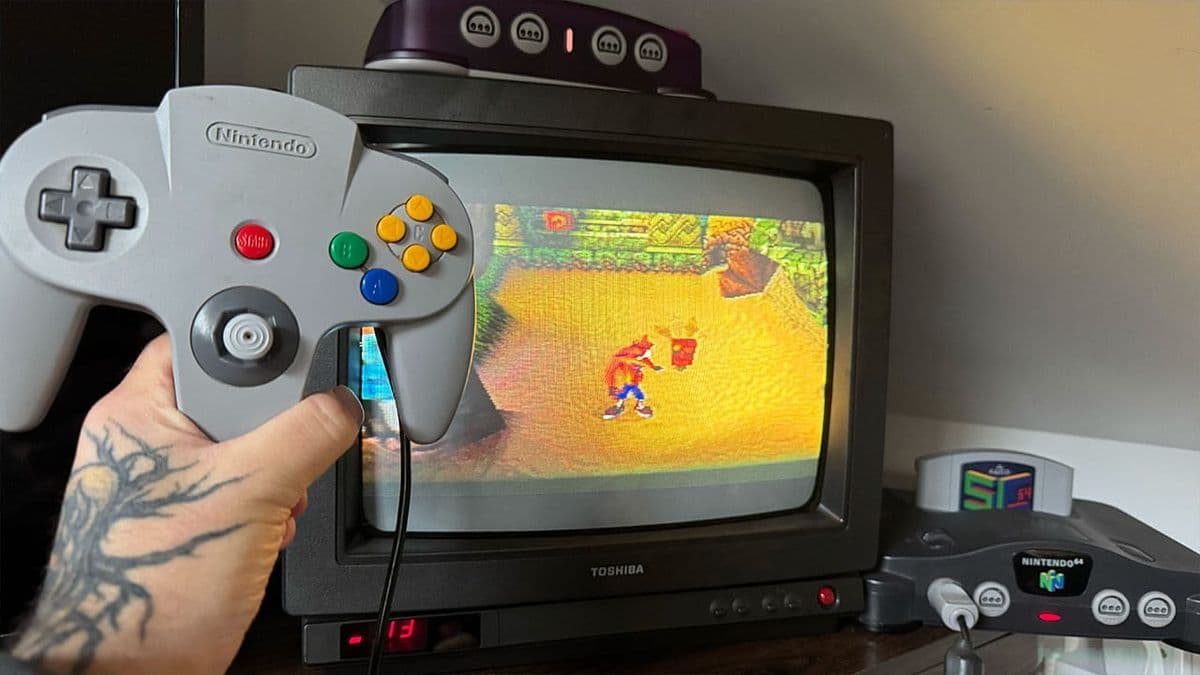
Seeing a crash bandicoot n64 test build running on Nintendo hardware feels like finding an AdLib card inside a Mac. A homebrew developer has brought Sony's mascot onto rival silicon, delivering a playable stage straight to a console that fought it for market share.
A crash bandicoot n64 test build brings Sony software to rival hardware
In 1996, suggesting that Crash Bandicoot could run on a rival console would get you laughed out of the lunchroom. Sony built its early platforming strategy around the orange marsupial to fight off Super Mario 64. They kept the two consoles as strictly divided as Sound Blaster and AdLib sound cards in an old beige PC tower.
Times have changed. As spotted on Retro Dodo after the project appeared on Recollect64, developer old_pirate built a proof of concept for Nintendo hardware. You can now boot a test build directly on a real Nintendo 64 using a flash cartridge.
The build isn't a full commercial release. Right now, you only get a single playable level converted from the original Crash Bandicoot. It also lacks audio entirely.
Navigating the stage requires you to supply your own vocal jumping noises and hum the soundtrack yourself. It feels a bit like trying to launch a DOS game in 1994 without getting your DMA and IRQ settings right first. Silence aside, seeing the character step onto green polygon grass on Nintendo hardware feels surreal.
Running PlayStation geometry on 64-bit silicon takes serious work
Translating PlayStation code to run on N64 silicon takes real effort. The two systems handled texture memory and geometry handling in completely different ways. Sony relied on double-buffered VRAM and custom fixed-function chips. Nintendo relied on a unified memory setup and explicit microcode routines.
Because of those architecture gaps, early platformers rarely shared internal code logic. The original Sony release crammed tight stages into limited System RAM by streaming assets constantly off the optical disc. Cartridges handle data reads faster, but they lack that cheap CD storage volume.
The port requires a 4MB Expansion Pak to run properly on real hardware. That extra memory gives the console enough headroom to store stage textures, collision meshes, and character animations at once. Without that expansion pack slotted into the deck, the engine simply runs out of room.
Silent island runs and what crash bandicoot n64 gameplay feels like on a cartridge
Despite the silence, the single stage is completely playable from start to finish. The frame rate drops slightly in busier spots, but both branching paths through the level function without crashing the machine. You jump over hazards, smash wooden crates, and turn corners cleanly.
Testing the build shows how closely it mirrors the original movement physics. Controlling the character on a N64 thumbstick feels surprisingly responsive despite the slight frame drops. If you ever wondered how a crash bandicoot n64 retro game would feel under an analog stick, this answers the question.
Here is what you need to run this build on your own hardware:
- A real console or an FPGA system like the Analogue 3D.
- A flash cartridge such as the SC64 to load the file.
- An installed 4MB Expansion Pak expansion module.
- The free test file downloaded directly from Itch.io.
The hardware limits, memory demands, and where this port goes next
I enjoy watching community coders push old console chips into doing things they were never designed to do. It takes a subtle kind of madness to force Sony software onto a Nintendo cartridge. The technical trick is fun to see in motion, even with performance dips.
Whether this project expands into a complete game remains open. Converting an entire disc load of stages, bonus rounds, and boss fights takes hundreds of megabytes. Fitting that onto standard cartridge sizes requires heavy texture compression or audio stripping.
Adding audio will be the next real hurdle for the developer. Synthesizing sound effects and playback routines for N64 audio hardware takes extra coding time. For now, the silent demo runs as a working cross-console experiment.
If you own an SC64 cartridge, an Analogue 3D, or an original console, you can download the test file for free right now on Itch.io. Grab your flash cart, plug in your controller, and try walking through the jungle yourself.
Read next
Source: Retro Dodo