Tomb Raider marks 30 years of triangular polygons and tomb raiding
Lara Croft turned 30 this week, and while the 1996 original required you to reconfigure sound card IRQ settings just to hear a gunshot, you can now buy the modern reboot trilogy on a portable console in seconds.
 Andy
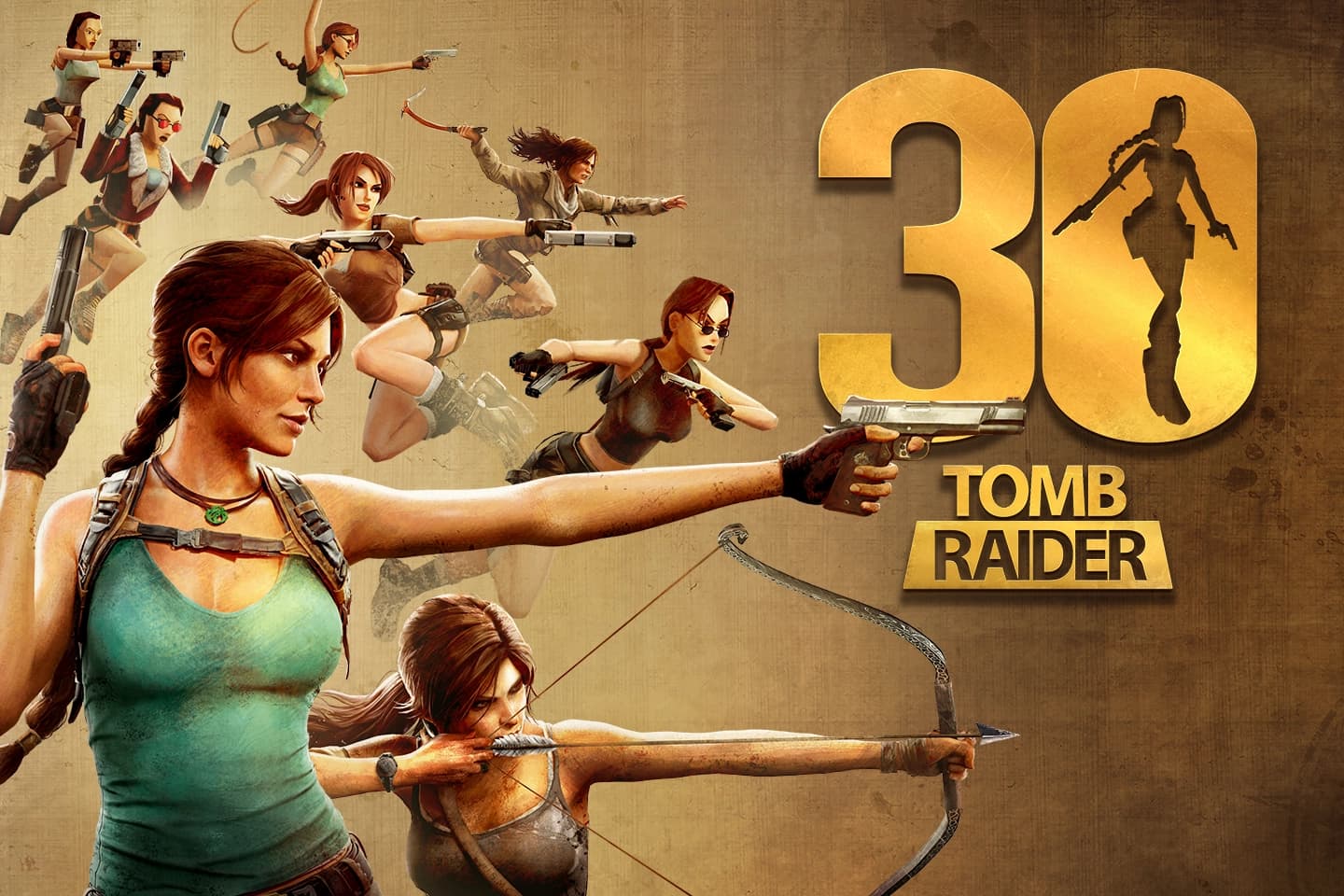
Examining tomb raider history starts with a polygon count so low that Lara Croft's elbows looked like cardboard boxes. Thirty years later, she is jumping across handheld screens without a 3dfx expansion card in sight.
Thirty years ago, the original Tomb Raider launched on MS-DOS and the Sega Saturn. It forced players to navigate tank controls and software rendering long before hardware acceleration saved us from slide-show frame rates. Aspyr and Crystal Dynamics recently released a celebration trailer to mark three decades of the series. The video highlights both classic entries and recent remasters.
Software rendering made early tomb raider history feel like work
Playing the 1996 original on a beige desktop required patience. If you ran it without a dedicated 3dfx Voodoo card, your CPU handled every single pixel. Frame rates regularly dropped into single digits whenever a bear charged across the room. You had to memorize key bindings and tap arrow keys to align jumps on a rigid block grid.
That rigid math gave the puzzles their weight. A ledge was a real physical object on a grid. It sat exactly two tiles away, requiring a running start and a frame-perfect grab. Miss the timing, and Lara fell to the bottom of a pit with a dry crunch. You spent minutes recalculating your approach before trying again.
Looking back at tomb raider history retro game design reveals how much friction we used to tolerate. Config.sys tweaks and sound card IRQ conflicts were standard setup rituals. Modern players miss out on that specific pain, but the trade-off brought smoother animation and reliable controls. The original game demanded precision because the engine couldn't hide its structural skeleton behind motion blur.
Switch 2 gets the survivor trilogy in shadow drops
The anniversary arrives alongside a sudden game drop on Nintendo's newest handheld. Shadow of the Tomb Raider: Definitive Edition arrived on the Nintendo Switch 2 on October 22, 2026. It costs $39.99, though a 10 percent launch discount keeps the price lower through November 4. The release packs in the complete package without locking extra content behind separate fees.
The package contains these specific features on cart or digital download:
- The full single-player base game
- All seven DLC challenge tombs
- Bonus side missions and narrative paths
- Additional weapons and outfit cosmetics
- Two-player online cooperative modes
If you want the full reboot era on one device, the Tomb Raider: Definitive Survivor Trilogy bundle also arrived on Switch 2 for $69.99. It shares the same temporary 10 percent launch discount through November 4. That collection bundles Tomb Raider: Definitive Edition, Rise of the Tomb Raider: 20 Year Celebration, and Shadow of the Tomb Raider into a single purchase.
Studying tomb raider history gameplay shows how far environmental traversal has moved from that 1996 grid. Lara now scrambles up mud walls, swings from ropes, and slips through jungle foliage with fluid animation. Running seven extra challenge tombs on a portable screen with clean lighting is a trade I can live with. I still miss the sharp grid steps of the 1996 engine, but handheld performance has finally caught up to our expectations.
Physical releases in tomb raider history still lag behind digital store pages
Digital buyers can play the entire reboot trilogy immediately, but physical collectors face fewer options right now. Limited Run Games opened pre-orders for a physical edition of Rise of the Tomb Raider on Switch 2 in October 2026. Cartridge enthusiasts must wait for further announcements regarding the rest of the series.
Boxed copies for Shadow of the Tomb Raider or the complete trilogy bundle remain unannounced. That leaves a gap for players who prefer shelf cases over digital licenses. Limited print runs mean physical buyers often pay full price months after digital discounts end. It's an annoying reality of modern distribution, especially for games that take up significant storage space on internal drives.
Unreal Engine 5 handles the modern remake while we wait
Looking ahead, Crystal Dynamics, Flying Wild Hog, and Amazon Game Studios are building Tomb Raider: Legacy of Atlantis. The project uses Unreal Engine 5 to reimagine the 1996 original for PC, PlayStation 5, Xbox Series X/S, and Switch 2. It aims to update ancient traps and subterranean ruins for modern hardware.
Rebuilding a 1996 level layout in a modern engine carries real risks. High-resolution geometry can obscure the clear paths that made early puzzle solving work. Dynamic lighting looks impressive, but dark corners sometimes hide essential levers from the player. The developers must balance current visual fidelity against the strict clarity of the original layout.
If you want to prepare for the new release, fire up the classic entries on modern hardware or grab the Switch 2 trilogy before the launch discount ends on November 4, 2026. Playing through those ancient corridors shows how much raw geometry defined the early games. Grab a controller, turn off the smoothing filters, and see how many times you fall into a spike pit before hitting the right ledge.
Source: Nintendo Life