Anti-gravity racer Zero brings SNES-style speed to the Game Boy Color
Developer Shane McCafferty has dragged SNES-style Mode 7 scaling onto Nintendo's 8-bit handheld for ZERO, a fast anti-gravity racer out now on the Game Boy Color.
 Andy
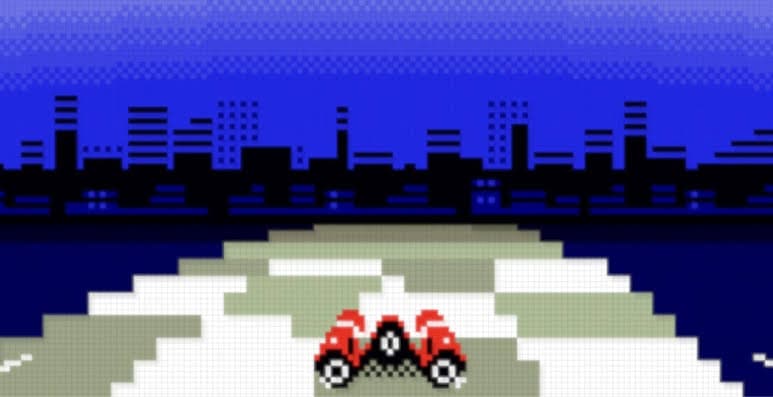
If you want 16-bit futuristic racing on an 8-bit handheld, the zero game boy color release drops you into high-speed hovercraft cups where boosting eats your life support. Developer Shane McCafferty built nine courses out of clever raster tricks, giving portable players a lean alternative to Nintendo's home console racers.
Zero game boy color conversion turns six rows of pixels into a racer
Nintendo built its famous 16-bit racer around hardware line-shifting that flattened track graphics into an interactive floor. The Game Boy Color has no such custom graphics chip, so developer Shane McCafferty used an old demoscene technique instead. He stitched each road segment together out of six horizontal rows, manipulating scanlines to trick your eyes into seeing a pseudo-3D track stretch toward the horizon.
As Time Extension spotted, publisher Thalamus Digital Publishing Ltd. released the digital GBC file on itch.io for £1.99. Watching that low-resolution horizon sweep smoothly across a screen that originally spent its life drawing sluggish puzzle blocks feels like a minor miracle. The engine holds its frame rate even when opponent craft crowd the screen.
Shane McCafferty keeps making 8-bit chips do impossible math
McCafferty is no stranger to bullying low-power handhelds into doing heavy lifting. He previously built a Game Boy Color shooter called Wolf, alongside portable ports of OutRun, Nitro, and Hero GP. He knows exactly how much hardware register abuse an 8-bit CPU can tolerate before it locks up.
If you ever spent an afternoon tweaking CONFIG.SYS just to free up 590KB of conventional memory for a sim, watching someone squeeze nine tracks of high-speed hovercraft racing out of an 8-bit Z80 clone feels like familiar wizardry. I spent half my youth fighting HIMEM.SYS line by line just to make sound cards talk to IRQ 7. Seeing modern coders apply that same obsessive optimization to handheld ROM files brings back good memories of the shareware era.
Energy management turns every lap in zero game boy color into a razor-thin gamble
The structure keeps things tight. You get nine courses split across Bronze, Silver, and Gold cups, unlocking each tier by winning the previous set. That structure keeps your attention focused on surviving one turn at a time.
The mechanical core relies on strict resource tracking. Here is how your ship survives each heat:
- Races start you with 11 power units on your display.
- Punching the boost button eats three power units immediately.
- Running dry causes a sudden crash and burn sequence.
- Overtaking a rival vehicle restores one single power unit to your bank.
Boost buttons burn through reserves before you reach the first turn
That mechanical hook turns every overtake into a tight gamble over whether to conserve energy or dump your reserve into the back straight. If you hit the boost key early to grab an early lead, you leave yourself zero safety margin for errors. Miscalculate a turn, brush a wall, or miss a pass, and your racer detonates into pixels.
The zero game boy color gameplay relies entirely on this constant risk assessment. You spend every straightaway checking opponent positions while calculating whether you have enough juice to make the next overtake payload pay off. That tight resource loop turns what could have been a basic graphics test into a real racing game.
When studying any zero game boy color retro game, you quickly notice how hardware limits force sharp game design decisions. McCafferty cuts away bloat, leaving only raw speed, sharp steering, and aggressive energy management. I find that focus far more satisfying than modern racing games that hide boring mechanics behind heavy visual filters.
Grab the rom file and load your flash cartridge
It's cheap, clever, and works on original handheld hardware, flash carts, or your emulator of choice. You can grab the digital file right now on itch.io for £1.99. Whether you load it onto a real Game Boy Color or run it through a desktop emulator, it delivers fast, punishing laps in seconds.
I put the ROM file on a flash cartridge, popped in two fresh AA batteries, and blew through the Bronze Cup during lunch. The download takes up virtually no disk space, installs in seconds, and costs less than a cold espresso. Grab your preferred handheld, fire up the Gold Cup, and don't forget to watch your fuel gauge.
Source: Time Extension