Someone got Doom running on a thirty dollar digital multimeter
Artur Bieniek managed to compile Doom onto a $30 FNIRSI DMC-100 digital multimeter, complete with full-color graphics and controls mapped to a DJI drone remote.
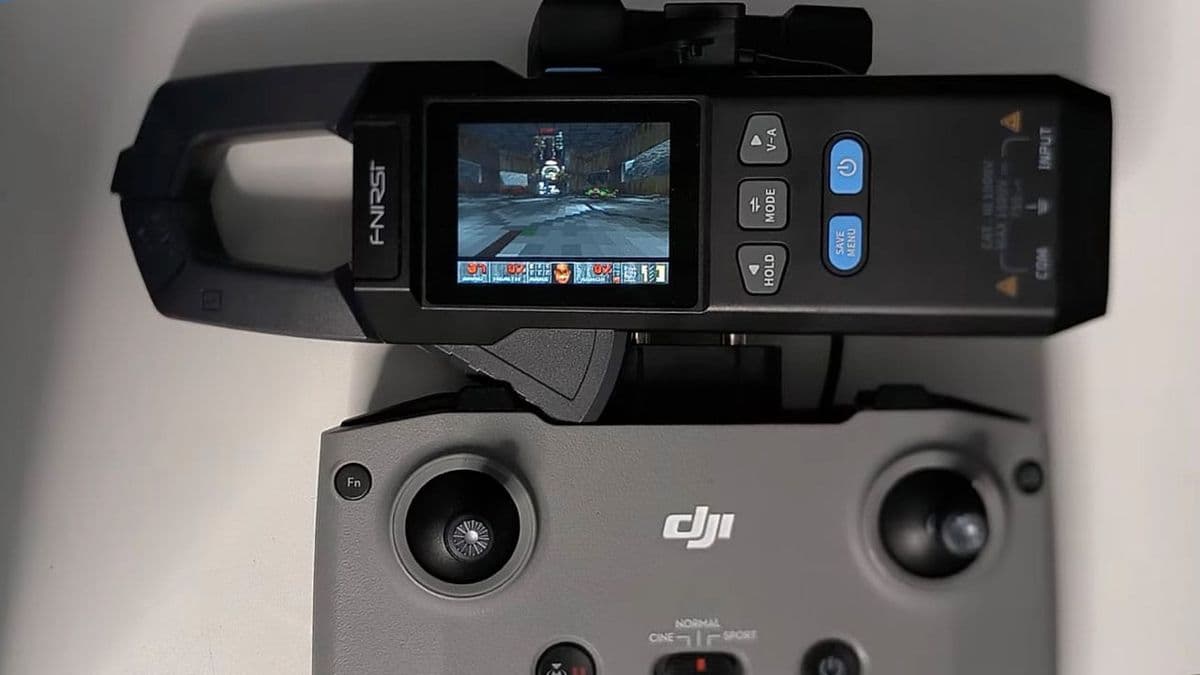
Artur Bieniek built a working doom multimeter port on a thirty dollar FNIRSI DMC-100 clamp meter, turning a garage tool into a portable gaming display. Instead of probing automotive fuses or checking line voltage, the device renders 3D corridors using levels from Freedoom.
Hardware hackers are running games on shop tools
Cheap diagnostic equipment used to sit in a toolbox until a car battery died or an outlet stopped working. Today, those same tools contain processors faster than the beige desktop towers of thirty years ago.
This project targets the FNIRSI DMC-100, a benchtop clamp meter that costs thirty dollars online. Developer Artur Bieniek replaced the utility firmware with real software execution, proving that modern microcontrollers in cheap hardware can handle classic 3D rendering.
Squeezing the doom multimeter port into 32 kilobytes
The Artery AT32F415 microcontroller inside the meter runs at 150 MHz, which is plenty of clock speed for first person shooters. The real bottleneck is memory, because the chip only includes 32 KB of RAM.
To put that in perspective, MS-DOS required 640 KB of conventional RAM just to run standard PC titles without crashing. I remember juggling autoexec.bat and config.sys files for hours just to free up ten extra kilobytes for boot disks. That makes 32 KB feel like a total tightrope act.
Bieniek relied on the doomgeneric port to get around these hardware limits. The project loads Episode 1 of Freedoom: Phase 1, bringing over levels E1M1 through E1M9 without cutting core features.
The device displays color graphics on its 320x240 screen and drives audio through the internal speaker. Here is what fits onto the chip:
- Nine complete levels spanning Episode 1 of Freedoom
- Working title screens and option menus
- Intermission screens and end-of-level summaries
- Four save slots to store your progress
Compiling code for a device meant for checking current
Getting the project onto the meter requires a Linux workstation configured with GNU Make, Python 3, and a modern toolchain. You can't simply double click an executable and start playing.
Building the binary requires a compiler newer than LLVM Clang 19. If you attempt to compile the source code with Clang 19 or older, the output expands beyond the internal flash memory limits and bleeds straight into the settings page.
When the binary overflows, the software fails to boot correctly. Tuning compiler flags for tiny chips brings back the same headache as setting hardware jumpers on an ISA sound card.
What the doom multimeter port gameplay actually offers
Since the physical meter only features basic buttons for electrical testing, normal controls are impossible on the tool itself. Player input comes from an external peripheral connected directly to the USB-C port.
Bieniek mapped movement and actions to a DJI RC-N1 drone controller. Holding a heavy dual-stick remote while staring at a pocket meter displaying green slime pits feels intentionally weird.
The doom multimeter port gameplay holds up surprisingly well despite the strange hardware pairing. The doom multimeter port retro game setup proves that embedded microcontrollers can handle full frame rates when code is properly optimized.
Build your own setup or stick to DOS
If you want to try this yourself, Bieniek posted the complete source code, test scripts, and build instructions on GitHub. You need thirty dollars for the meter, a drone controller, and a Linux environment capable of compiling the binary.
For those who prefer playing on a proper keyboard, our browser emulator lets you jump straight into classic PC software without flashing microcontroller firmware. You can play Doom or load up alternate shareware episodes right now without fighting compiler flags.
If you have thirty dollars and want to measure hellfire instead of electrical resistance, grabbing the source code is a great weekend project. Otherwise, keep your multimeter in the garage and play in your browser.
Source: Retro Dodo