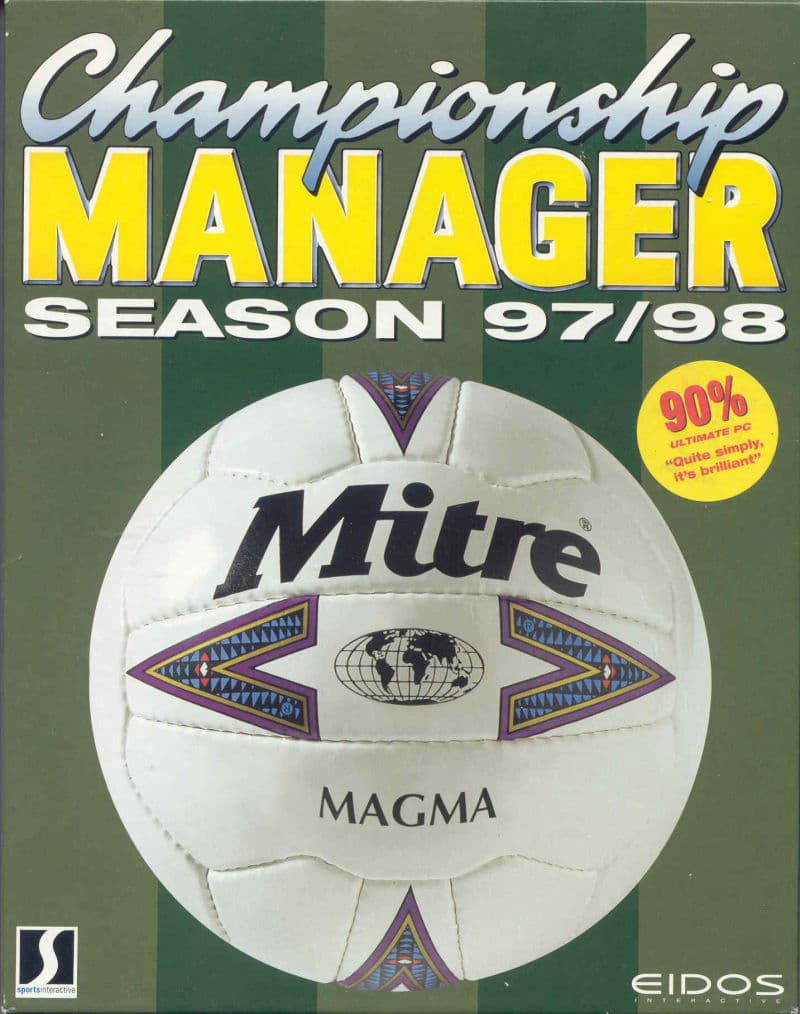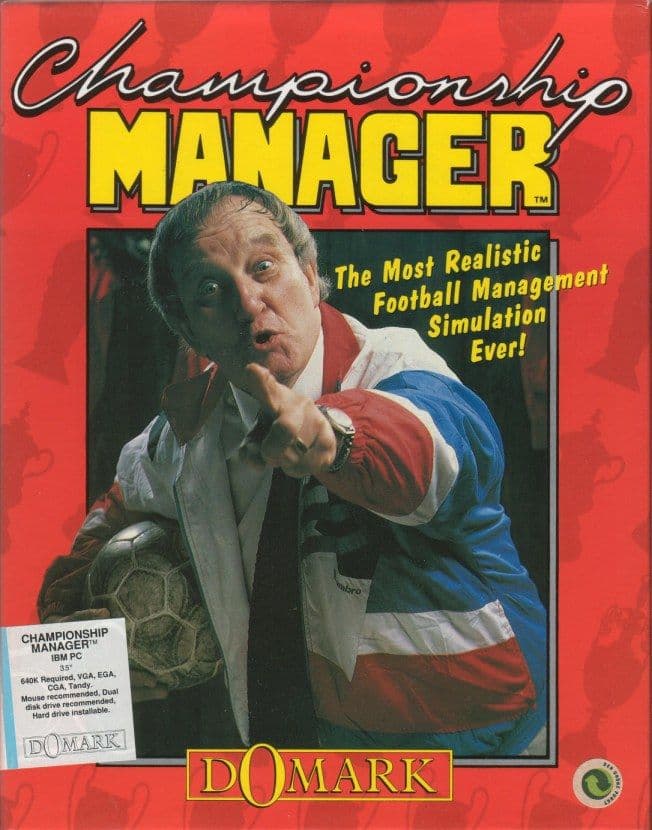
Championship Manager trades flashy pitch action for text commentary and raw statistics, leaving you to steer an entire football club from the front office.
You do not run across a pixelated field or aim shots manually in this management title. Paul and Oliver Collyer built the game in their Shropshire bedroom, focusing entirely on decisions rather than arcade reflexes.
Launching the 1992 MS-DOS release puts you straight into club administration. You pick a side from four English divisions and immediately face a squad full of distinct numbers.
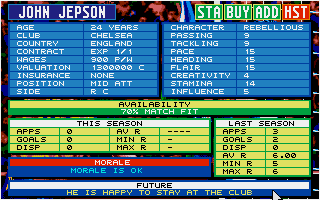
Every athlete has numerical values for specific traits like passing, tackling, and creativity. Instead of watching custom player models run around, you spend your time evaluating performance grades out of 10 after every fixture.
Match day contains zero direct arcade control. The entire fixture unfolds through a running text commentary window that streams key actions across your display.
You step in only when you want to make tactical adjustments or call for substitutions. Watching the text roll past builds real tension, especially when a late equaliser hinges on a tactical shift.
The database covers 80 playable English league teams, alongside 380 non-league and European sides. Due to early licensing boundaries, international and foreign club rosters lack real squad names.
Opponents from outside the main domestic leagues appear with generic labels such as "No.3" or "No.10". Managing around these mystery lineups became a famous quirk for early players.
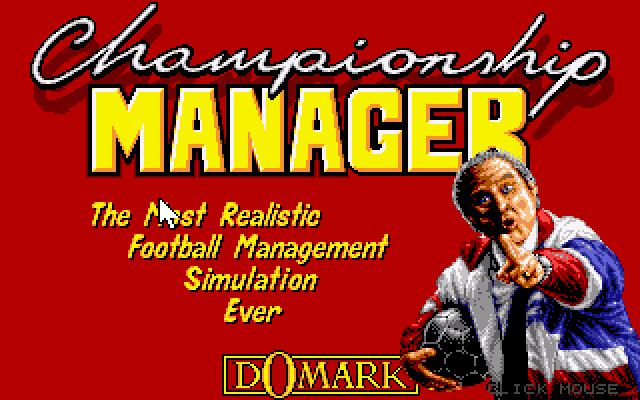
The core gameplay loop splits every week into weekday and weekend segments. Between match days, you handle contract lengths, wage demands, and transfer offers.
Signing a star requires multi-step negotiations. First, the opposing club must accept your financial bid. After that, you must satisfy the player's personal salary expectations without alienating your board.
The squad screen requires constant attention across a full season. Injury risks, physical fatigue, and squad depth dictate whether your team earns promotion or drops down the table.
Up to four human players can share the same keyboard on one system. Taking turns managing rival clubs in the same league adds sharp personal competition to the administrative grind.
Contemporary reviewers divided sharply over this numeric approach to sports games. Amiga Format famously scored the original release at 41%, dismissing it as an accountancy package with long delays.
Conversely, Amiga Mania handed it an 88% score, praising its deep lists and sheer choice. The early codebase was written in BASIC, which caused sluggish processing times during match calculation.
Publisher Domark Software Ltd. helped bring the game to wider retail shelves, where developers Intelek handled the MS-DOS conversion. Porting the logic to C helped fix early engine bottlenecks.
The presentation is plain, displaying large colourful interface buttons alongside text boxes. Yet the underlying math creates realistic league tables that reward smart squad planning over quick fingers.
Without domain knowledge of early nineties football, the massive spreads of player stats can feel opaque. There are no 2D graphics engines or international coaching roles here, just pure club management.
What holds up is the tension of building a winning roster within tight financial limits. Balancing squad morale, scout reports, and tight player budgets provides a genuine management test that modern titles still copy.
You can play Championship Manager online free in your browser right now. You can jump straight into the hot seat, select your starting eleven, and test your tactics with zero setup required.
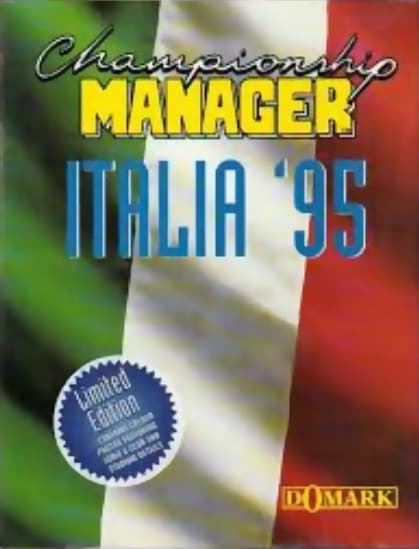
Championship Manager trades flashy pitch action for text commentary and raw statistics, leaving you to steer an entire football club from the front office.
You do not run across a pixelated field or aim shots manually in this management title. Paul and Oliver Collyer built the game in their Shropshire bedroom, focusing entirely on decisions rather than arcade reflexes.
Launching the 1992 MS-DOS release puts you straight into club administration. You pick a side from four English divisions and immediately face a squad full of distinct numbers.
Every athlete has numerical values for specific traits like passing, tackling, and creativity. Instead of watching custom player models run around, you spend your time evaluating performance grades out of 10 after every fixture.
Match day contains zero direct arcade control. The entire fixture unfolds through a running text commentary window that streams key actions across your display.
You step in only when you want to make tactical adjustments or call for substitutions. Watching the text roll past builds real tension, especially when a late equaliser hinges on a tactical shift.
The database covers 80 playable English league teams, alongside 380 non-league and European sides. Due to early licensing boundaries, international and foreign club rosters lack real squad names.
Opponents from outside the main domestic leagues appear with generic labels such as "No.3" or "No.10". Managing around these mystery lineups became a famous quirk for early players.
The core gameplay loop splits every week into weekday and weekend segments. Between match days, you handle contract lengths, wage demands, and transfer offers.
Signing a star requires multi-step negotiations. First, the opposing club must accept your financial bid. After that, you must satisfy the player's personal salary expectations without alienating your board.
The squad screen requires constant attention across a full season. Injury risks, physical fatigue, and squad depth dictate whether your team earns promotion or drops down the table.
Up to four human players can share the same keyboard on one system. Taking turns managing rival clubs in the same league adds sharp personal competition to the administrative grind.
Contemporary reviewers divided sharply over this numeric approach to sports games. Amiga Format famously scored the original release at 41%, dismissing it as an accountancy package with long delays.
Conversely, Amiga Mania handed it an 88% score, praising its deep lists and sheer choice. The early codebase was written in BASIC, which caused sluggish processing times during match calculation.
Publisher Domark Software Ltd. helped bring the game to wider retail shelves, where developers Intelek handled the MS-DOS conversion. Porting the logic to C helped fix early engine bottlenecks.
The presentation is plain, displaying large colourful interface buttons alongside text boxes. Yet the underlying math creates realistic league tables that reward smart squad planning over quick fingers.
Without domain knowledge of early nineties football, the massive spreads of player stats can feel opaque. There are no 2D graphics engines or international coaching roles here, just pure club management.
What holds up is the tension of building a winning roster within tight financial limits. Balancing squad morale, scout reports, and tight player budgets provides a genuine management test that modern titles still copy.
You can play Championship Manager online free in your browser right now. You can jump straight into the hot seat, select your starting eleven, and test your tactics with zero setup required.
The on-screen keyboard and gamepad mapping the browser player uses on a phone, a tablet or a controller, as opposed to the real keys above. $PRO members make their own in the player and share them here; anyone can pick one to play with.
Cheat codes, console commands and memory pokes for Championship Manager — each one verified and attributed.
Sign in to submitThe on-screen keyboard and gamepad mapping the browser player uses on a phone, a tablet or a controller, as opposed to the real keys above. $PRO members make their own in the player and share them here; anyone can pick one to play with.
Cheat codes, console commands and memory pokes for Championship Manager — each one verified and attributed.
Sign in to submit