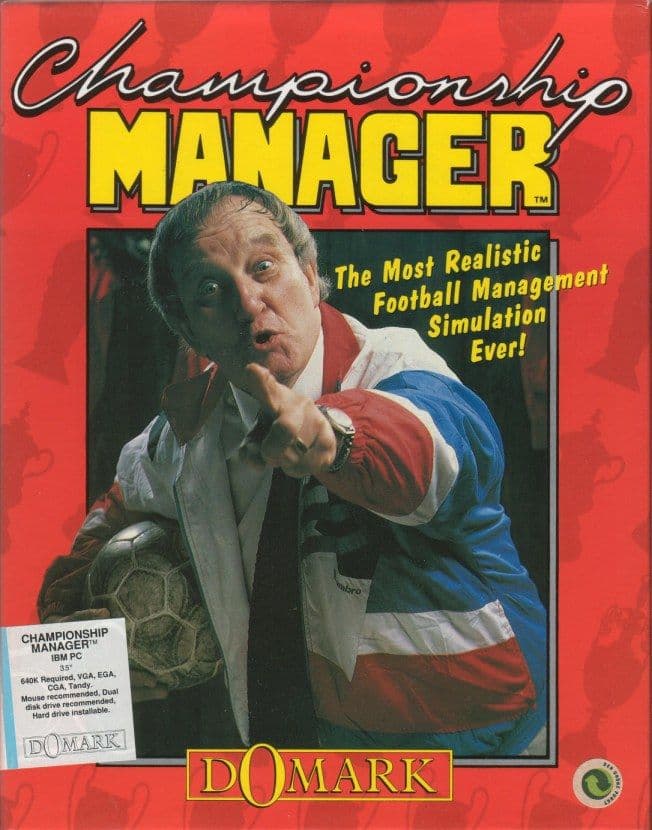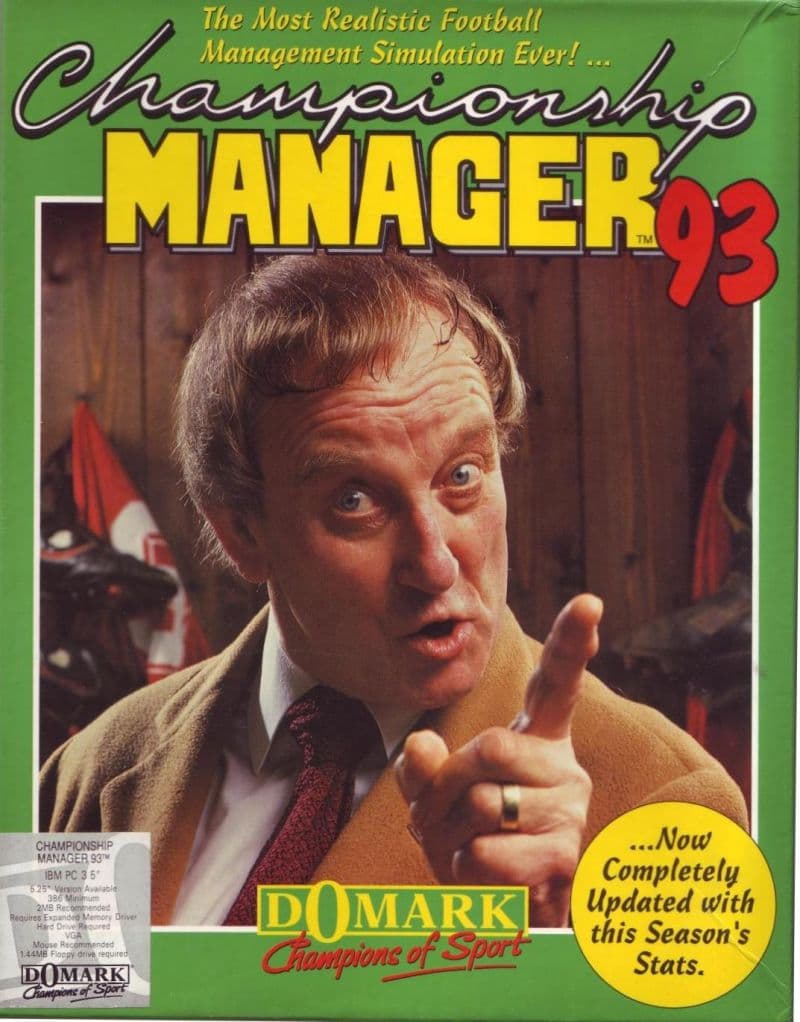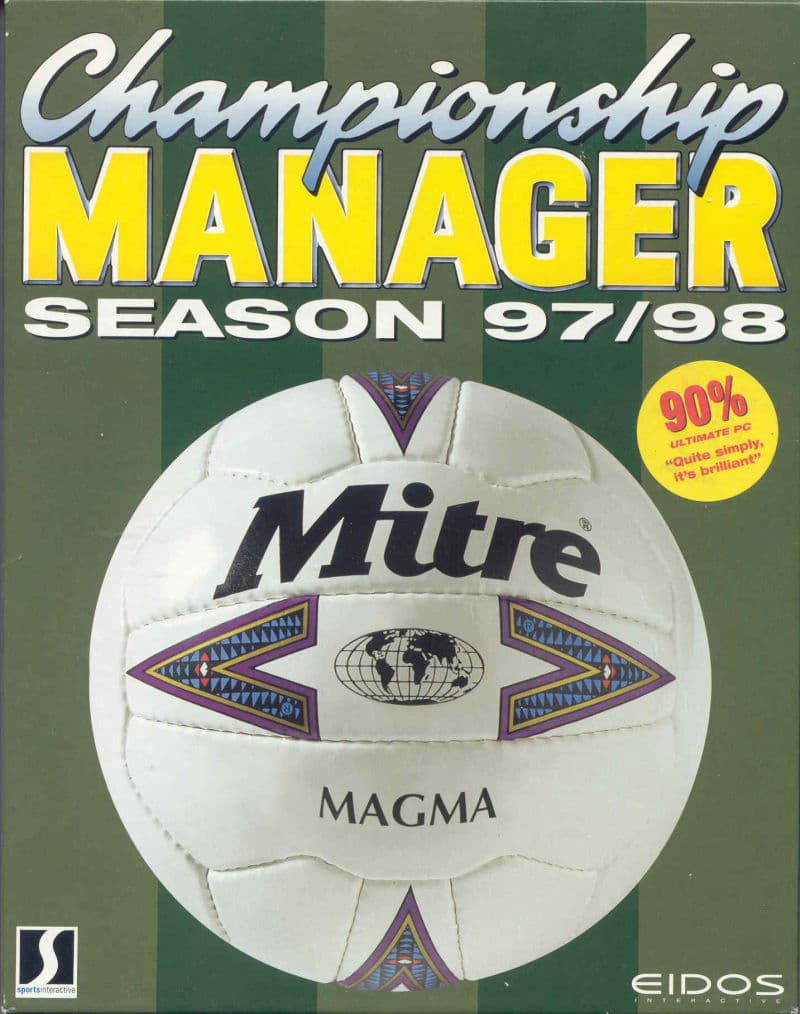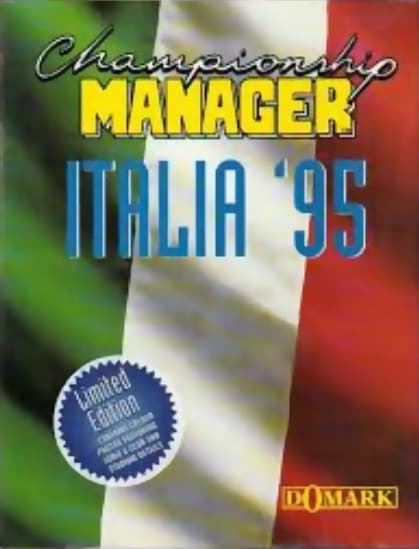
Championship Manager Italia took the clinical, spreadsheet-driven engine of British football management and dropped it straight into the tactical, high-stakes universe of 1990s Italian soccer.
Swapping British muddy pitches for Championship Manager Italia and Serie A
When brothers Paul and Oliver Collyer built Championship Manager Italia at Intelek, they recognized that football fans were falling in love with foreign leagues. Driven by television broadcasts that brought foreign superstars into living rooms, the appetite for managing teams like AC Milan, Juventus, or Inter was at an all-time high. Instead of flashy arcade graphics or moving sprites, this text-based managerial simulation demanded total tactical discipline from the user.
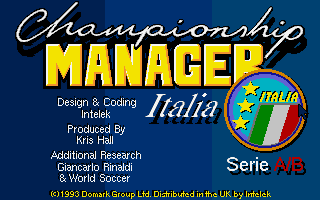
Launching the game on MS-DOS in 1993 under Domark Software Ltd. was a bold choice. While other sports games gave you action sequences or arcade controls, this title offered menus, financial tables, and line upon line of updating text. If you expected action highlights, you were in for a shock. Success depended entirely on reading match reports, adjusting team tactics, and adjusting player runs.
The transition from the English league system to Italian football meant adapting to entirely different rules. You had to account for strict foreign-player quotas and handle realistic squad squad rotations across Serie A and Serie B. Tactical flexibility was non-negotiable if you wanted to keep your job past Christmas.
Stat screens, strict transfer windows, and match simulation text
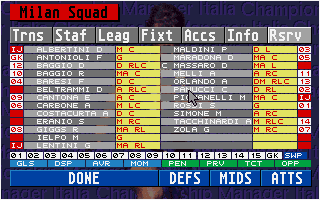
A typical season starts with a dense wall of statistics. You pick your squad from real 1993 rosters, set up training, hire support staff, and face the harsh reality of Italian boardrooms. The interface relies entirely on monochrome or low-color text screens that look closer to financial software than standard computer games. Navigate through player attributes, assign roles like forward runs or deep-lying tackles, and set your matchday lineup before hitting the button to simulate the week.
Matches run entirely in real-time text narration. A status line tells you who has the ball, while commentary updates appear across the screen to signal missed shots, yellow cards, or sudden injuries. It was agonizingly tense on period hardware, where slow processor speeds meant waiting several minutes just to watch a big match tick down to the ninety-minute mark.
The engine punishes reckless planning hard through rigid mechanics. The transfer system in particular is notoriously brutal:
- Transfer windows are strictly enforced, leaving zero room for last-minute panic buys outside allowed dates.
- Unwanted players refuse to leave if their contract demands are not met by suitors, cluttering your wage bill.
- Squad morale drops instantly if stars are benched or fined without tactical cause.
- Board patience decays rapidly if high financial expenditures fail to yield silverware within a single season.
The Lazio exploit, copy manuals, and PC speaker sound
Audio design in this DOS release is minimalist to an extreme degree. Aside from a short intro tune, you hear almost nothing during standard play. Matches pass in total silence save for the occasional chime or PC speaker beep when a goal lands. This dry approach alienated some critics at the time, with publications like Amiga Joker panning the presentation with a 28% score, while tactical purists at The One Amiga scored it at 89% for its raw depth.
Before you even kicked a ball, copy protection hit you at startup. The game asked for match results or manual codes printed on specific pages of the physical documentation. Lose the manual, and your season was over before it began.
For those who made it past the prompt, the game contained a tactic that every manager ended up exploiting. Signing Paul Gascoigne, who played for Lazio at the time, was virtually a cheat code. The internal match engine calculated his skill parameters so favorably that putting him in midfield guaranteed absurd assist numbers and free-kick goals, regardless of your overall formation.
What still holds up in Championship Manager Italia today
Compared to modern management titles with complex 3D engines, this classic release stripped football management down to pure logic and numbers. The core thrill of turning a mid-table Serie B side into domestic champions using clever tactics and shrewd scouting remains genuine. It rewards patient players who enjoy calculating risks on paper.
What fails to hold up is the stubborn user interface. Trying to unload deadwood from your roster feels like arguing with a brick wall, as AI clubs routinely ignore reasonable asking prices. The lack of match audio or fast simulation speeds can make long seasons feel like a grind if you are used to modern quality-of-life options.
If you enjoy classic sports games or want to experience the groundwork laid before the franchise evolved, this is the simulation to load up. It delivers early 1990s Italian football with uncompromising mechanical honesty.
Where to play Championship Manager Italia online
You can play Championship Manager Italia free in your browser right now, with full keyboard support and quick saving ready to go. The original MS-DOS game runs directly in your window, so there is no setup required and nothing to install. Take charge of your favorite Italian club, navigate the transfer market, and see if your tactics can conquer Serie A tonight.
Players' controls
Touch and gamepad controls
The on-screen keyboard and gamepad mapping the browser player uses on a phone, a tablet or a controller, as opposed to the real keys above. $PRO members make their own in the player and share them here; anyone can pick one to play with.
Make your own touch controlsPRO
- 1Open the editorSign in below, then pick what to make. The game starts with the editor open over it.
- 2Place your keysAdd keys and drag them where your thumbs rest, or map a controller's buttons. Test plays the game with them; Save keeps them, and you play with them from then on.
- 3Share themShare them right after saving in the game, or name and share them here. Players vote, and the best become this game's controls for everyone.
Go PROSee how it worksSign in+20 XP for sharing · +50 XP if yours become the game's own
- The game's own controlsNone yet: played with a real keyboard only.In use
2 screenshots
From the archive
No gameplay video yet
No gameplay video for Championship Manager Italia yet. Sign in to add one.
No reviews yet
Tell the community what you think of Championship Manager Italia. Reviews are public and tied to your username.
No archived manuals for Championship Manager Italia yet
No manuals archived for this title yet. Sign in to upload the first scan.
Cheat codes, console commands and memory pokes for Championship Manager Italia — each one verified and attributed.
Sign in to submitNo cheats yet for this title
Know a working cheat, poke or trainer? Add it with the button above. Moderators check every entry before it goes live.
No archived soundtrack for Championship Manager Italia yet
No soundtrack archived for this title yet. Sign in to upload the first rip.
No save states for Championship Manager Italia yet
No save states for this title yet. Sign in to share one.
Discussions
Sign in to post- Threads0
- Total posts0
- Online now6
Community · Championship Manager Italia
Who's contributing, and what's new
- Reviews0
- Threads0
- Uploadsapproved0
- Contributors0
Recent activity