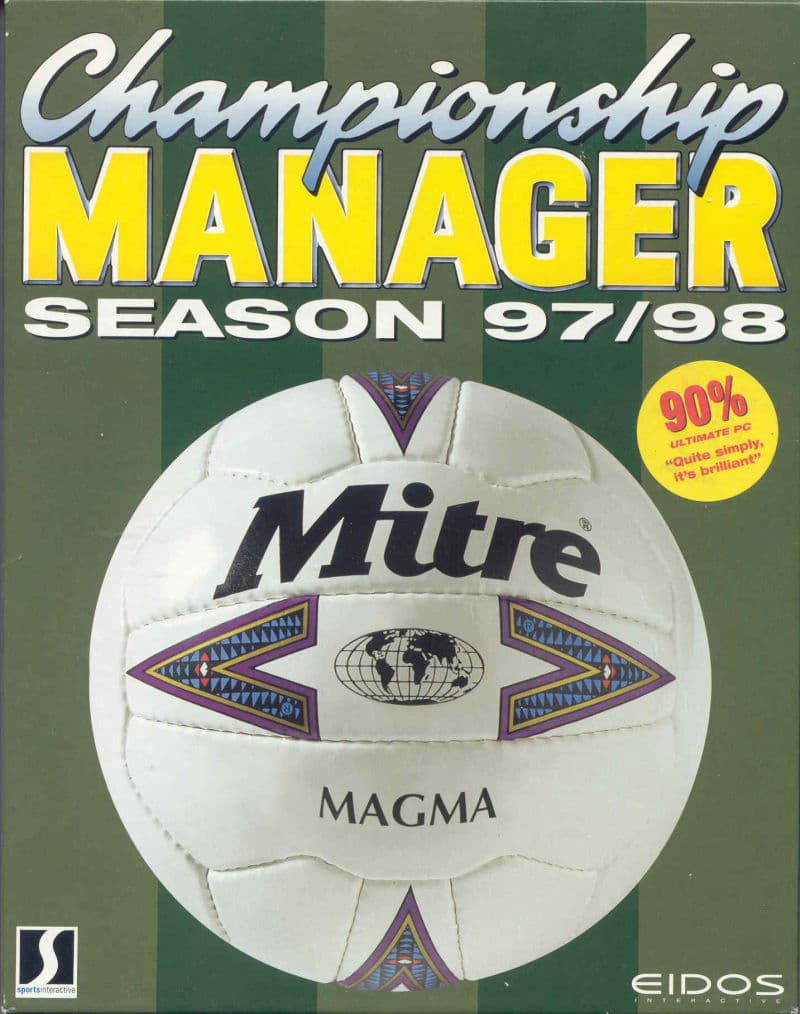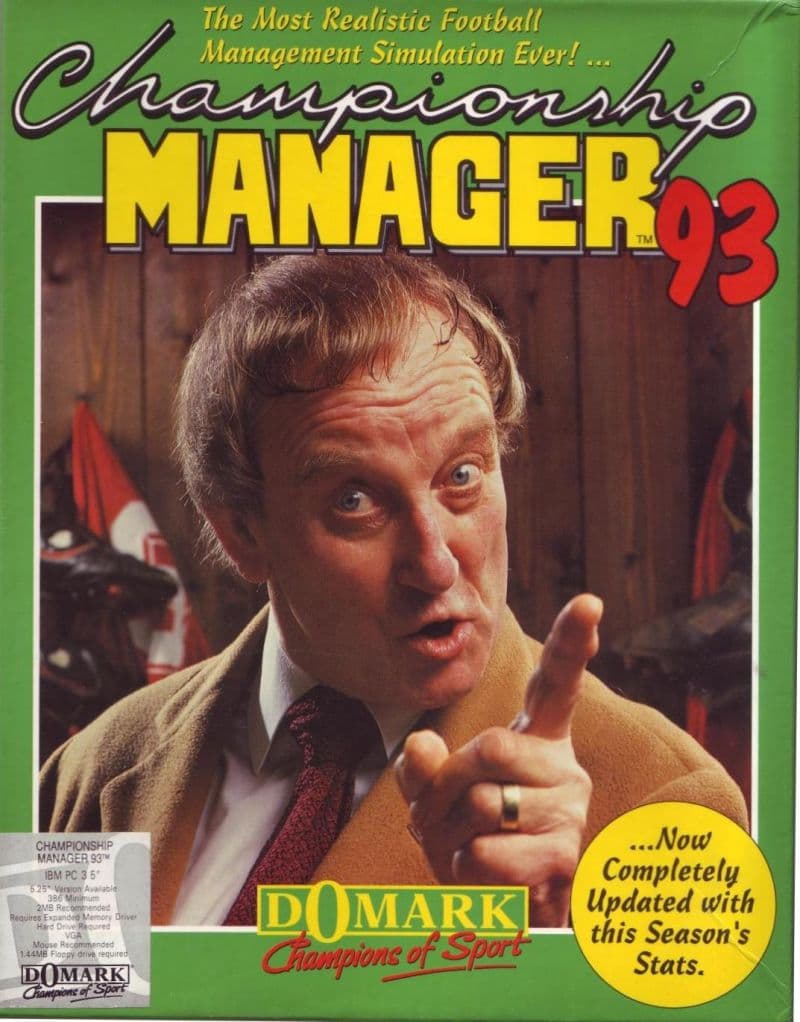
Starting a career in Championship Manager 93/94 meant surrendering your free time to walls of green text, numbers, and the rhythmic chug of a hard drive simulating English football. Designed and coded by brothers Paul and Oliver Collyer, it traded arcade action for cold player statistics, reserve fixtures, and squad management that felt demanding and deep.
When you fire up the game, there are no animated graphics or polygon goal celebrations. You choose a club in the English football league, step into the manager's office, and face a plain menu system that treats elite sport like an office accounting spreadsheet. Navigating transfer lists, negotiating player wages, sorting reserve squad contracts, and tracking fitness ratings is where the real drama happens.
Matches take place entirely inside a text commentary window. You watch line by line as the engine calculates possession, fouls, yellow cards, and injury time minute by minute. Hearing a late equalizer scroll across the bottom of the screen alongside a flat beep from your PC speaker delivers genuine tension that plenty of action titles failed to match on a Sound Blaster board.
Published by Domark Software Ltd. in 1993, this installment expanded heavily on the framework of the 1992 original. The Collyer brothers introduced several mechanics that quickly set the standard for football management titles:
These additions made managing lower-tier teams in Division 3 feel like a multi-year project rather than a quick arcade fixture. You spent hours hunting for budget squad replacements, balancing contract demands against board expectations, and monitoring player fatigue across a grinding 42-match league schedule.
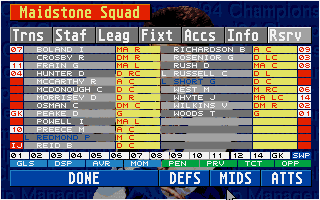
Because the match simulation relied on fixed mathematical logic, dedicated players soon identified quirks in how the code calculated attack vectors. The most famous strategic exploit was the 3-3-1-3 formation. By cramming your entire tactical setup straight down the middle of the pitch, opponent defense routines struggled to cover your central runs, letting your team score absurd amounts of goals against superior clubs.
If you wanted an extra edge before kicking off your first season, managing Tranmere Rovers functioned as a pseudo-cheat code. Taking the job automatically funded your club with a £30 million cash balance, allowing you to instantly sign international stars and buy your way to top-flight trophies without working up from lower divisions.
Before you could take your place on the touchline, the Championship Manager 93/94 MS-DOS game forced you through a manual copy-protection check. The startup screen asked for specific words or match scores pulled from exact line numbers in the printed booklet. Players quickly realized that typing 2-1 passed the security check surprisingly often, saving fans who had misplaced their printed manual.
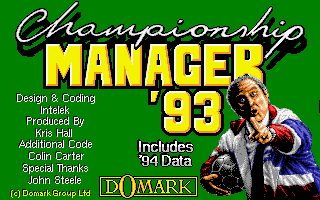
The vast scope of the simulation came with heavy demands on early hardware. Moving from one season to the next required your processor to recalculate thousands of transfers, contract renewals, and skill stat changes across all divisions. On a typical 386 or 486 PC, an end-of-season transition often took anywhere from two to four hours, forcing managers to leave their hardware clunking away overnight just to reach pre-season friendlies.
At release, contemporary magazine reviewers were sharply split over the text-only style. Amiga Magazine handed the game a harsh 4/10 rating, criticizing the complete lack of pitch graphics and minimal sound support while describing the presentation as a massive spreadsheet of player stats. Yet management enthusiasts embraced that bare layout because it meant faster processing during match days compared to earlier releases.
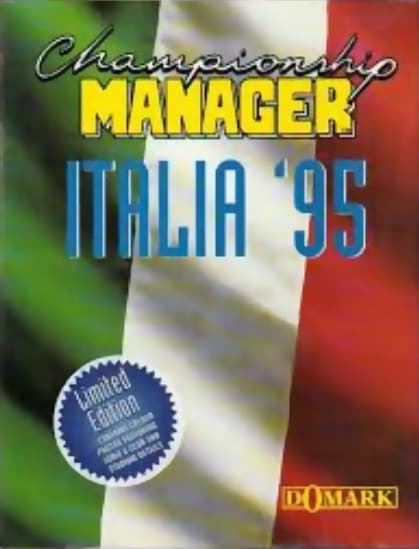
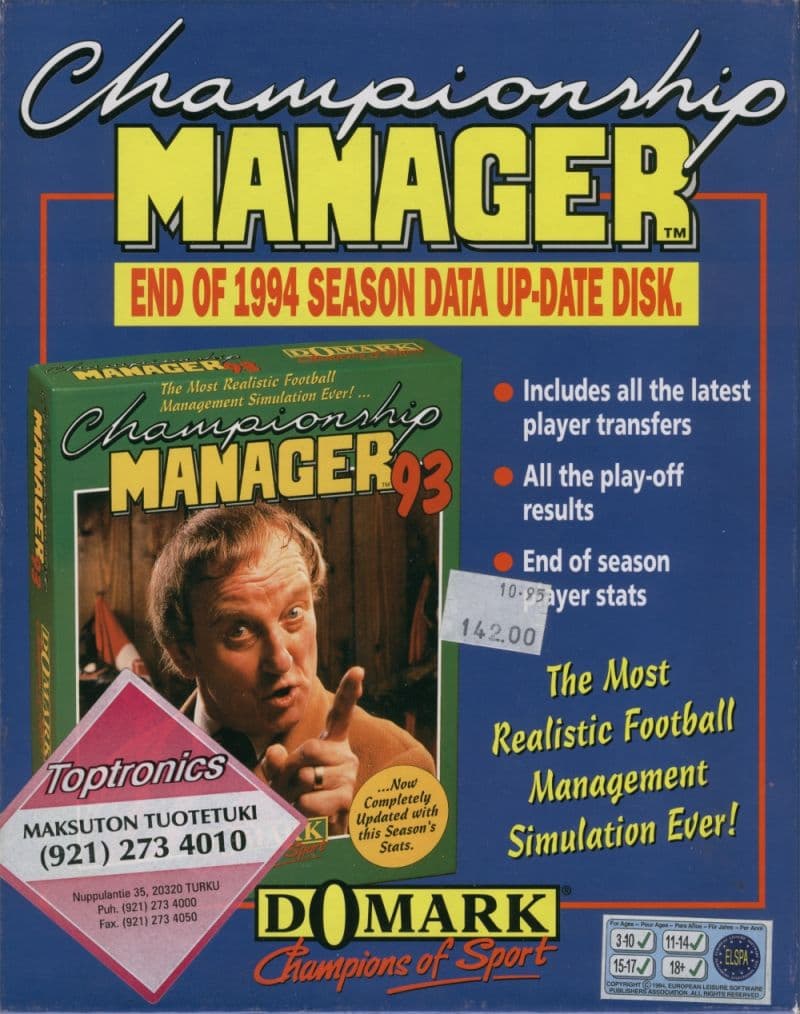
The core engine developed by Domark Software, Inc. proved adaptable enough to launch spinoffs like Championship Manager Italia and Championship Manager Norge alongside seasonal update disks. The developers even slipped hidden easter eggs into the database. Fictional players like Mark Collis and Ferah Orosco were added to team rosters, triggering endless debates among scouting fans looking for hidden talent in the transfer market.
This early managerial entry relies entirely on tactical judgment. There are no visual gimmicks or cutscenes to disguise bad decisions; if your midfield pairing lacks stamina or your defenders cannot handle aerial balls, your club drops down the table. Losing save data or corrupting floppy disks after fifty hours in charge of a low-tier squad was a real hazard, but taking a Division 3 side to European trophies strictly through spreadsheet scouting still feels great in classic sports games.
You can play Championship Manager 93/94 free in your browser right here on this page, with no old hardware to assemble and no manual copy-protection checks blocking your start. Choose your starting division, test out the central overload tactics, and see how your managerial skills handle the 93/94 season in moments.
Starting a career in Championship Manager 93/94 meant surrendering your free time to walls of green text, numbers, and the rhythmic chug of a hard drive simulating English football. Designed and coded by brothers Paul and Oliver Collyer, it traded arcade action for cold player statistics, reserve fixtures, and squad management that felt demanding and deep.
When you fire up the game, there are no animated graphics or polygon goal celebrations. You choose a club in the English football league, step into the manager's office, and face a plain menu system that treats elite sport like an office accounting spreadsheet. Navigating transfer lists, negotiating player wages, sorting reserve squad contracts, and tracking fitness ratings is where the real drama happens.
Matches take place entirely inside a text commentary window. You watch line by line as the engine calculates possession, fouls, yellow cards, and injury time minute by minute. Hearing a late equalizer scroll across the bottom of the screen alongside a flat beep from your PC speaker delivers genuine tension that plenty of action titles failed to match on a Sound Blaster board.
Published by Domark Software Ltd. in 1993, this installment expanded heavily on the framework of the 1992 original. The Collyer brothers introduced several mechanics that quickly set the standard for football management titles:
These additions made managing lower-tier teams in Division 3 feel like a multi-year project rather than a quick arcade fixture. You spent hours hunting for budget squad replacements, balancing contract demands against board expectations, and monitoring player fatigue across a grinding 42-match league schedule.
Because the match simulation relied on fixed mathematical logic, dedicated players soon identified quirks in how the code calculated attack vectors. The most famous strategic exploit was the 3-3-1-3 formation. By cramming your entire tactical setup straight down the middle of the pitch, opponent defense routines struggled to cover your central runs, letting your team score absurd amounts of goals against superior clubs.
If you wanted an extra edge before kicking off your first season, managing Tranmere Rovers functioned as a pseudo-cheat code. Taking the job automatically funded your club with a £30 million cash balance, allowing you to instantly sign international stars and buy your way to top-flight trophies without working up from lower divisions.
Before you could take your place on the touchline, the Championship Manager 93/94 MS-DOS game forced you through a manual copy-protection check. The startup screen asked for specific words or match scores pulled from exact line numbers in the printed booklet. Players quickly realized that typing 2-1 passed the security check surprisingly often, saving fans who had misplaced their printed manual.
The vast scope of the simulation came with heavy demands on early hardware. Moving from one season to the next required your processor to recalculate thousands of transfers, contract renewals, and skill stat changes across all divisions. On a typical 386 or 486 PC, an end-of-season transition often took anywhere from two to four hours, forcing managers to leave their hardware clunking away overnight just to reach pre-season friendlies.
At release, contemporary magazine reviewers were sharply split over the text-only style. Amiga Magazine handed the game a harsh 4/10 rating, criticizing the complete lack of pitch graphics and minimal sound support while describing the presentation as a massive spreadsheet of player stats. Yet management enthusiasts embraced that bare layout because it meant faster processing during match days compared to earlier releases.
The core engine developed by Domark Software, Inc. proved adaptable enough to launch spinoffs like Championship Manager Italia and Championship Manager Norge alongside seasonal update disks. The developers even slipped hidden easter eggs into the database. Fictional players like Mark Collis and Ferah Orosco were added to team rosters, triggering endless debates among scouting fans looking for hidden talent in the transfer market.
This early managerial entry relies entirely on tactical judgment. There are no visual gimmicks or cutscenes to disguise bad decisions; if your midfield pairing lacks stamina or your defenders cannot handle aerial balls, your club drops down the table. Losing save data or corrupting floppy disks after fifty hours in charge of a low-tier squad was a real hazard, but taking a Division 3 side to European trophies strictly through spreadsheet scouting still feels great in classic sports games.
You can play Championship Manager 93/94 free in your browser right here on this page, with no old hardware to assemble and no manual copy-protection checks blocking your start. Choose your starting division, test out the central overload tactics, and see how your managerial skills handle the 93/94 season in moments.
How Championship Manager 93/94 is played — the keys the game listens to, grouped by what they do.
Highlighted keys are mapped — hover or tap one to see what it does.
The game relies primarily on the mouse for menu navigation and decision making, with the keyboard used for typing text input.
The on-screen keyboard and gamepad mapping the browser player uses on a phone, a tablet or a controller, as opposed to the real keys above. $PRO members make their own in the player and share them here; anyone can pick one to play with.
Cheat codes, console commands and memory pokes for Championship Manager 93/94 — each one verified and attributed.
Sign in to submitHow Championship Manager 93/94 is played — the keys the game listens to, grouped by what they do.
Highlighted keys are mapped — hover or tap one to see what it does.
The game relies primarily on the mouse for menu navigation and decision making, with the keyboard used for typing text input.
The on-screen keyboard and gamepad mapping the browser player uses on a phone, a tablet or a controller, as opposed to the real keys above. $PRO members make their own in the player and share them here; anyone can pick one to play with.
Cheat codes, console commands and memory pokes for Championship Manager 93/94 — each one verified and attributed.
Sign in to submit