
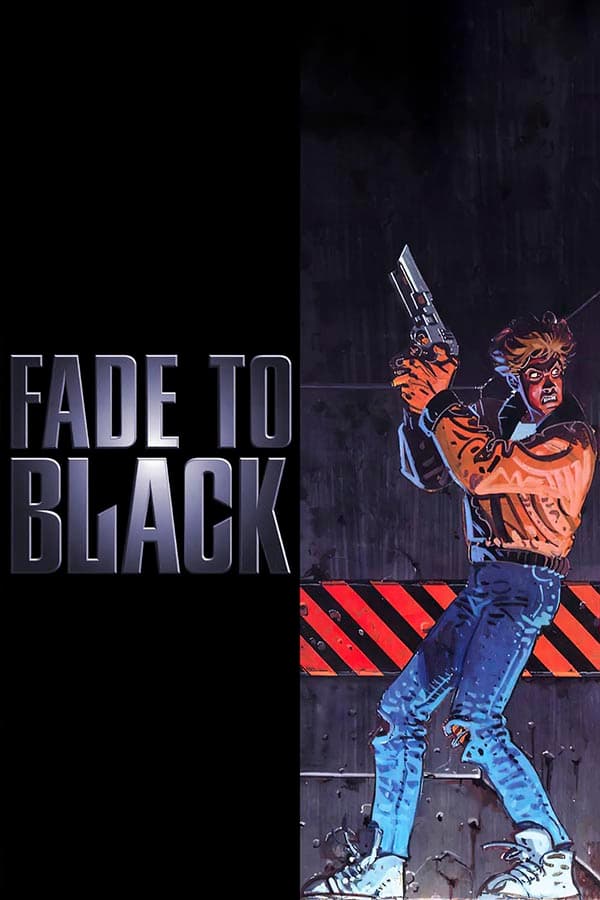

Waking up from fifty years of cryogenic sleep in the lunar prison of New Alcatraz, Conrad Hart trades the rotoscoped 2D ledge-grabbing of his past for a clunky, Gouraud-shaded 3D space suit in Fade to Black.
The moment you step out of your cell in Fade to Black, you realize director Paul Cuisset abandoned the tight platforming of Flashback for full polygonal freedom. Armed with a futuristic pistol that picks up infinite ammo upgrades, you sneak past alien Morph patrols, ducking behind low walls to dodge incoming plasma bolts. It feels like a tense thriller right up until you try to turn around quickly, only to find Conrad moves with the turning circle of a delivery truck.
Back in 1995, Delphine Software International tried something radical by shifting their cinematic style into three dimensions on 1995 hardware. The dynamic camera shifts dramatically as you move from corridor to open room, reminiscent of Alone in the Dark but far more aggressive. When it works, watching Conrad draw his sidearm in a smooth polygonal motion looks incredible. When it fails, the camera tucks itself behind a doorway, leaving you getting shot by an off-screen turret while staring closely at a grey wall texture.
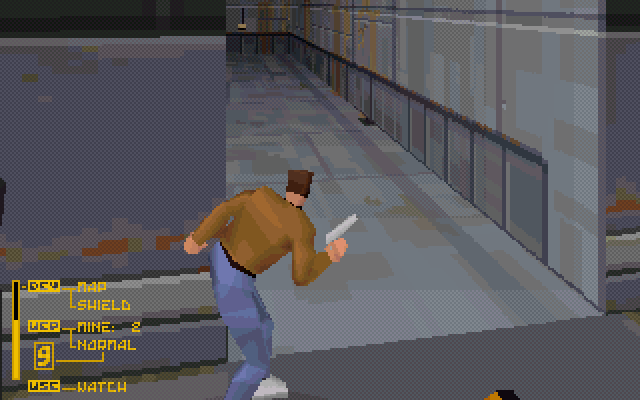
The game asks a lot from your fingers and your nerves. Controlling Conrad involves managing magnetic shields, scanning rooms, planting mines, and navigating maze-like corridors full of instant-death hazards. You will spend minutes searching through wall receptacles and storage cabinets for keycards, battery recharges, or obscure code sequences just to open a single laser barrier. Then an unkillable enemy who looks identical to standard Morph guards drops from the ceiling and kills you instantly.
The original MS-DOS version suffered from heavy system demands and sticky keyboard controls. Period reviews were split down the middle. German magazine PC Joker praised the cinematic audio and presentation with an 89% rating, while GameSpot pointed out how the shifting perspective ruined the action. The difficulty level jumps wildly, throwing severe spikes at you on Mars and Venus. Instead of precise jumping, you get odd environmental puzzles like freezing parrot-like birds mid-flight to progress, alongside an unexpected arcade space-piloting segment.
Originally envisioned as a 2D Mega CD project called Flashback 2, the development team scrapped their initial plans to go all-in on polygons. Programmer Philippe Chastel and the coding team built an engine capable of Gouraud-shaded environments, ditching the flat 2D rotoscoped sprites of the previous game entirely. Artist Thierry Perreau sculpted the futuristic aesthetic, while the physical box got a cover illustration by French comic legend Jean Giraud, better known as Moebius.
The audio side was equally ambitious, with composer Raphaël Gesqua crafting an atmospheric score that scaled across modern sound cards. If you had a Sound Blaster AWE32, Roland MT-32, or Gravis UltraSound, the ambient synth soundscapes added serious tension to the alien compounds. However, configuring those cards under DOS was famously tricky, often producing reversed audio channels on Sound Blaster 16 hardware or crashing DOSBox setups if the UltraSound drivers were selected improperly.
Does this early 3D action shooter hold up? The visuals have that distinct, sharp low-poly charm, and the sci-fi narrative holding Conrad's escape together remains fun to follow. Yet the clumsy movement, confusing save system, and disorienting camera angles mean only dedicated retro enthusiasts will see the credits. If you want a smooth action game, the brutal difficulty spikes will frustrate you quickly. If you want to see how European studios tackled 3D combat before dual-analog sticks existed, it is fascinating.
You can experience this pivot in gaming history yourself. You can play Fade to Black free in your browser right now with no setup required. When you load up the Electronic Arts published classic, take two minutes to learn the ducking and side-stepping controls in the safety of your starting cell. You will need every bit of muscle memory once "The Spider" and the rest of the Morph army track you down.
Waking up from fifty years of cryogenic sleep in the lunar prison of New Alcatraz, Conrad Hart trades the rotoscoped 2D ledge-grabbing of his past for a clunky, Gouraud-shaded 3D space suit in Fade to Black.
The moment you step out of your cell in Fade to Black, you realize director Paul Cuisset abandoned the tight platforming of Flashback for full polygonal freedom. Armed with a futuristic pistol that picks up infinite ammo upgrades, you sneak past alien Morph patrols, ducking behind low walls to dodge incoming plasma bolts. It feels like a tense thriller right up until you try to turn around quickly, only to find Conrad moves with the turning circle of a delivery truck.
Back in 1995, Delphine Software International tried something radical by shifting their cinematic style into three dimensions on 1995 hardware. The dynamic camera shifts dramatically as you move from corridor to open room, reminiscent of Alone in the Dark but far more aggressive. When it works, watching Conrad draw his sidearm in a smooth polygonal motion looks incredible. When it fails, the camera tucks itself behind a doorway, leaving you getting shot by an off-screen turret while staring closely at a grey wall texture.

The game asks a lot from your fingers and your nerves. Controlling Conrad involves managing magnetic shields, scanning rooms, planting mines, and navigating maze-like corridors full of instant-death hazards. You will spend minutes searching through wall receptacles and storage cabinets for keycards, battery recharges, or obscure code sequences just to open a single laser barrier. Then an unkillable enemy who looks identical to standard Morph guards drops from the ceiling and kills you instantly.
The original MS-DOS version suffered from heavy system demands and sticky keyboard controls. Period reviews were split down the middle. German magazine PC Joker praised the cinematic audio and presentation with an 89% rating, while GameSpot pointed out how the shifting perspective ruined the action. The difficulty level jumps wildly, throwing severe spikes at you on Mars and Venus. Instead of precise jumping, you get odd environmental puzzles like freezing parrot-like birds mid-flight to progress, alongside an unexpected arcade space-piloting segment.
Originally envisioned as a 2D Mega CD project called Flashback 2, the development team scrapped their initial plans to go all-in on polygons. Programmer Philippe Chastel and the coding team built an engine capable of Gouraud-shaded environments, ditching the flat 2D rotoscoped sprites of the previous game entirely. Artist Thierry Perreau sculpted the futuristic aesthetic, while the physical box got a cover illustration by French comic legend Jean Giraud, better known as Moebius.
The audio side was equally ambitious, with composer Raphaël Gesqua crafting an atmospheric score that scaled across modern sound cards. If you had a Sound Blaster AWE32, Roland MT-32, or Gravis UltraSound, the ambient synth soundscapes added serious tension to the alien compounds. However, configuring those cards under DOS was famously tricky, often producing reversed audio channels on Sound Blaster 16 hardware or crashing DOSBox setups if the UltraSound drivers were selected improperly.

Does this early 3D action shooter hold up? The visuals have that distinct, sharp low-poly charm, and the sci-fi narrative holding Conrad's escape together remains fun to follow. Yet the clumsy movement, confusing save system, and disorienting camera angles mean only dedicated retro enthusiasts will see the credits. If you want a smooth action game, the brutal difficulty spikes will frustrate you quickly. If you want to see how European studios tackled 3D combat before dual-analog sticks existed, it is fascinating.
You can experience this pivot in gaming history yourself. You can play Fade to Black free in your browser right now with no setup required. When you load up the Electronic Arts published classic, take two minutes to learn the ducking and side-stepping controls in the safety of your starting cell. You will need every bit of muscle memory once "The Spider" and the rest of the Morph army track you down.
How Fade to Black is played — the keys the game listens to, grouped by what they do.
Highlighted keys are mapped — hover or tap one to see what it does.
Key map is based on available game documentation and research notes. Action keys like jumping and shooting are not listed in the retrieved documentation excerpts.
The on-screen keyboard and gamepad mapping the browser player uses on a phone, a tablet or a controller, as opposed to the real keys above. $PRO members make their own in the player and share them here; anyone can pick one to play with.
Cheat codes, console commands and memory pokes for Fade to Black — each one verified and attributed.
Sign in to submitHow Fade to Black is played — the keys the game listens to, grouped by what they do.
Highlighted keys are mapped — hover or tap one to see what it does.
Key map is based on available game documentation and research notes. Action keys like jumping and shooting are not listed in the retrieved documentation excerpts.
The on-screen keyboard and gamepad mapping the browser player uses on a phone, a tablet or a controller, as opposed to the real keys above. $PRO members make their own in the player and share them here; anyone can pick one to play with.
Cheat codes, console commands and memory pokes for Fade to Black — each one verified and attributed.
Sign in to submit