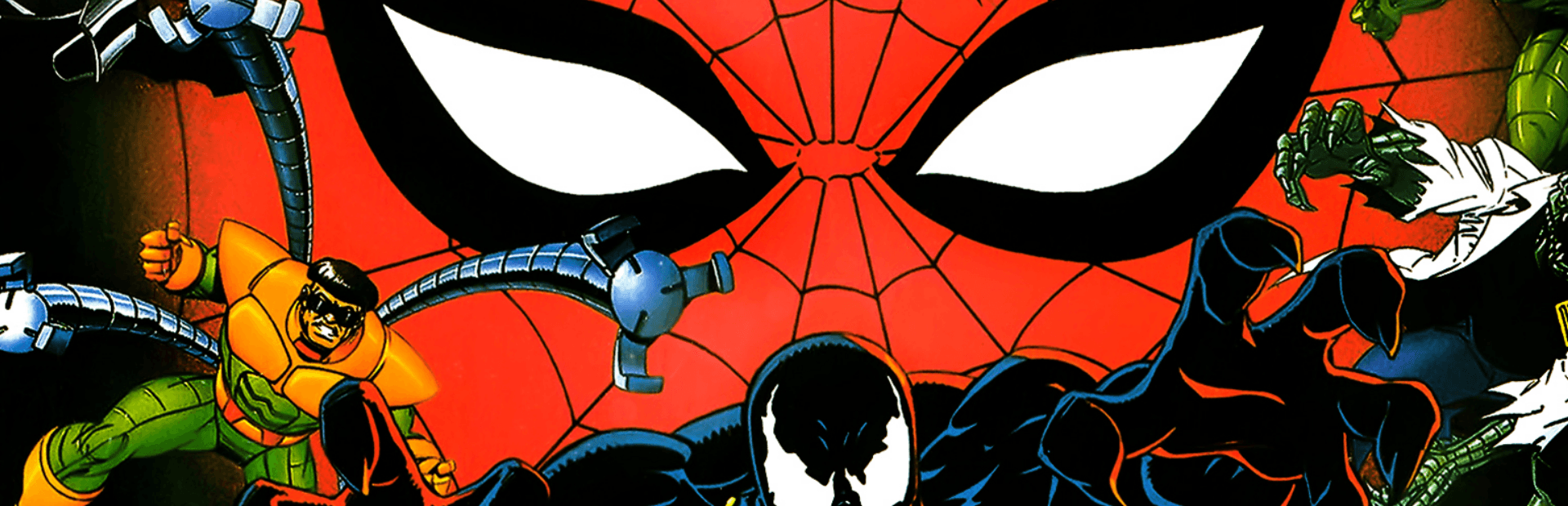
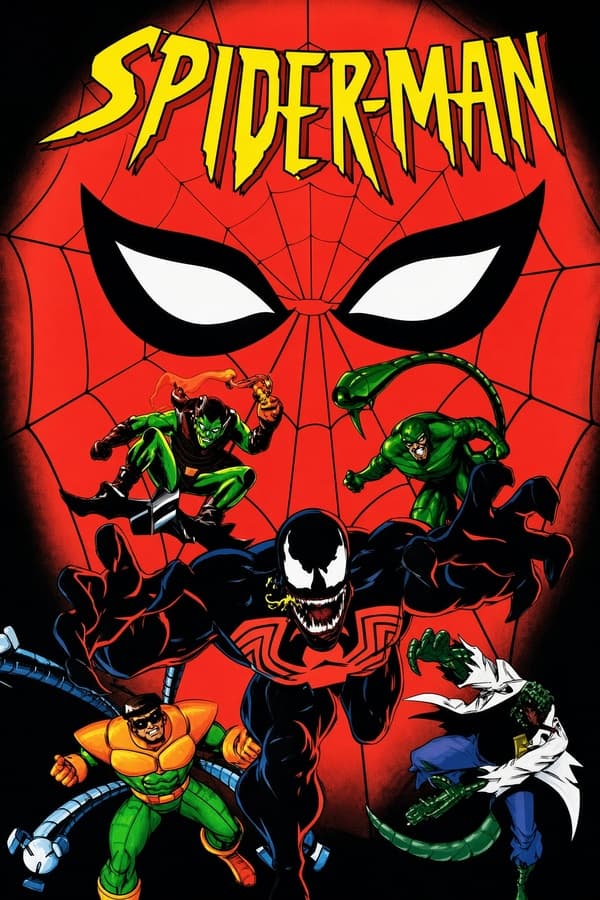

If you loaded up Marvel Comics Spider-Man: The Sinister Six back in 1996, you were treated to a rotoscoped opening sequence that made your Sound Blaster setup sing before dropping you into a surprisingly rigid interactive comic book. You control Peter Parker and his masked alter-ego as they attempt to unravel a political conspiracy involving mayoral candidate Bob Mason while taking down six famous villains along the way.
When you boot up this 1996 release, the initial impression built by the studio is startlingly high-tech for its era. Developed by Brooklyn Multimedia and published by Byron Preiss Multimedia Company, Inc., the game runs on Hypnotix's Hypno engine, the same tech behind rail-shooters like Wetlands. The opening montage uses smooth rotoscoped animation overlays on top of pre-rendered CGI backgrounds, making Spider-Man look surprisingly fluid as he swings across New York rooftops.
Once the gameplay takes over, however, the momentum shifts abruptly. Instead of swinging freely across city streets, you navigate Peter Parker through talking-head dialogue screens and branching narrative decisions. The initial objective revolves around saving Spidey's reputation and unmasking a conspiracy, but the interactive mechanics are heavily stripped down. Anyone expecting a traditional point-and-click adventure with an inventory full of items and a grid of verb commands will be shocked to find Parker locked into preset choices.
You cannot walk across the room, open drawers, or inspect objects in the environment the way traditional fans of the adventure genre were used to. Instead, you click through dialogue choices, choose which locations to visit next, and tackle standalone mini-games. Writer F.J. Lennon built six distinct storyline branches into the project, meaning your choices actually alter which bosses you face and how the story resolves, even if your direct physical control over Peter remains strictly limited.
The core gameplay loop splits cleanly between quiet investigation and arcade-style villain encounters. When you play as Peter Parker, your primary task involves gathering clues and tackling code-breaking challenges. These "decrypt the message" sequences ask you to decipher ciphertexts and puzzle out security passcodes to unlock corrupt files linked to Bob Mason's campaign.
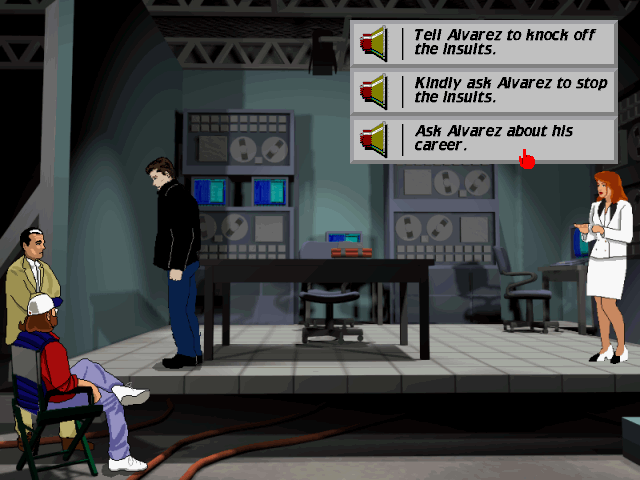
These puzzles are not particularly complex, but they play fair. Unlike games that rely on absurd item combinations, the hurdles here test basic logic and pattern recognition. The friction comes when the narrative pushes you straight into a villain confrontation, where the puzzle interface vanishes and a fighting mini-game takes over.
The lineup of rogues is legitimate comic book royalty: Doctor Octopus, Hobgoblin, Shocker, Chameleon, Mysterio, and Vulture. Each encounter plays out as an isolated action screen where timing your attacks and dodges matters far more than narrative choices. If you find these combat sequences clunky, the main menu provides a standalone combat practice mode where you can train against each boss individually without restarting the story narrative.
At release, critics were sharply divided over how the Hypno engine handled character visuals outside the action sequences. While the rotoscoped Spider-Man animations in cutscenes earned genuine praise, the secondary character models looked stiff. Lip-syncing in non-rotoscoped dialogue scenes had an unfortunate habit of flapping open and shut like novelty dentures, breaking the atmosphere during intense political debates.
Pacing was another common complaint among players who bought the original CD-ROM. Jumping from static reading screens directly into twitch-based boss encounters created an awkward rhythm. If you failed to time a jump against Shocker or missed a hit on Mysterio, the quick defeat sent you tumbling back to previous save points, leading modern retro players to label the difficulty spikes infuriating.
Production numbers for this physical release were notoriously tiny. Industry estimates suggest only around 1,500 physical copies ever reached store shelves, turning the original box into a collector piece. The engine was eventually preserved by open-source programmers, who integrated Hypno support into ScummVM version 2.6.0, even documenting hidden cheat codes built into the original code to bypass tricky maze sequences entirely.
While F.J. Lennon later wrote the prose novel Spider-Man: Venom Factor, this specific CD-ROM game never received a direct mechanical sequel. Look at it today and you see an unusual mid-nineties experiment: part digital comic book, part puzzle room, and part arcade fighter, all pressed onto a single disc.
If you want to experience this piece of PC history yourself, you can play Marvel Comics Spider-Man: The Sinister Six online without hunting down rare vintage media or wrestling with sound card configuration files. Modern players often expect a standard side-scrolling action title, so going in with the mindset of an interactive graphic novel saves a lot of initial confusion. The full Marvel Comics Spider-Man: The Sinister Six MS-DOS game is ready to run right here, giving you quick access to all six story branches and every boss fight. Jump into the practice mode first to get a feel for the jump timing before taking on Doctor Octopus in the main campaign, and see if you can uncover all six endings for yourself.
If you loaded up Marvel Comics Spider-Man: The Sinister Six back in 1996, you were treated to a rotoscoped opening sequence that made your Sound Blaster setup sing before dropping you into a surprisingly rigid interactive comic book. You control Peter Parker and his masked alter-ego as they attempt to unravel a political conspiracy involving mayoral candidate Bob Mason while taking down six famous villains along the way.
When you boot up this 1996 release, the initial impression built by the studio is startlingly high-tech for its era. Developed by Brooklyn Multimedia and published by Byron Preiss Multimedia Company, Inc., the game runs on Hypnotix's Hypno engine, the same tech behind rail-shooters like Wetlands. The opening montage uses smooth rotoscoped animation overlays on top of pre-rendered CGI backgrounds, making Spider-Man look surprisingly fluid as he swings across New York rooftops.
Once the gameplay takes over, however, the momentum shifts abruptly. Instead of swinging freely across city streets, you navigate Peter Parker through talking-head dialogue screens and branching narrative decisions. The initial objective revolves around saving Spidey's reputation and unmasking a conspiracy, but the interactive mechanics are heavily stripped down. Anyone expecting a traditional point-and-click adventure with an inventory full of items and a grid of verb commands will be shocked to find Parker locked into preset choices.
You cannot walk across the room, open drawers, or inspect objects in the environment the way traditional fans of the adventure genre were used to. Instead, you click through dialogue choices, choose which locations to visit next, and tackle standalone mini-games. Writer F.J. Lennon built six distinct storyline branches into the project, meaning your choices actually alter which bosses you face and how the story resolves, even if your direct physical control over Peter remains strictly limited.
The core gameplay loop splits cleanly between quiet investigation and arcade-style villain encounters. When you play as Peter Parker, your primary task involves gathering clues and tackling code-breaking challenges. These "decrypt the message" sequences ask you to decipher ciphertexts and puzzle out security passcodes to unlock corrupt files linked to Bob Mason's campaign.
These puzzles are not particularly complex, but they play fair. Unlike games that rely on absurd item combinations, the hurdles here test basic logic and pattern recognition. The friction comes when the narrative pushes you straight into a villain confrontation, where the puzzle interface vanishes and a fighting mini-game takes over.
The lineup of rogues is legitimate comic book royalty: Doctor Octopus, Hobgoblin, Shocker, Chameleon, Mysterio, and Vulture. Each encounter plays out as an isolated action screen where timing your attacks and dodges matters far more than narrative choices. If you find these combat sequences clunky, the main menu provides a standalone combat practice mode where you can train against each boss individually without restarting the story narrative.
At release, critics were sharply divided over how the Hypno engine handled character visuals outside the action sequences. While the rotoscoped Spider-Man animations in cutscenes earned genuine praise, the secondary character models looked stiff. Lip-syncing in non-rotoscoped dialogue scenes had an unfortunate habit of flapping open and shut like novelty dentures, breaking the atmosphere during intense political debates.
Pacing was another common complaint among players who bought the original CD-ROM. Jumping from static reading screens directly into twitch-based boss encounters created an awkward rhythm. If you failed to time a jump against Shocker or missed a hit on Mysterio, the quick defeat sent you tumbling back to previous save points, leading modern retro players to label the difficulty spikes infuriating.
Production numbers for this physical release were notoriously tiny. Industry estimates suggest only around 1,500 physical copies ever reached store shelves, turning the original box into a collector piece. The engine was eventually preserved by open-source programmers, who integrated Hypno support into ScummVM version 2.6.0, even documenting hidden cheat codes built into the original code to bypass tricky maze sequences entirely.
While F.J. Lennon later wrote the prose novel Spider-Man: Venom Factor, this specific CD-ROM game never received a direct mechanical sequel. Look at it today and you see an unusual mid-nineties experiment: part digital comic book, part puzzle room, and part arcade fighter, all pressed onto a single disc.
If you want to experience this piece of PC history yourself, you can play Marvel Comics Spider-Man: The Sinister Six online without hunting down rare vintage media or wrestling with sound card configuration files. Modern players often expect a standard side-scrolling action title, so going in with the mindset of an interactive graphic novel saves a lot of initial confusion. The full Marvel Comics Spider-Man: The Sinister Six MS-DOS game is ready to run right here, giving you quick access to all six story branches and every boss fight. Jump into the practice mode first to get a feel for the jump timing before taking on Doctor Octopus in the main campaign, and see if you can uncover all six endings for yourself.
How Marvel Comics Spider-Man: The Sinister Six is played — the keys the game listens to, grouped by what they do.
Highlighted keys are mapped — hover or tap one to see what it does.
The C cheat key requires launching the game executable with the /wincombat parameter.
The on-screen keyboard and gamepad mapping the browser player uses on a phone, a tablet or a controller, as opposed to the real keys above. $PRO members make their own in the player and share them here; anyone can pick one to play with.
Cheat codes, console commands and memory pokes for Marvel Comics Spider-Man: The Sinister Six — each one verified and attributed.
Sign in to submitaka Spider-Man: ששת הרשעים · Spider-Man Contra los Seis Siniestros · Spider-Man: Die Gnadenlosen Sechs
How Marvel Comics Spider-Man: The Sinister Six is played — the keys the game listens to, grouped by what they do.
Highlighted keys are mapped — hover or tap one to see what it does.
The C cheat key requires launching the game executable with the /wincombat parameter.
The on-screen keyboard and gamepad mapping the browser player uses on a phone, a tablet or a controller, as opposed to the real keys above. $PRO members make their own in the player and share them here; anyone can pick one to play with.
Cheat codes, console commands and memory pokes for Marvel Comics Spider-Man: The Sinister Six — each one verified and attributed.
Sign in to submit