Pole Position II
aka Arcade Archives: Pole Position II
Rate this game
- Played often
If you drop into Pole Position II expecting a gentle warm-up lap, your car will explode against a roadside billboard three seconds after the lights go green. This arcade port forces you to shave split seconds off qualifying times just to earn a spot on the starting grid before throwing you into full-throttle traffic.
When Pole Position II hits top gear, the track becomes a game of chicken
The moment you step on the gas in this classic racing driving game, the horizon rushes toward you at breakneck speed. You start with a solitary qualifying lap, fighting a strict countdown timer to earn pole position on the grid. Stepping on the brakes usually guarantees a failed qualifying attempt, so you learn to feather the shift between low and high gear to carry maximum momentum through every sweeping curve.
Steering on a keyboard or joystick demands small, precise inputs rather than heavy turns. One overzealous press sends your Formula One car sliding across the tarmac into a road sign or an opponent. If you survive qualifying, the actual race puts you on a crowded track where slower rival drivers shift lanes without warning and block your ideal racing line.
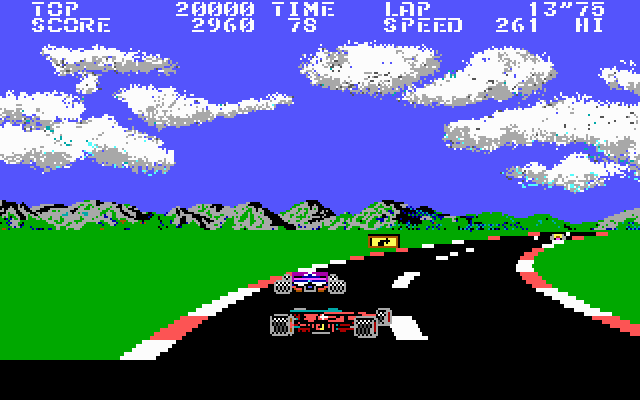
Four courses that look almost identical under the EGA hood
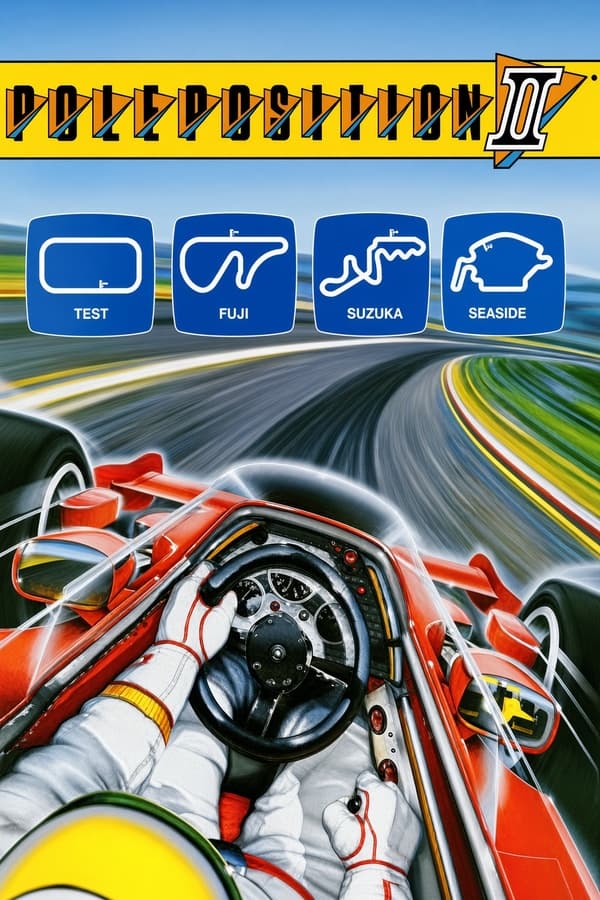
The arcade original made its name by expanding on the single circuit of the first game, giving players four distinct courses to master. In this DOS release, you choose between Fuji Speedway, Test, Seaside, and Suzuka Circuit from the main menu. Each track presents a different tactical challenge, from the massive main straight on Fuji to the tight, punishing hairpin turns of Suzuka that demand quick downshifts.
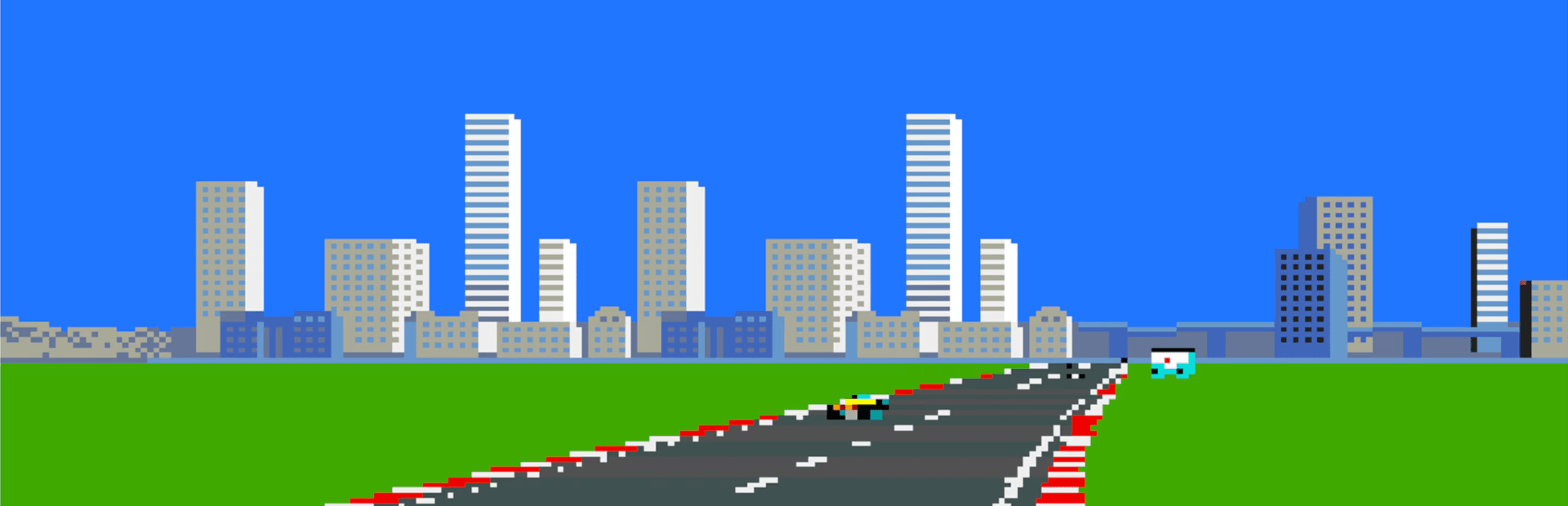
While the track layouts force you to adapt your driving lines, the visual presentation on screen hardly shifts between them. The roadside billboards feature different sponsor logos, but the surrounding grass, track textures, and horizon remain visually interchangeable across all four locations. Dark puddle obstacles sit in fixed spots on the asphalt, instantly robbing your car of velocity and dropping your engine pitch if you touch them during a high-speed pass.
What Mindscape gave PC owners and what Beam Software forgot
Publisher Mindscape, Inc. took a player-friendly route with this release by shipping the disk completely free of copy protection. You never had to consult a printed manual for code wheels or decipher passcodes before starting your engine. That decision made getting into the driver's seat painless, but the software inside disk was missing key features that arcade fans expected.
Port developer Beam Software handled the conversion, but the technical transition to PC hardware left the audio presentation lacking. While the original cabinet created by Namco Limited filled arcades with engine roars and catchy synth tunes, this conversion suffers from missing music and thin sound effects. You spend most of your drive accompanied by sparse PC speaker ticks or dead silence where the motor sound ought to hum.
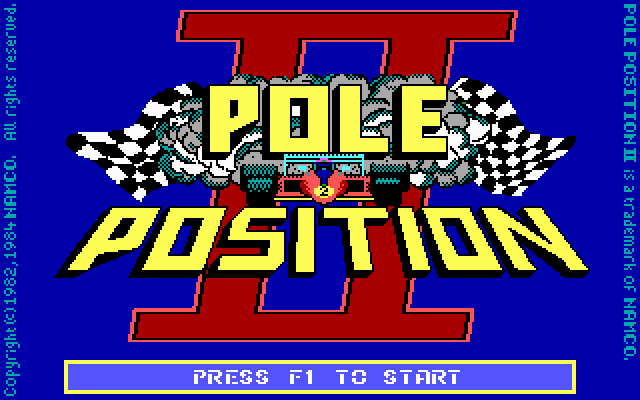
Why Pole Position II misses the podium on MS-DOS
By the time this port landed on PC displays in 1989, computer racing titles were already moving toward detailed physics and richer options. Retrospective reviews on sites like Home of the Underdogs correctly noted that while the port offers a decent EGA conversion, the underlying game feels like a average arcade port when stacked up against its late-eighties peers. Clipping another car or brushing a billboard triggers a dramatic fiery explosion that brings your vehicle to a complete stop, costing you critical seconds while a replacement car spawns on track.
That punishing arcade loop leaves zero margin for driving mistakes. A single crash during qualifying consigns you to the back of the grid, while a single collision during the main race guarantees you will run out of time before reaching the checkered flag. The lack of extra difficulty settings, custom control remapping, or variable sound modes means the initial thrill wears off once you memorize the four track layouts.
How to play Pole Position II free in your browser right now
If you want a fast dose of early open-wheel racing without searching through old disk images, you can jump directly into the driver seat. The frantic twitch steering, high-speed gear shifting, and tight lap timers remain as demanding now as they were decades ago. It takes only a few seconds to boot up a match and see if your reflexes can handle the Suzuka curves at maximum speed.
You can load this complete Pole Position II MS-DOS game directly in your web browser with zero setup required. You can play Pole Position II online free in your browser right here, taking control of the gear shifter and taking on the timer in your browser window today.
How Pole Position II is played — the keys the game listens to, grouped by what they do.
- Interface
Highlighted keys are mapped — hover or tap one to see what it does.
Keyboard controls are user-definable by pressing F9. An optional joystick calibration screen is available before playing.
Players' controls
Touch and gamepad controls
The on-screen keyboard and gamepad mapping the browser player uses on a phone, a tablet or a controller, as opposed to the real keys above. $PRO members make their own in the player and share them here; anyone can pick one to play with.
Make your own touch controlsPRO
- 1Open the editorSign in below, then pick what to make. The game starts with the editor open over it.
- 2Place your keysAdd keys and drag them where your thumbs rest, or map a controller's buttons. Test plays the game with them; Save keeps them, and you play with them from then on.
- 3Share themShare them right after saving in the game, or name and share them here. Players vote, and the best become this game's controls for everyone.
Go PROSee how it worksSign in+20 XP for sharing · +50 XP if yours become the game's own
- The game's own controlsKeyboardGamepadWhat every player starts with.In use
2 screenshots
From the archive
No gameplay video yet
No gameplay video for Pole Position II yet. Sign in to add one.
No reviews yet
Tell the community what you think of Pole Position II. Reviews are public and tied to your username.
No archived manuals for Pole Position II yet
No manuals archived for this title yet. Sign in to upload the first scan.
Cheat codes, console commands and memory pokes for Pole Position II — each one verified and attributed.
Sign in to submitNo cheats yet for this title
Know a working cheat, poke or trainer? Add it with the button above. Moderators check every entry before it goes live.
No archived soundtrack for Pole Position II yet
No soundtrack archived for this title yet. Sign in to upload the first rip.
No save states for Pole Position II yet
No save states for this title yet. Sign in to share one.
Discussions
Sign in to post- Threads0
- Total posts0
- Online now6
Community · Pole Position II
Who's contributing, and what's new
- Reviews0
- Threads0
- Uploadsapproved0
- Contributors0
Recent activity